The Airlines And Regulators Taking Action On Boeing 737 Max Jets
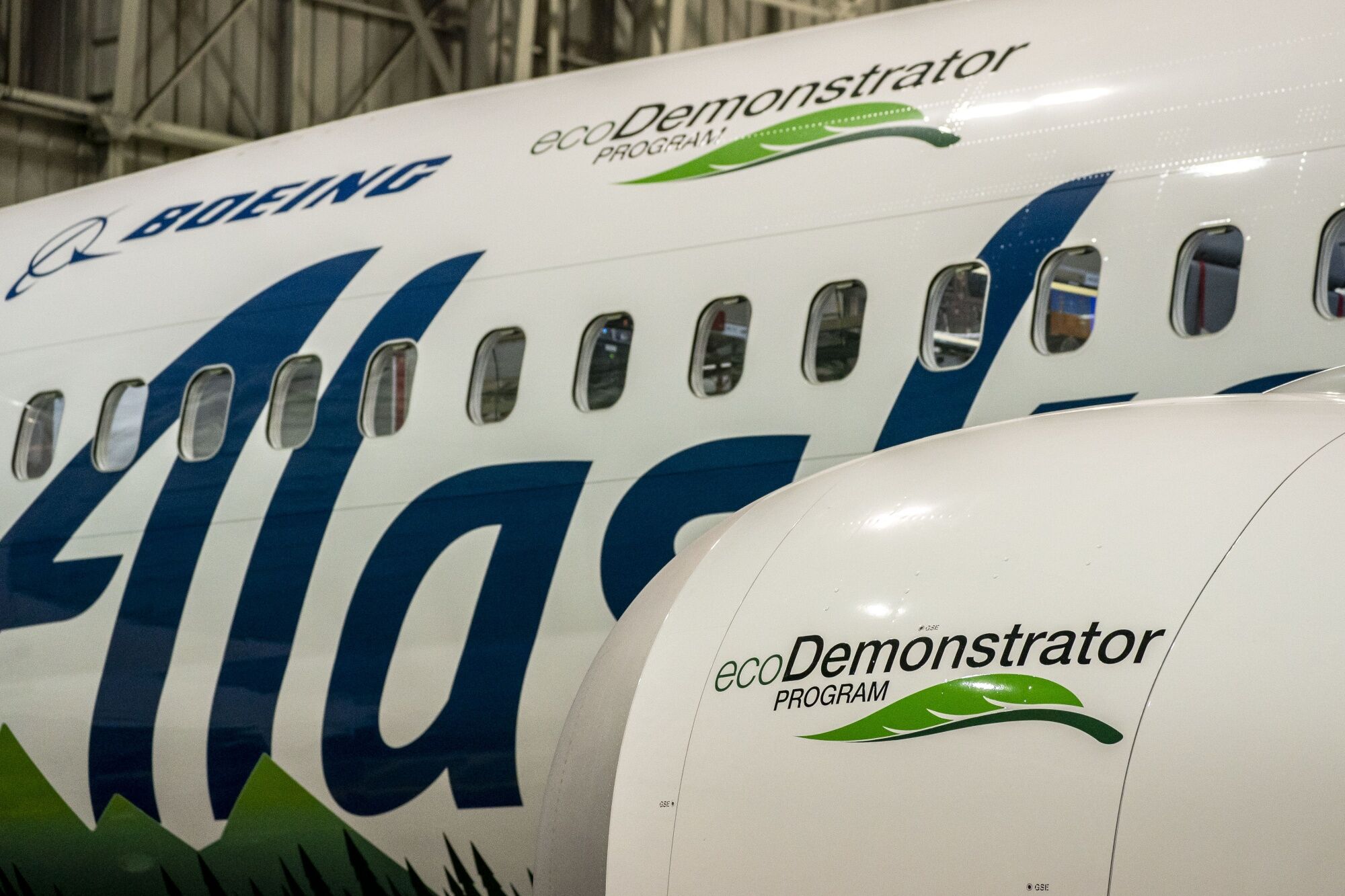
(Bloomberg) -- The accident on Alaska Airlines Flight 1282 on Jan. 5 has thrust Boeing Co.'s 737 Max plane — by far its most popular aircraft and its biggest source of revenue — into the spotlight again.
The manufacturer's entire fleet of Max aircraft was temporarily taken out of service in 2019 following two deadly crashes. Now, the US Federal Aviation Administration has ordered a temporary grounding of some 737-9 Max aircraft after Friday's mishap involving that model, prompting regulators and airlines around the world to take precaution and discuss next steps.
Here are the measures that regulators, governments and airlines are adopting:
Regulators and Government Agencies
North America
- The US Federal Aviation Administration ordered the temporary grounding and inspections of some 737-9 Max aircraft. The move affects about 171 planes worldwide, according to a statement by the FAA.
- The US National Transportation Safety Board is also investigating the matter. Its chair Jennifer Homendy said the probe will include a look at the FAA's oversight of Boeing and the manufacturer's process for planemaking on the affected aircraft type.
Europe
- The European Union Aviation Safety Agency, or EASA, told Bloomberg News it had adopted the FAA's emergency directive. It noted no European airline in an EASA member state operated an aircraft in the affected Boeing configuration.
- The UK Civil Aviation Authority said it has written to non-UK and foreign permit carriers to inquire about inspections being undertaken prior to flying into or over UK airspace. There are no UK-registered 737-9 Max jets.
Asia
- The Civil Aviation Administration of China on Saturday evening held an emergency meeting on the Alaska Air incident, as it weighed its response to the fuselage blowout, Bloomberg News reported. No Chinese carrier operates a 737-9 Max jet.
- India's Directorate General of Civil Aviation is asking its country's carriers to make a one-time inspection 737-8 Max jets made by Boeing. Like China, no Indian carrier operates a 737-9 Max jet.

Actions by Airlines
- Alaska Air Group Inc., the airline at the center of the turmoil, initially grounded all 65 of its 737-9 Max jets hours after the accident. It later allowed 18 of the planes to resume flying after receiving detailed maintenance inspections pre-dating the event. However, it subsequently pulled all jets from service again.
- United Airlines Holding Inc., the biggest operator of the affected Max type, says all 79 of its jets are temporarily grounded. The next step is for the airline to determine with the FAA the inspection process and requirements to return the planes to service. It earlier said 33 of the jets had met necessary inspections before grounding all planes.
- Panama's Copa Airlines SA said it grounded 21 of its impacted jets. The carrier has a total of 29 in its fleet, but operates them in two different configurations.
- Aeromexico has followed United and Alaska Air in pulling all 19 of its 737-9 Max jets from service for inspections.
- Icelandair said its small fleet of 737-9 Max jets are not affected by FAA inspections. The carrier has been in contact with Boeing and the FAA.
- Turkish Airlines said its country's civil aviation authority asked it to examine its small fleet of five 737-9 Max planes. Until the technical review is complete, the carrier has withdrawn the jets from service.
- FlyDubai said its three 737-9 Max jets are unaffected by the FAA directive, the company told Bloomberg News.
More stories like this are available on bloomberg.com
©2024 Bloomberg L.P.

-
Getting To Work Costs Women More | The Reason Why

It is not just about women paying more than men. It is about women paying much more in cities than in villages.
-
AI Bias In Investing Cannot Be Eliminated, But It Can Be Governed
Framing is a particularly important example as identical financial information presented in terms of gains rather than losses can lead an LLM to reach a different assessment.
-
Joining The Dots | Dark Skies, Steady Diya: Why Hope Holds This Diwali
With war, a weak rupee and foreign outflows weighing on sentiment, policymakers at the NDTV World Summit and market veterans at NDTV Profit Ignite: Diwali Edition offered the same advice: stay invested and filter out the noise.
-
The Curious Case of Equitas Small Finance Bank And A CEO Who Quit For Stock
PN Vasudevan believes persistent investor concerns over a perceived conflict of interest had become a governance overhang on Equitas Small Finance Bank's stock, even as the lender improved profitability and asset quality.
-
Talking Points This Week: AI Cash Burn, A Tiger Comeback And An India That Still Finds Its Own Path
India is not immune to higher oil or tighter global liquidity, yet its earnings base is broader, its domestic policy levers are still available.
-
Foreign Investors Own Half Of HDFC Bank and ICICI Bank. An LTCG Cut Could Matter Most Here
Foreign portfolio investors have US$115 billion parked in HDFC Bank, ICICI Bank. If the government cuts long-term capital gains tax, Jefferies says returning foreign money could land here first.
-
'Never Seen This Level Of Negativity': Sandeep Tandon Says The Next Rally May Be Closer Than You Think
Veteran investor Sandeep Tandon says foreign selling is easing, large-caps are due a comeback and mid-caps are crowded, while he turns positive on gold, power and pharma this Diwali.
-
Indians Stay With Family, Not In Hotels | The Reason Why
India still lacks enough clean, reliable and affordable hotels for budget-conscious travellers.
-
The Economic Imperative: Analysing The Material Driving Force Behind India-Canada Strategic Reset
This economic complementarity is further reinforced by deep institutional investment ties and talent mobility, which form the bedrock of the bilateral framework.
-
Medicine Pricing: Where Must Profit Stop?
India must confront excessive margins, hidden incentives and regulatory gaps that threaten the integrity of medicine.










