Tesla Cuts Prices of All Models for the Second Time This Year
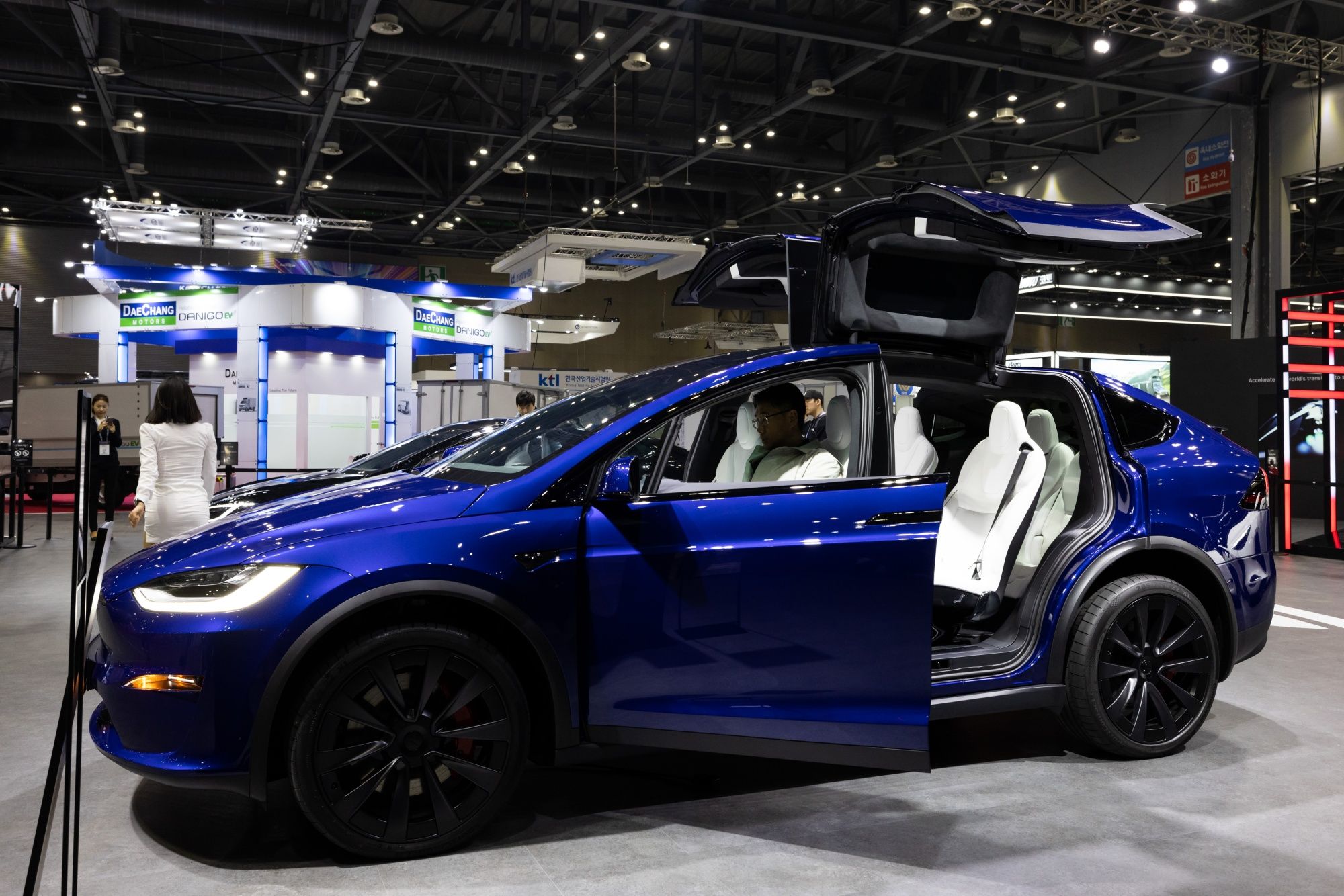
(Bloomberg) -- Tesla Inc. marked down all of its vehicles again in the US after price tweaks throughout the first quarter yielded an incremental sales gain.
The company discounted each version of its higher-volume Model 3 and Y electric vehicles by at least $1,000, and versions of its costlier Model S and X vehicles by $5,000. It also introduced a new base version of the Model Y starting at $49,990.
This is the second broad-based markdown for Tesla this year, following cuts across the lineup in mid-January.

Chief Executive Officer Elon Musk has said he's willing to sacrifice Tesla's profitability to keep growing in the face of rising interest rates and a possible recession. The company is in the rare position among EV makers of having big profit margins to work with, as incumbents including Ford Motor Co. and newer entrants like Rivian Automotive Inc. and Lucid Group Inc. struggle to make money at lower volumes.
After Tesla's first lineup-wide price cuts early this year, Musk said on a Jan. 25 earnings call that orders were running at almost twice the rate of production. But the company was unable to sustain that supply-demand dynamic: deliveries rose about 4% from the fourth quarter, and Tesla produced almost 18,000 more cars than it handed over to customers.
Despite a second round of discounts to the Model S and X in early March, Tesla delivered just 10,695 of those vehicles in the quarter, the lowest since the third quarter of 2021.

Following the latest changes, Tesla has now dropped the price of each of those vehicles by at least $20,000 and as much as $34,000 since the start of the year.
The US automaker also marked down vehicles in China earlier this year, triggering a price war in the world's largest new-energy vehicle market. It shipped a total of 88,869 vehicles from the Shanghai factory in March, according to preliminary data released earlier this week by China's Passenger Car Association.
A significant price differential remains for Tesla's vehicles in China, where a basic Model 3 starts at 229,900 yuan ($33,400) and the Model Y begins at 261,900 yuan ($38,086).
While Tesla continues to outpace other automakers in global EV sales, it's facing stiffer competition than ever before from China's BYD Co., with analysts at BloombergNEF expecting the Berkshire Hathaway Inc.-backed manufacturer to challenge for the No. 1 spot this year.
Tesla also needs to pick up the pace to keep growing at the rate investors are used to. Last year, the company fell short of its target for a 50% average annual increase in vehicle deliveries, expanding by 40%. Its growth rate slipped to 36% in the first quarter.
The Austin, Texas-based company will report earnings on April 19.
More stories like this are available on bloomberg.com
©2023 Bloomberg L.P.

-
The Economic Imperative: Analysing The Material Driving Force Behind India-Canada Strategic Reset

This economic complementarity is further reinforced by deep institutional investment ties and talent mobility, which form the bedrock of the bilateral framework.
-
Medicine Pricing: Where Must Profit Stop?
India must confront excessive margins, hidden incentives and regulatory gaps that threaten the integrity of medicine.
-
Why Amazon And Flipkart Are Struggling To Beat Meesho In India's Smaller Cities
With 274 million users and lowest-cost logistics, Meesho is defending its value commerce crown against giants like Amazon and Flipkart.
-
High US Salaries, No Green Card Certainty: The Financial Calculation Facing Indian H-1B Families
The suspension of PERM processing at eight technology employers does not cancel existing H-1B visas. What it does is force a question many Indian families have been avoiding: is the US salary worth tying your career and family plans to one employer?
-
Swiggy vs Eternal: Food Delivery's Two Rivals Are No Longer In The Same Race
Eternal is building a private AI assistant, dark.ai. Swiggy is still working out how to make Instamart pay, with an operating loss of Rs 895 crore in the July-September quarter while Blinkit stayed profitable.
-
Where You Live Shapes How You Get To Work | The Reason Why
Two-wheelers are the most popular way to get to work in India, accounting for nearly 43% of workplace commutes.
-
Unhedged Position: Can India See An Indonesia-Style Time Correction?
The Nifty is trading below levels it first clocked in 2024. Is there, then, as I have suggested in the headline, potential that the current time correction drags on painfully for the next three-five, even ten years?
-
Navigating Friction And Energy Realities: An Analysis Of Marco Rubio's October Visit To India
Occurring at a critical juncture marked by stalled trade negotiations and escalating geopolitical pressures over global energy supplies, the visit offers a profound window into modern US-India relations.
-
India Exports Capital. Why Not Export Trusteeship?
The big question, then, is whether India can build an institution that global borrowers, investors, banks, and lawyers can trust, even without an Indian connection.
-
France's Economy & Politics Are In Crisis | The Reason Why
Let's look at how the French economy and politics evolved under Nicolas Sarkozy, Franois Hollande and Emmanuel Macron.










