TerraUSD Backer Says Spent Reserves Trying To Salvage Dollar Peg
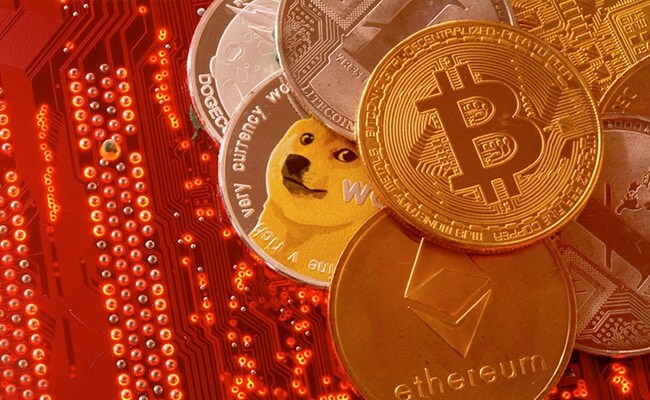
An affiliate of the company behind collapsed stablecoin TerraUSD on Monday said it had spent the bulk of its reserves trying to defend its dollar peg last week and would use what little remained to compensate some users who had lost out.
The token's crash last week sent cryptocurrencies tumbling, a slide that resumed on Monday, as bitcoin gave up the gains it had eked out over the weekend to trade just below $30,000.
Cryptocurrency markets were rocked by the spectacular collapse of TerraUSD, a so-called stablecoin which lost its 1:1 dollar peg. TerraUSD was trading around 5 cents at 1647 GMT on Monday, according to CoinGecko pricing.
Luna Foundation Guard (LFG), a Singapore-based non-profit organisation designed to maintain TerraUSD's price, had been building large reserves of cryptocurrencies - including over 80,000 bitcoin - to support the peg. The value of the reserves hit $4 billion on May 3, according to LFG data.
But LFG said in a series of tweets https://twitter.com/LFG_org/status/1526126719874109440? on Monday that it had spent the majority of its bitcoin last week in a failed attempt to prop up TerraUSD as it collapsed.
Now, LFG said, it would use what little reserves it had left to compensate remaining users of TerraUSD, starting with the smallest holders, though it had yet to decide the best method of doing so.
But the remaining coins in the reserve were worth just under $90 million on Monday, according to LFG's data.
Holders of the TerraUSD coin and a linked token, luna, collectively lost around $42 billion in the last week, according to blockchain analytics firm Elliptic.
"There seems to be little hope for those hoping that some of the reserves could be used to compensate users of the stablecoin - since so little of it remains," said Tom Robinson, chief scientist and co-founder at Elliptic.
"Of course we will wait to see whether LFG can provide proof to back up their statements."
Regulators Eye Crypto
The incident has drawn particular attention, including from financial regulators, to stablecoins and the role they play in the crypto system as a main medium for moving money between cryptocurrencies or for converting balances to fiat cash.
Bank of France Governor Francois Villeroy de Galhau told a conference that crypto assets could disrupt the international financial system if they were not regulated and made interoperable in a consistent and appropriate manner across jurisdictions.
He pointed to stablecoins, which he said were somewhat misnamed, as among the sources of risk.
Speaking separately, Fabio Panetta, member of the executive board of the European Central Bank, on Monday said stablecoins were vulnerable to runs.
Tether, the world's largest stablecoin, briefly lost its 1:1 peg on May 12 before recovering. Unlike TerraUSD, Tether is backed by reserves in traditional assets, according to its operating company.
On the same day, bitcoin dropped as far as $25,400, its lowest level since December 2020, but recovered to as high as $31,400 on Sunday.
Ether, the second-largest cryptocurrency, fell 6.1 per cent to around $2,000 on Monday.
Regulators elsewhere are also concerned. The U.S. Federal Reserve warned last week that stablecoins were vulnerable to investor runs because they were backed by assets that could lose value or become illiquid in times of market stress.

-
We May Need Another Tukaram Mundhe To Fight Air Pollution | The Reason Why

Developers may install basic measures such as sprinklers and green nets, resume work, and continue violating rules when this equipment stops working.
-
Extracting Value From Battery Scrap Could Be Challenging For India | The Reason Why
A discarded lithium-ion battery still contains valuable materials such as lithium, nickel and cobalt. These can be recovered and reused. When such batteries are crushed and shredded, they produce a dark powder called black mass.
-
One El Nino, India Can Handle. Two Could Break The Granary
India's grain stocks can absorb one bad year, but a second El Nino could drain the buffer in two to three years, economists say.
-
India's Troika Of Good Luck | Joining The Dots
As Jensen Huang's exit drags Nvidia down, a cooling AI trade and resilient earnings have revived investor interest in India. A likely RBI rate hike looms.
-
Talking Points This Week: Leadership Shock At Nvidia, Earnings Strength, And The Fog Over Hormuz
The Anthropic IPO pricing and first trading day, Nvidia's upcoming earnings, and any fresh signals from Iran will set the tone for the following week.
-
Signature Play: The Classic Cocktail Is Dead. Or Is It?
Classic cocktails are disappearing from India's cocktail menus. But they're still being ordered, taught to bartenders and borrowed from. So, who's really having the last drink?
-
A New Samvat Wishlist: Inclusive Prosperity And Human Development
India has strengthened its economic foundations through infrastructure, digital access and enterprise. Its next growth chapter must deepen productivity, create better livelihoods and widen participation in prosperity.
-
Love, Sex Aur Dhokha: The Audacious Plot To Spy On Jensen Huang
A Taipei dinner, a Singapore chip buyer and a suspected Chinese asset: inside the alleged spy operation that got close to NVIDIA's Jensen Huang.
-
Ten Things I Learnt This Samvat
Patience can be a trap. Cheap stocks can stay cheap. Leverage can wipe you out. What did Samvat 2082 teach us? Niraj Shah writes on 10 lessons from the year gone by.
-
Talking Points This Week: Tech Nerves, FII Buying, And A Faraway Banking Shock
The global markets are not shining this Diwali. The exception in the large markets is, India.









