"Telecom Companies Taking A Ride Without Paying For The Horse": Supreme Court On AGR Dues
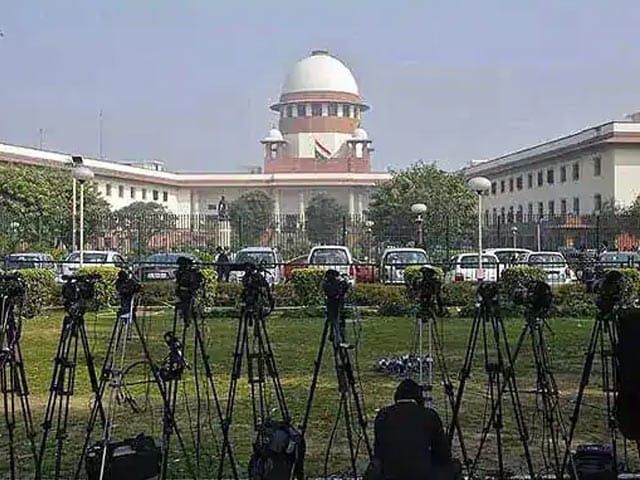
Expressing concern over non-payment of the Adjusted Gross Revenue (AGR) related dues by the telecom companies which are under insolvency, the Supreme Court on Thursday said "without paying for the horse, telcos are taking a ride". The top court said it is “extremely worried” that almost the entire AGR dues will be “wiped out” in the IBC process. The top court wondered can a liability like AGR related dues be wound up, under the guise of selling spectrum under the Insolvency and Bankruptcy Code (IBC).
A bench of Justices Arun Mishra, S Abdul Nazeer and M R Shah said spectrum trading is altogether different from sale of spectrum under the IBC.
"Without paying for the horse, telecos are taking a ride. Unless dues are paid, nobody can start using the spectrum. Can a liability like AGR be wound up, under the guise of selling spectrum under the IBC," the bench said. It further observed, "We are extremely worried that almost entire AGR dues will be wiped out in the IBC process".
The bench said after the sale of spectrum, the new user will extinguish any pending demand against the spectrum in question. During the hearing, senior advocate Ravi Kadam, appearing for Aircel Monitoring Committee, told the bench that from April 8, 2016, there have been eight instances of spectrum trading with Bharti Airtel.
He said that the Department of Telecom (DOT) had approved the sale and had raised demand for the dues.
Kadam said there are no instance of spectrum sharing by Aircel with any operator.
The bench asked Kadam what has Aircel going into resolution proceedings got to do with the AGR dues. It questioned whether Airtel has paid AGR dues for spectrum bought from Aircel.
Senior advocate Kapil Sibal, appearing for Airtel, said the company has paid all relevant dues with respect to spectrum trading and have paid Rs 18,004 crore towards AGR dues.
The bench said it wants details from DOT of spectrum allocated to Reliance Communication (RCom) and Aircel since 1999. It said the court want relevant details of all instances of spectrum sharing and asked whether Aircel is looking to sell spectrum under the IBC.
Kadam said that right to use spectrum is an asset and to keep the company running, this right will be sold on approval of the resolution plan. He said the resolution process has been concluded, UV Asset Reconstruction Company (UVARC's) plan has been approved and dues of the DOT has been recognized by the Committee Of Creditors (CoC) .
Kadam said that right to use spectrum is an intangible good under IBC that can be sold and license agreement recognises right to use it as an asset. He said the company has the power to transfer the right to use the spectrum.
The hearing remained inconclusive and would continue on Friday.
On August 14, the top court had sought the details of spectrum sharing pact between RComm and Reliance Jio and said as to why the company using the spectrum of the other firm cannot be asked to pay the AGR related dues to the government. The Centre had earlier told the top court there was a difference of opinion between two of its ministers (DOT and the Ministry of Corporate Affairs) on the issue of sale of spectrum during insolvency proceedings.
Earlier, the top court had made it clear it will not hear "even for a second" the arguments on reassessment or re-calculation of the AGR related dues of telecom companies which run into about Rs 1.6 lakh crore.
The top court had in October 2019 delivered the verdict on the AGR issue for calculating government dues of telecom companies such as licence fee and spectrum usage charges.
After the top court had rejected pleas by Vodafone Idea, Bharti Airtel and Tata Teleservices seeking review of the judgement which widened the definition of AGR by including non-telecom revenues, the DoT had in March moved a plea seeking staggered payment over 20 years.

-
Getting To Work Costs Women More | The Reason Why

It is not just about women paying more than men. It is about women paying much more in cities than in villages.
-
AI Bias In Investing Cannot Be Eliminated, But It Can Be Governed
Framing is a particularly important example as identical financial information presented in terms of gains rather than losses can lead an LLM to reach a different assessment.
-
Joining The Dots | Dark Skies, Steady Diya: Why Hope Holds This Diwali
With war, a weak rupee and foreign outflows weighing on sentiment, policymakers at the NDTV World Summit and market veterans at NDTV Profit Ignite: Diwali Edition offered the same advice: stay invested and filter out the noise.
-
The Curious Case of Equitas Small Finance Bank And A CEO Who Quit For Stock
PN Vasudevan believes persistent investor concerns over a perceived conflict of interest had become a governance overhang on Equitas Small Finance Bank's stock, even as the lender improved profitability and asset quality.
-
Talking Points This Week: AI Cash Burn, A Tiger Comeback And An India That Still Finds Its Own Path
India is not immune to higher oil or tighter global liquidity, yet its earnings base is broader, its domestic policy levers are still available.
-
Foreign Investors Own Half Of HDFC Bank and ICICI Bank. An LTCG Cut Could Matter Most Here
Foreign portfolio investors have US$115 billion parked in HDFC Bank, ICICI Bank. If the government cuts long-term capital gains tax, Jefferies says returning foreign money could land here first.
-
'Never Seen This Level Of Negativity': Sandeep Tandon Says The Next Rally May Be Closer Than You Think
Veteran investor Sandeep Tandon says foreign selling is easing, large-caps are due a comeback and mid-caps are crowded, while he turns positive on gold, power and pharma this Diwali.
-
Indians Stay With Family, Not In Hotels | The Reason Why
India still lacks enough clean, reliable and affordable hotels for budget-conscious travellers.
-
The Economic Imperative: Analysing The Material Driving Force Behind India-Canada Strategic Reset
This economic complementarity is further reinforced by deep institutional investment ties and talent mobility, which form the bedrock of the bilateral framework.
-
Medicine Pricing: Where Must Profit Stop?
India must confront excessive margins, hidden incentives and regulatory gaps that threaten the integrity of medicine.










