TCS Chief Natarajan Chandrasekaran Is New Tata Sons Chairman
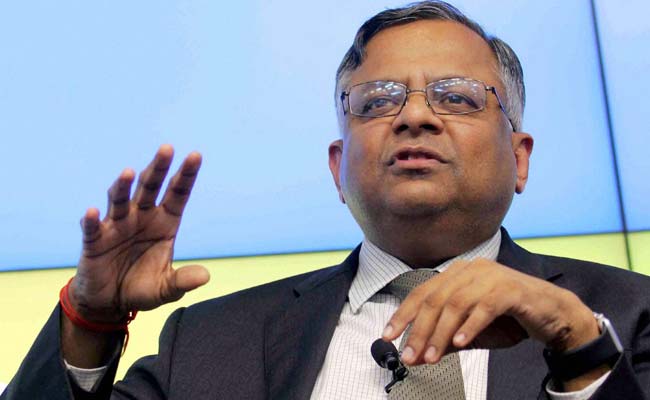
Natarajan Chandrasekaran, the CEO and Managing Director of Tata Consultancy Services (TCS), will be the new chairman of Tata Sons, the holding company that controls the $100 billion Tata conglomerate. Mr Chandrasekaran will be the first non-Parsi chairman of Tata Sons. He will take charge from February 21, 2017.
"At the Tata group, we are at an inflection point. I am aware that this role comes with huge responsibilities. It will be my endeavour to help progress the group with the ethos, ethics and values that the Tata group has been built on," Mr Chandrasekaran said in a statement.
Mr Chandrasekaran, 53, has been chief executive of TCS, India's biggest outsourcer, since 2009. He was appointed as a director on the board of Tata Sons days after Cyrus Mistry was removed as chairman of the group in October. He takes over from Ratan Tata, who returned as interim chairman of the group following Cyrus Mistry's ouster. Ratan Tata had headed the Tata group for 21 years before handing the reins over to Mr Mistry in 2012.
"Mr Chandrasekaran has demonstrated exemplary leadership as the Chief Executive Officer and Managing Director of Tata Consultancy Services. We believe he will now inspire the entire Tata group to realise its potential acting as leaders in their respective businesses, always in keeping with our value system and ethics and adhering with the practices of the Tata group which have stood it in good stead," board of Tata Sons said in a statement.
Meanwhile, TCS has elevated Rajesh Gopinathan, the current chief finance officer, as the new chief executive.
The announcement was made after a board meeting of Tata Sons held at the group's headquarters Bombay House. Earlier in the day TCS announced its third quarter results, reporting a net profit of Rs 6,778 crore, beating the Street's estimates.
Under Mr Chandrasekaran's leadership, the revenues of TCS grew over three times from Rs 30,029 crore in 2009-10 to over Rs 1 lakh crore in 2015-16. The crown jewel of the Tata group also remains the most valuable company in India with a market capitalisation of nearly Rs 4.2 lakh crore.
Mr Chandrasekaran joined TCS in 1987 after completing a Masters in Computer Applications from the Regional Engineering College, Trichy in Tamil Nadu.
Tata Sons had on October 24 removed Cyrus Mistry as chairman in a surprise move and named group patriarch Ratan Tata as interim chief, also setting up a selection committee to find the next chairman. The selection committee included Ratan Tata, Venu Srinivasan, Amit Chandra, Ronen Sen and Lord Kumar Bhattacharyya. All of them, except Mr Bhattacharya, are on the board of Tata Sons.
Mr Mistry's ouster has been followed by a bitter public spat between him and the group. Mr Mistry, who is still a director on the Tata Sons board, has contested his removal as chairman in the National Company Law Tribunal (NCLT), a quasi-judicial body that deals with corporate grievances in India.
Tata Sons has called an extraordinary general meeting on February 6 to remove Mr Mistry from its board. The Tatas have filed a legal notice against Mr Mistry, accusing him of breaching confidentiality rules, and alleging he that he shared "confidential data, business strategies, financial information" related to Tata Sons.
Mr Mistry has alleged breach of governance within the Tata group, a charge that Tata Sons has denied saying it has followed the highest standards of corporate governance.

-
We May Need Another Tukaram Mundhe To Fight Air Pollution | The Reason Why

Developers may install basic measures such as sprinklers and green nets, resume work, and continue violating rules when this equipment stops working.
-
Extracting Value From Battery Scrap Could Be Challenging For India | The Reason Why
A discarded lithium-ion battery still contains valuable materials such as lithium, nickel and cobalt. These can be recovered and reused. When such batteries are crushed and shredded, they produce a dark powder called black mass.
-
One El Nino, India Can Handle. Two Could Break The Granary
India's grain stocks can absorb one bad year, but a second El Nino could drain the buffer in two to three years, economists say.
-
India's Troika Of Good Luck | Joining The Dots
As Jensen Huang's exit drags Nvidia down, a cooling AI trade and resilient earnings have revived investor interest in India. A likely RBI rate hike looms.
-
Talking Points This Week: Leadership Shock At Nvidia, Earnings Strength, And The Fog Over Hormuz
The Anthropic IPO pricing and first trading day, Nvidia's upcoming earnings, and any fresh signals from Iran will set the tone for the following week.
-
Signature Play: The Classic Cocktail Is Dead. Or Is It?
Classic cocktails are disappearing from India's cocktail menus. But they're still being ordered, taught to bartenders and borrowed from. So, who's really having the last drink?
-
A New Samvat Wishlist: Inclusive Prosperity And Human Development
India has strengthened its economic foundations through infrastructure, digital access and enterprise. Its next growth chapter must deepen productivity, create better livelihoods and widen participation in prosperity.
-
Love, Sex Aur Dhokha: The Audacious Plot To Spy On Jensen Huang
A Taipei dinner, a Singapore chip buyer and a suspected Chinese asset: inside the alleged spy operation that got close to NVIDIA's Jensen Huang.
-
Ten Things I Learnt This Samvat
Patience can be a trap. Cheap stocks can stay cheap. Leverage can wipe you out. What did Samvat 2082 teach us? Niraj Shah writes on 10 lessons from the year gone by.
-
Talking Points This Week: Tech Nerves, FII Buying, And A Faraway Banking Shock
The global markets are not shining this Diwali. The exception in the large markets is, India.









