TCS CEO Says $10-Billion Deals In Two Quarters Is Only The Start
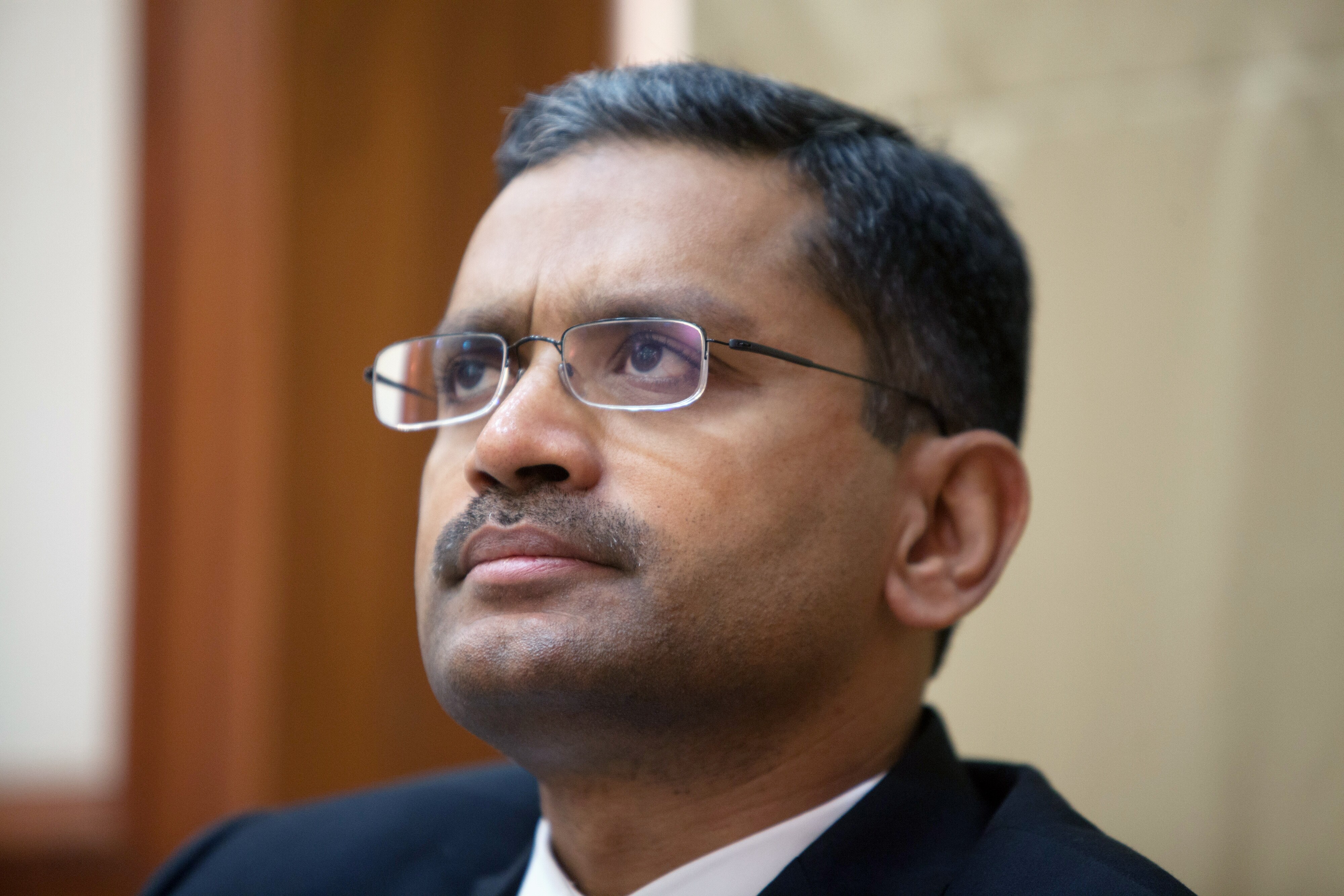
Tata Consultancy Services Ltd. sealed new deals worth $4.9 billion each in the last two quarters as India's largest software services provider's investment in automation to cloud computing starts to pay off. Rajesh Gopinathan, its managing director and chief executive officer, said it's just the beginning.
“If you look at any of the contracts that have been spoken about, almost all of them bet on a very core technology transformation,” Gopinathan told BloombergQuint in an exclusive interview. “That's what is leading to large contract wins. I would think bulk of it is yet to unfold.”
TCS, which began its digital foray with small discretionary orders, has now entered a phase where the demand has soared, said Gopinathan who succeeded N Chandrasekaran after he took over as group parent Tata Sons Ltd.'s chairman in February last year. Clients will allocate a larger portion of their spend to technology five years from now, he said.
Independent estimates suggest growth remaining steady. Tech spending is expected to rise 3.2 percent next year, according to an October report by Gartner. And that will be led by enterprise software and software services, it said. IT services will be a key driver as the market is forecast to reach $1 trillion, a yearly increase of 4.7 percent, despite the threat of a slowdown and pressures to cut spending, it said.
Gopinathan said TCS, the biggest Indian company by market value, realised the potential of digital services early. The information technology company anticipated the scale digital services will reach and prepared for it in advance, he said. “There was skepticism as to whether this was the right thing to do but our conviction came from the positive feedback from clients.”
Higher adoption from clients ensured that the company could move faster from the pilot stage to the final product, he said. Now, large orders have started flowing in.
In December, the company won a 10-year $2.25-billion deal from AC Nielson that, apart from the regular IT services, includes analytics and financial planning. It won a $2.5 billion deal from U.S. insurance company Transamerica in January, besides large-sized deals from Scottish Widows, M&F Prudential and Mark & Spencer to provide digital services. Such services now account for 28 percent of its total revenue.
Growth Back In BFSI
TCS is the largest provider of back-end services to the banking and financial services industry, Gopinathan said. After several quarters of slowdown, its mainstay vertical continued to rebound for the second straight quarter in the three months ended September.
IT spending in financial services is back, he said. From spending on technology in back offices, clients are now integrating automation, artificial intelligence and cloud computing with banking and other such services, according to Gopinathan. As a result, technology spends are now four to five times of what they were earlier, he said.
Such technologies also offer lasting returns, he said. “The cost per unit keeps on falling. It initially falls because of usage of tools and later falls because of automation,” he said. But that won't impact TCS' revenue. “Even if the actual cost of unit falls, consumption increases many times, thereby the increasing the value.”
Visa Woes
Indian software services providers are expected to face visa curbs in the U.S. as the Trump administration changes its policy to make them hire local workers instead of flying engineers from India. TCS already is facing a trial in the U.S. over claims of racial discrimination by American workers, which alleged they were 13 times more likely to be fired if they are not South Asians, Bloomberg reported. The company had denied any bias.
Gopinathan said Indian companies send on-site engineers because of the skill gap in the developed markets is phenomenally high. “In the U.S., the difference between skilled technological jobs and the availability is almost one million people,” he said. “If you try to hire in that market and there's a supply constraint, every single person who is trying to hire will face such issues.”
The U.S. is expected to review its H1-B visa policy in 2019. There is speculation that it may do away with the current lottery system for granting visas, allow only candidates with master's degree from U.S. universities and do away with the H-4 visas that allow spouses of H1-B holders to work in America.
“We have an industry leadership position and hire the highest number of people in most of the markets we operate in,” Gopinathan said. “Any reform that reduces net availability [of talent] will be detrimental to all participants.”
Watch the interaction with Rajesh Gopinathan here:

-
Getting To Work Costs Women More | The Reason Why

It is not just about women paying more than men. It is about women paying much more in cities than in villages.
-
AI Bias In Investing Cannot Be Eliminated, But It Can Be Governed
Framing is a particularly important example as identical financial information presented in terms of gains rather than losses can lead an LLM to reach a different assessment.
-
Joining The Dots | Dark Skies, Steady Diya: Why Hope Holds This Diwali
With war, a weak rupee and foreign outflows weighing on sentiment, policymakers at the NDTV World Summit and market veterans at NDTV Profit Ignite: Diwali Edition offered the same advice: stay invested and filter out the noise.
-
The Curious Case of Equitas Small Finance Bank And A CEO Who Quit For Stock
PN Vasudevan believes persistent investor concerns over a perceived conflict of interest had become a governance overhang on Equitas Small Finance Bank's stock, even as the lender improved profitability and asset quality.
-
Talking Points This Week: AI Cash Burn, A Tiger Comeback And An India That Still Finds Its Own Path
India is not immune to higher oil or tighter global liquidity, yet its earnings base is broader, its domestic policy levers are still available.
-
Foreign Investors Own Half Of HDFC Bank and ICICI Bank. An LTCG Cut Could Matter Most Here
Foreign portfolio investors have US$115 billion parked in HDFC Bank, ICICI Bank. If the government cuts long-term capital gains tax, Jefferies says returning foreign money could land here first.
-
'Never Seen This Level Of Negativity': Sandeep Tandon Says The Next Rally May Be Closer Than You Think
Veteran investor Sandeep Tandon says foreign selling is easing, large-caps are due a comeback and mid-caps are crowded, while he turns positive on gold, power and pharma this Diwali.
-
Indians Stay With Family, Not In Hotels | The Reason Why
India still lacks enough clean, reliable and affordable hotels for budget-conscious travellers.
-
The Economic Imperative: Analysing The Material Driving Force Behind India-Canada Strategic Reset
This economic complementarity is further reinforced by deep institutional investment ties and talent mobility, which form the bedrock of the bilateral framework.
-
Medicine Pricing: Where Must Profit Stop?
India must confront excessive margins, hidden incentives and regulatory gaps that threaten the integrity of medicine.










