Taxman To Go After Illegal Miners To Check GST Evasion
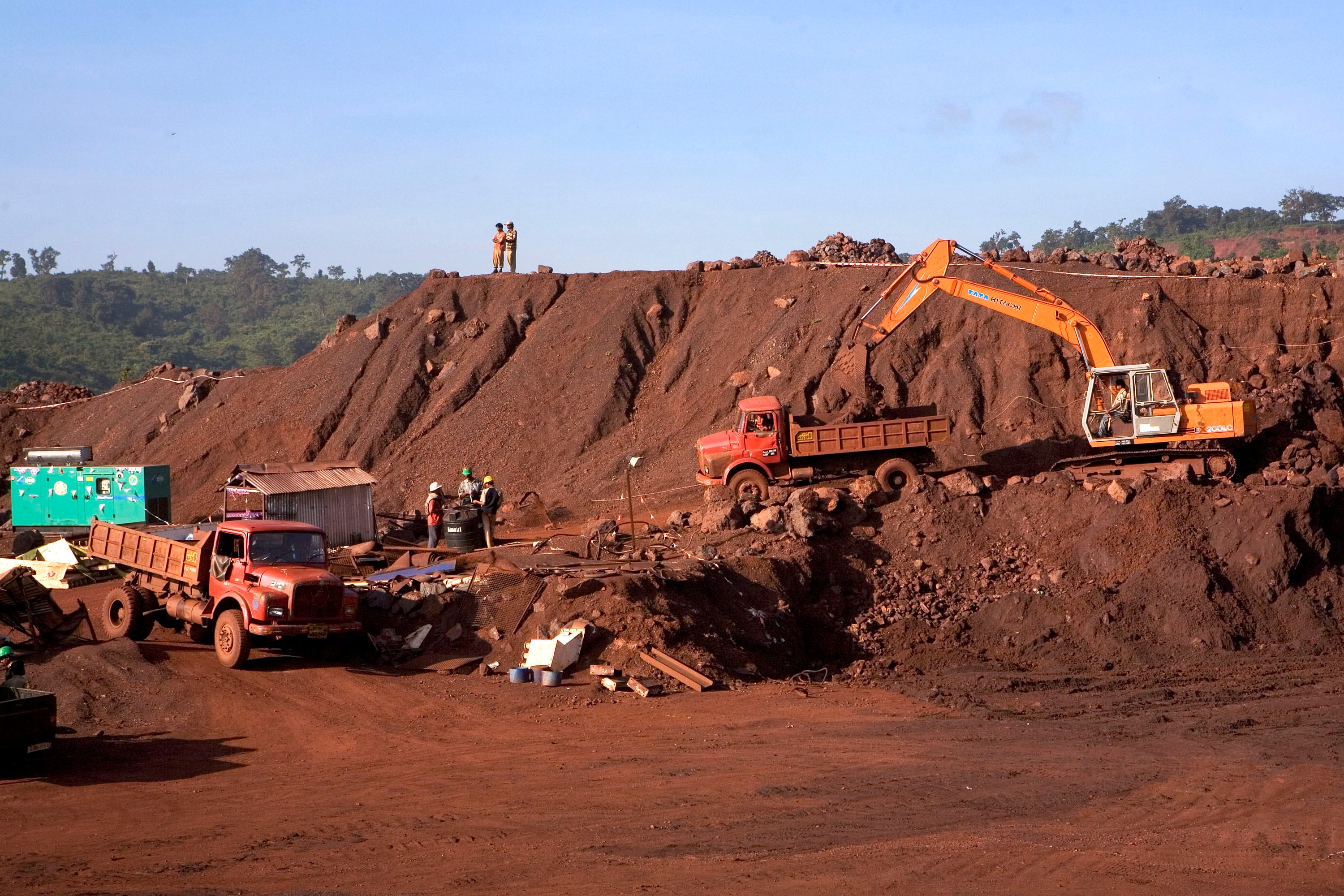
The tax authorities have partnered with a monitoring committee that's tasked with the sale of illegal iron ore seized in Karnataka to check indirect tax compliance in transaction of the commodity.
The Central Board of Indirect Taxes and Customs plans to verify whether the export, purchase or sale of illegally mined minerals evaded payment of central excise, customs duty and service tax in the pre-goods and services tax regime, a senior government official told BloombergQuint on the condition of anonymity.
The action relates to a case filed in the Supreme Court in 2009 to curb illegal iron ore mining in Karnataka. The central government isn't a party to the case but is examining the matter since it involves revenue related to the Goods and Services Act, said the official who isn't authorised to speak to the media. The tax department is also considering to become a party to the ongoing case in the Supreme Court, the official said.
After a writ petition was filed in the apex court in 2009 seeking ban on illegal mining of iron ore, the court referred the matter to Central Empowered Committee to redress grievances over steps taken by the government. The CEC recommended forming a monitoring committee to supervise the sale of illegally extracted iron ore, nearly 29 million metric tonnes of which was seized from 2006-10.
According to Karnataka Lokayukta—an anti-corruption ombudsman—the value of the illegally extracted iron ore was Rs 12,228 crore, based on the average price of the commodity and foreign exchange value over the period.
The tax department wants to examine indirect tax implications on transactions, such as:
- Collecting customs duty, central excise and service taxes on the sale, export or purchase of illegally mined iron ore.
- Collecting customs duty, central excise and sales taxes on the export, sale and purchase of legally mined minerals made through monitoring committee in the pre-GST era.
- Whether the customs duty and GST were collected on export, purchase or sale of legally mined minerals made through monitoring committee in the GST regime.
In the pre-GST regime:
- Central excise was levied on concentrated iron ore.
- Service tax on payments made for leasing rights.
- Customs duty on export of iron ore.
The tax department wants to understand these transactions and verify if the tax liabilities have been discharged, said the official cited earlier.
The Central Board of Indirect Taxes and Customs may ask its intelligence arm—Directorate General of Goods and Services Tax Intelligence—to approach the Supreme Court to verify indirect tax compliance, the official said.
The official said that it would report compliance and tax collected, if any, in such transactions. The Department of Revenue Intelligence may be asked to check collection of customs duty for illegal iron ore that was exported.
Firms May Be Penalised For Illegal Extraction
The tax authorities also plan to levy a penalty of 100 percent of the value of illegally mined iron ore on which taxes were evaded, said the official cited earlier. The tax department can impose penalty on tax evaded in past transactions, but it can't raise a tax demand after five years of the relevant date, the official said.
This would be on companies that extracted iron ore beyond their leased areas, where taxes on ore extracted from illegally encroached area would have been evaded. During 2006-2010, there was unchecked export of illegally extracted iron ore from border areas of Andhra Pradesh and Karnataka, which would have escaped the payment of customs duty.
According to Lokayukta's report, Vedanta-owned Sesa Goa and state-run KIOCL Ltd., among others, were found exporting iron ore after issue of permits was banned.

-
Getting To Work Costs Women More | The Reason Why

It is not just about women paying more than men. It is about women paying much more in cities than in villages.
-
AI Bias In Investing Cannot Be Eliminated, But It Can Be Governed
Framing is a particularly important example as identical financial information presented in terms of gains rather than losses can lead an LLM to reach a different assessment.
-
Joining The Dots | Dark Skies, Steady Diya: Why Hope Holds This Diwali
With war, a weak rupee and foreign outflows weighing on sentiment, policymakers at the NDTV World Summit and market veterans at NDTV Profit Ignite: Diwali Edition offered the same advice: stay invested and filter out the noise.
-
The Curious Case of Equitas Small Finance Bank And A CEO Who Quit For Stock
PN Vasudevan believes persistent investor concerns over a perceived conflict of interest had become a governance overhang on Equitas Small Finance Bank's stock, even as the lender improved profitability and asset quality.
-
Talking Points This Week: AI Cash Burn, A Tiger Comeback And An India That Still Finds Its Own Path
India is not immune to higher oil or tighter global liquidity, yet its earnings base is broader, its domestic policy levers are still available.
-
Foreign Investors Own Half Of HDFC Bank and ICICI Bank. An LTCG Cut Could Matter Most Here
Foreign portfolio investors have US$115 billion parked in HDFC Bank, ICICI Bank. If the government cuts long-term capital gains tax, Jefferies says returning foreign money could land here first.
-
'Never Seen This Level Of Negativity': Sandeep Tandon Says The Next Rally May Be Closer Than You Think
Veteran investor Sandeep Tandon says foreign selling is easing, large-caps are due a comeback and mid-caps are crowded, while he turns positive on gold, power and pharma this Diwali.
-
Indians Stay With Family, Not In Hotels | The Reason Why
India still lacks enough clean, reliable and affordable hotels for budget-conscious travellers.
-
The Economic Imperative: Analysing The Material Driving Force Behind India-Canada Strategic Reset
This economic complementarity is further reinforced by deep institutional investment ties and talent mobility, which form the bedrock of the bilateral framework.
-
Medicine Pricing: Where Must Profit Stop?
India must confront excessive margins, hidden incentives and regulatory gaps that threaten the integrity of medicine.










