Tax Rates Hurdle For Rolling Out Best-Selling Cars In India: Honda
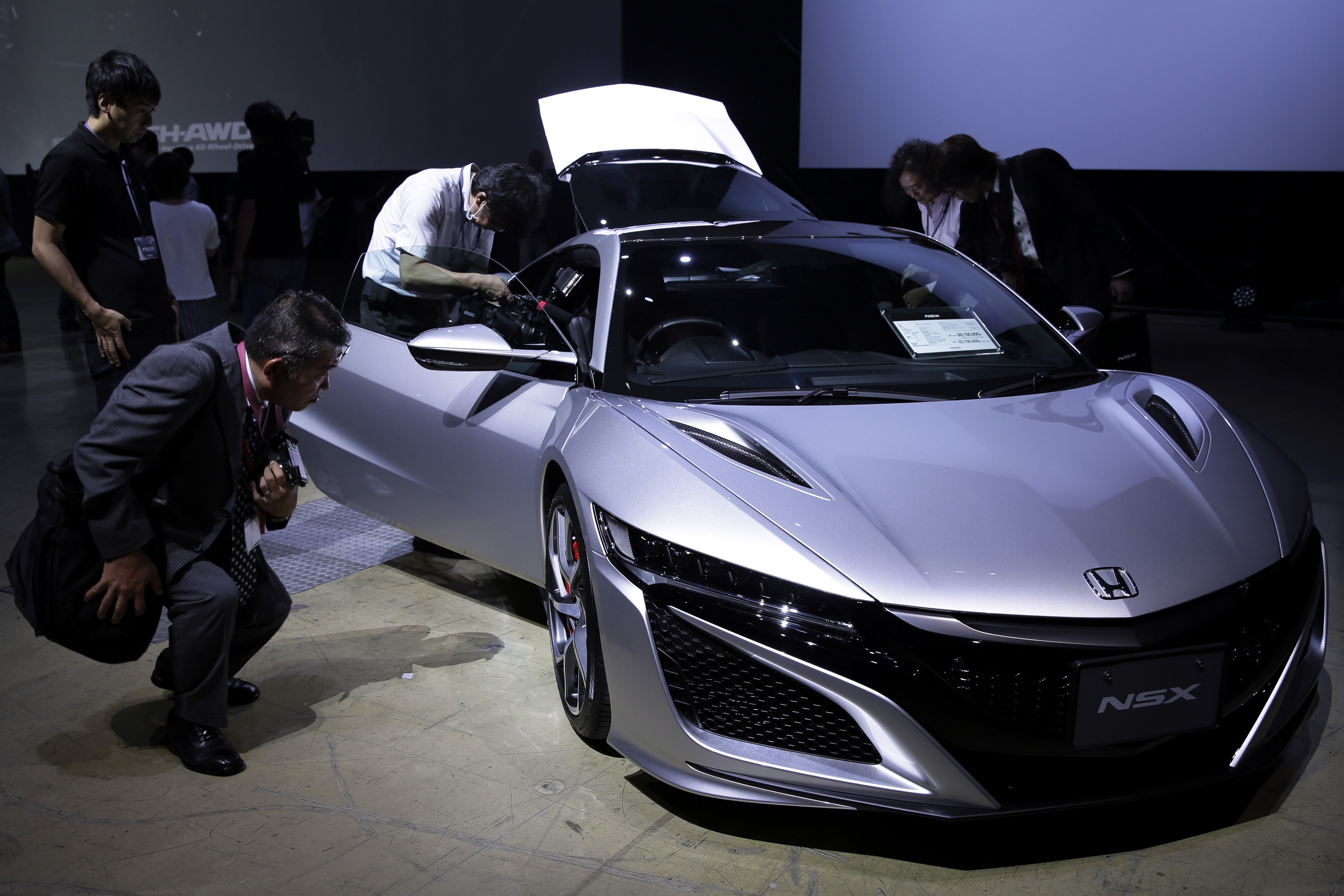
Calling for rationalisation of differential tax structures in the Indian automobile industry, Japanese auto major Honda said the “unique” system has led to skewed demand for small cars and prevented introduction of best-selling global models in the country.
The company's Indian arm -- Honda Cars India Ltd. (HCIL)-- expressed concern over lack of clarity on GST rate and the time for its implementation, saying such uncertainties make it difficult to plan production in advance.
“A lot of cars are sold in India but variety is not there. Car models which are selling are quite limited. It may be because of the unique tax structure, maybe it's the government policy to promote small cars,” HCIL President and CEO, Yoichiro Ueno said.
He further said tax differentiation in Indian auto industry is huge when compared to other major markets. As a result, Ueno said, customers are offered a limited model line-up, as bringing globally successful models to India are not feasible due to competitive pricing pressure.
“Because of that unique restriction, it is difficult. If the government can moderate the differentiation, automobile manufacturers can implement more variety of models which will benefit customers,” he added.
Citing Honda's own example, he said, globally the company's top four best-selling models are Jazz, Accord, Civic and CRV but the company is selling only Jazz and CRV in India.
“Even in CRV, we are selling a very small number,” he said.
The auto industry has four different slabs of excise duty based on dimensions and engine capacity. Small cars that are less than four meters in length attract excise duty of 12.5 percent, while those longer than four meters but with engine of less than 1,500 cc capacity attract a duty of 24 percent.
Further, vehicles with engine capacity of more than 1,500 cc are charged an excise duty of 27 percent while those with ground clearance of more than 170 millimeter attract an excise duty of 30 percent.
Ueno said that with crash test set to become mandatory by next year, from a safety point and customer comfort, there was a need to take a relook at the excise benefit given to small cars of less than four metre length.
“To be safe in crash test, the length of vehicle is a key factor. The longer the car, the safer it is. So in small cars, you have to compromise the cabin space to be safer in crash,” he added.
On GST, Ueno said the move to simplify overall tax structure is a welcome move which will benefit customers and manufacturers.
However, he said while details are awaited, there were a few concerns.
When asked what these concerns were, he said the rate isn't clear as yet and so is the timing for implementation which makes it “difficult for us to plan production”.
Bullish on the Indian auto market, Ueno said the country, which is the fifth largest global market after U.S., China, Japan and Germany last year, is set to become fourth largest this year surpassing Germany.
“India is growing the fastest among the top markets,” he added.
On Honda's performance in India, he admitted it has been below expectations as the company has been trying to clear high inventory at dealerships.
“Last year, we had a bit more challenging target and our wholesale was bit more inflated than retail sales. This year, we have decided to correct that. So our wholesale is less than retail this time but we are optimistic our sales will grow,” Ueno said.
Besides, the shift in demand from diesel to petrol has also resulted in the company having to adjust its production which also affected sales.
It has also affected the company's costing structure as the amortisation for diesel engine investment was based on certain volume, which has changed due to the shift in demand pattern, he added.

-
We May Need Another Tukaram Mundhe To Fight Air Pollution | The Reason Why

Developers may install basic measures such as sprinklers and green nets, resume work, and continue violating rules when this equipment stops working.
-
Extracting Value From Battery Scrap Could Be Challenging For India | The Reason Why
A discarded lithium-ion battery still contains valuable materials such as lithium, nickel and cobalt. These can be recovered and reused. When such batteries are crushed and shredded, they produce a dark powder called black mass.
-
One El Nino, India Can Handle. Two Could Break The Granary
India's grain stocks can absorb one bad year, but a second El Nino could drain the buffer in two to three years, economists say.
-
India's Troika Of Good Luck | Joining The Dots
As Jensen Huang's exit drags Nvidia down, a cooling AI trade and resilient earnings have revived investor interest in India. A likely RBI rate hike looms.
-
Talking Points This Week: Leadership Shock At Nvidia, Earnings Strength, And The Fog Over Hormuz
The Anthropic IPO pricing and first trading day, Nvidia's upcoming earnings, and any fresh signals from Iran will set the tone for the following week.
-
Signature Play: The Classic Cocktail Is Dead. Or Is It?
Classic cocktails are disappearing from India's cocktail menus. But they're still being ordered, taught to bartenders and borrowed from. So, who's really having the last drink?
-
A New Samvat Wishlist: Inclusive Prosperity And Human Development
India has strengthened its economic foundations through infrastructure, digital access and enterprise. Its next growth chapter must deepen productivity, create better livelihoods and widen participation in prosperity.
-
Love, Sex Aur Dhokha: The Audacious Plot To Spy On Jensen Huang
A Taipei dinner, a Singapore chip buyer and a suspected Chinese asset: inside the alleged spy operation that got close to NVIDIA's Jensen Huang.
-
Ten Things I Learnt This Samvat
Patience can be a trap. Cheap stocks can stay cheap. Leverage can wipe you out. What did Samvat 2082 teach us? Niraj Shah writes on 10 lessons from the year gone by.
-
Talking Points This Week: Tech Nerves, FII Buying, And A Faraway Banking Shock
The global markets are not shining this Diwali. The exception in the large markets is, India.









