Tax Department Not To Hound Small Depositors: Arun Jaitley
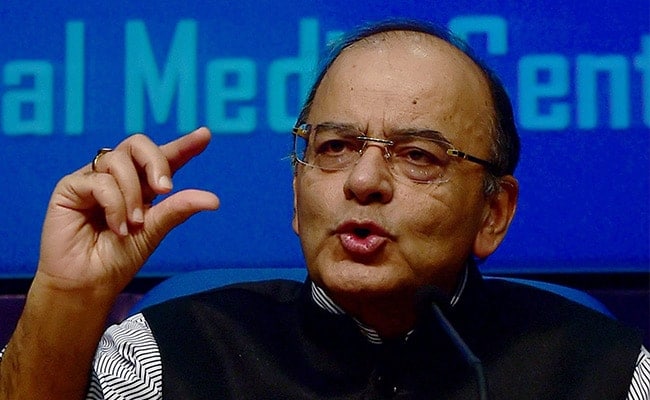
New Delhi: Assuring people that taxman will not hound those making small deposits in scrapped Rs 500/1,000 currency, Finance Minister Arun Jaitley today advised them not to throng banks as there is enough time to exchange the junked notes.
He said however that those depositing large amounts of unaccounted money will have to face the consequences under tax laws, which provide for tax and a 200 per cent penalty.
"With regard to people making small deposits, nobody will face any question or harassment of any kind. People who have small amount of cash at home for exigencies and emergencies, they can deposit that in their account. And the revenue department is not going to take notice of small depositors," Mr Jaitley said.
He added that deposits within the tax exempted limit can always be made within the banking system without any questions being asked.
"It's only people with large amounts of undisclosed monies who will have to face the consequences under the tax laws," Mr Jaitley said at the Economic Editors' conference.
Revenue Secretary Hasmukh Adhia said yesterday that only cash deposits of over Rs 2.5 lakh in bank accounts will be scrutinised by the tax department and in case of mismatch with I-T returns, tax plus 200 per cent penalty would be levied.
The government has allowed citizens to deposit in their bank accounts old currency of Rs 500 and Rs 1,000, which has been declared invalid in the country's biggest crackdown on black money, corruption and counterfeit notes, between November 10 and December 30.
On whether the demonetisation of Rs 500/1000 notes will help weed out black money, Mr Jaitley said this is not an isolated initiative and the decision has to be seen in the backdrop of various steps being taken including GST roll out.
"You will have the currency squeeze that will take place because a lot of static currency is not going to come back into the market. You have the GST which will be implemented, which is a far more effective system where tax evasion will be much lower and compliance will be much higher. You have parallel movement to rationalise your direct tax rate," he said.
Mr Jaitley said the collective impact of these steps will act as a great disincentive for black money hoarders. "Whether that will be totally eliminated in future that I cannot say today, but certainly it would be disincentivised".
Observing that temporary hardship is no reason to perpetuate a system where black money prospers, he said people should be prepared for a "temporary short-term hardship in order to have a far cleaner and better system for the future".
He said RBI and banks are taking all steps necessary to ensure that minimum inconvenience is faced by people while trying to ensure that at the earliest, the requisite currency is available.
"We do believe that there is no need to rush in the initial days because people have a lot of time till December 30. Therefore, the more the deposits and exchange are spread out, the more will be the convenience to people itself," he said.
There will be a few days of inadequacies of currencies and some impact on local purchases, but in the medium and long run, the overall impact of the recent steps that we have taken on the economy will be positive, Mr Jaitley said.
"In short run it (consumption) could (be affected). Eventually a very large part of this currency which is being removed was also lying static and therefore, once over the next few weeks replacement takes place, the current level of consumption will have to gradually come back," he said.
When asked banks' capital needs would come down with spurt in deposits, Mr Jaitley said: "They will still need money for recapitalisation, but obviously the kind of resource available with the banks would increase".
(This story has not been edited by NDTV staff and is auto-generated from a syndicated feed.)

-
Indians Are Travelling, But Not Every Journey Is A Holiday | The Week In Whys

Pilgrims, patients and working women are the real travellers, and the system hasn't quite caught up with them.
-
Getting To Work Costs Women More | The Reason Why
It is not just about women paying more than men. It is about women paying much more in cities than in villages.
-
AI Bias In Investing Cannot Be Eliminated, But It Can Be Governed
Framing is a particularly important example as identical financial information presented in terms of gains rather than losses can lead an LLM to reach a different assessment.
-
Joining The Dots | Dark Skies, Steady Diya: Why Hope Holds This Diwali
With war, a weak rupee and foreign outflows weighing on sentiment, policymakers at the NDTV World Summit and market veterans at NDTV Profit Ignite: Diwali Edition offered the same advice: stay invested and filter out the noise.
-
The Curious Case of Equitas Small Finance Bank And A CEO Who Quit For Stock
PN Vasudevan believes persistent investor concerns over a perceived conflict of interest had become a governance overhang on Equitas Small Finance Bank's stock, even as the lender improved profitability and asset quality.
-
Talking Points This Week: AI Cash Burn, A Tiger Comeback And An India That Still Finds Its Own Path
India is not immune to higher oil or tighter global liquidity, yet its earnings base is broader, its domestic policy levers are still available.
-
Foreign Investors Own Half Of HDFC Bank and ICICI Bank. An LTCG Cut Could Matter Most Here
Foreign portfolio investors have US$115 billion parked in HDFC Bank, ICICI Bank. If the government cuts long-term capital gains tax, Jefferies says returning foreign money could land here first.
-
'Never Seen This Level Of Negativity': Sandeep Tandon Says The Next Rally May Be Closer Than You Think
Veteran investor Sandeep Tandon says foreign selling is easing, large-caps are due a comeback and mid-caps are crowded, while he turns positive on gold, power and pharma this Diwali.
-
Indians Stay With Family, Not In Hotels | The Reason Why
India still lacks enough clean, reliable and affordable hotels for budget-conscious travellers.
-
The Economic Imperative: Analysing The Material Driving Force Behind India-Canada Strategic Reset
This economic complementarity is further reinforced by deep institutional investment ties and talent mobility, which form the bedrock of the bilateral framework.










