Tata Motors Shares Slip After CLSA Says 'Sell'
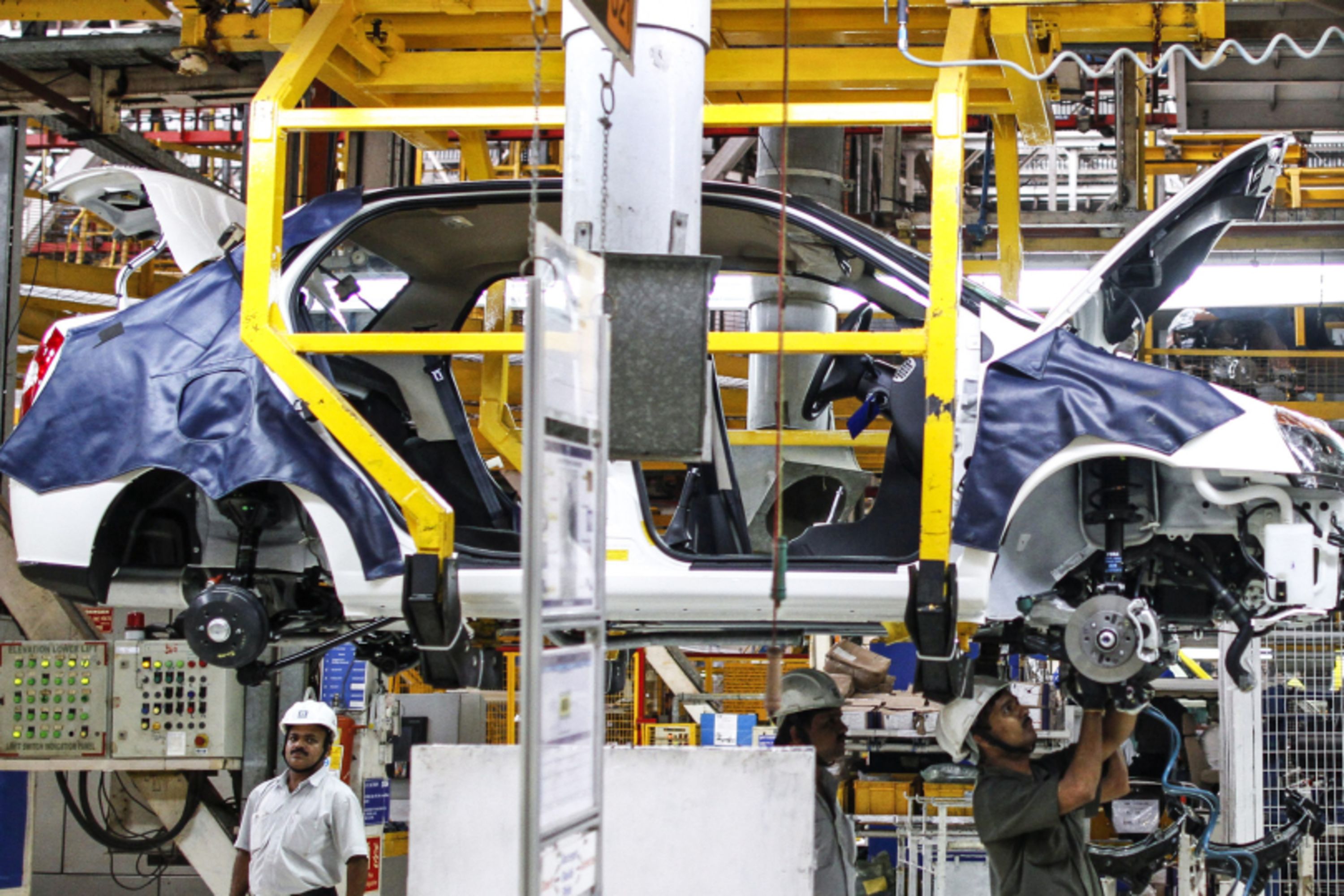
Shares of Tata Motors Ltd. fell the most in intraday trade in two weeks after CLSA downgraded the stock to 'sell', citing an overvalued domestic passenger vehicle business and slower electric vehicle ramp-up by its luxury brand Jaguar Land Rover.
The valuation of about $9.1 billion (about Rs 67,800 crore) ascribed to Tata Motors' passenger vehicle business by a private equity fund is “too high”, the research house said in a Jan. 4 note. “We value it at $5 billion (about Rs 37,200 crore), assuming Tata Motors' market share in domestic PV segment increases from 12% in FY22 to 16% by FY50, and profitability remain elevated till FY50.”
CLSA expects JLR's volumes to grow at an annualised rate of 20% over FY2022-24 compared with its earlier forecast of a mid-teen rise as chip shortage eases. But, it said, “most of this growth in auto volume will likely come from electric vehicles and hybrids and JLR does not have any launches in battery EVs till 2024, which could pose a risk to our volume estimates”.
CLSA downgraded the automaker's stock to ‘sell' from ‘buy', and cut price target to Rs 408 apiece from Rs 450—an implied downside of 15% from the current market price.
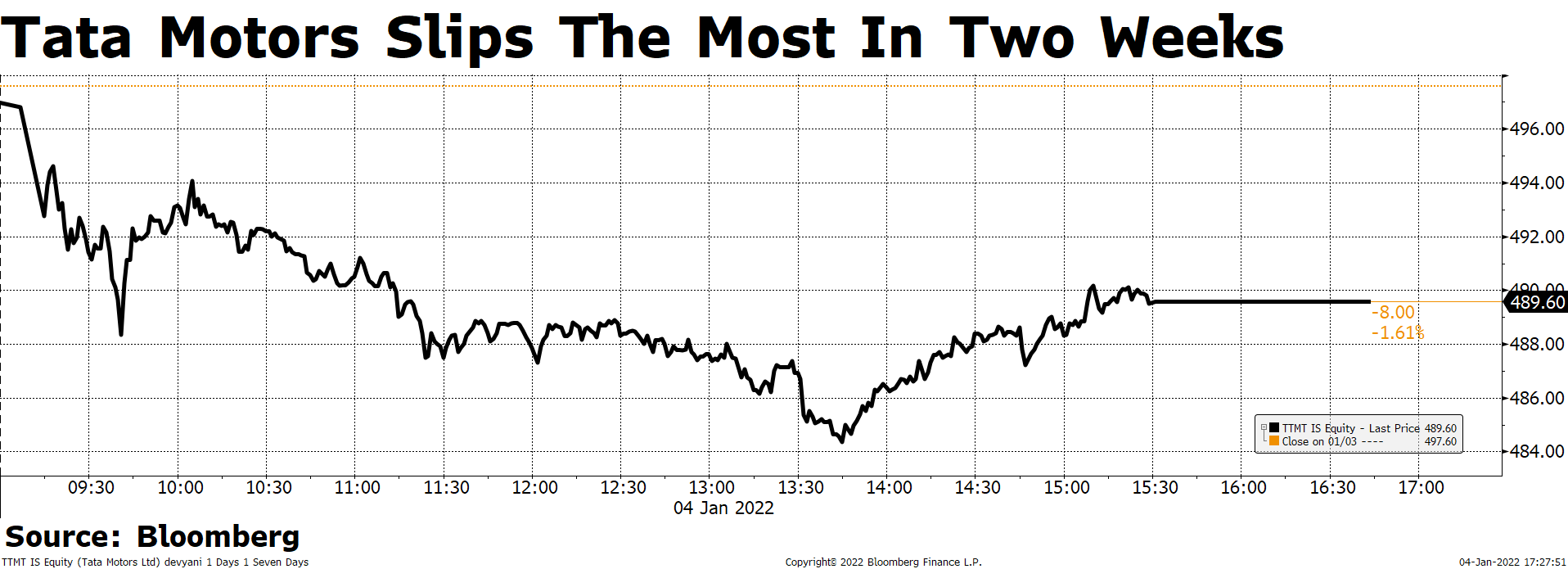
Shares of Tata Motors fell as much as 2.8% to Rs 484 apiece in intraday trade. The stock closed 1.6% lower, compared with a 1% rise in benchmark Nifty 50.
Other Highlights From CLSA Report
Domestic commercial vehicle business will post strong growth over the next three years, and expects the company to gain market share.
Values its CV business at $9.3 billion versus $5.9 billion for Ashok Leyland.
Forecasts a sharp reduction in net auto debt at the consolidated level, mainly from JLR operations.
Of the 34 analysts tracking Tata Motors, 25 maintain a ‘buy', five recommend a ‘hold' and four suggest a ‘sell', according to Bloomberg data. The overall consensus 12-month price target implies an upside of 12.4%.

-
India's Troika Of Good Luck | Joining The Dots

A weaker Trump, a cooling AI trade and resilient earnings have put Indian markets back in favour. Rising inflation could spoil the party.
-
Talking Points This Week: Leadership Shock At Nvidia, Earnings Strength, And The Fog Over Hormuz
The Anthropic IPO pricing and first trading day, Nvidia's upcoming earnings, and any fresh signals from Iran will set the tone for the following week.
-
Signature Play: The Classic Cocktail Is Dead. Or Is It?
Classic cocktails are disappearing from India's cocktail menus. But they're still being ordered, taught to bartenders and borrowed from. So, who's really having the last drink?
-
A New Samvat Wishlist: Inclusive Prosperity And Human Development
India has strengthened its economic foundations through infrastructure, digital access and enterprise. Its next growth chapter must deepen productivity, create better livelihoods and widen participation in prosperity.
-
Love, Sex Aur Dhokha: The Audacious Plot To Spy On Jensen Huang
A Taipei dinner, a Singapore chip buyer and a suspected Chinese asset: inside the alleged spy operation that got close to NVIDIA's Jensen Huang.
-
Ten Things I Learnt This Samvat
Patience can be a trap. Cheap stocks can stay cheap. Leverage can wipe you out. What did Samvat 2082 teach us? Niraj Shah writes on 10 lessons from the year gone by.
-
Talking Points This Week: Tech Nerves, FII Buying, And A Faraway Banking Shock
The global markets are not shining this Diwali. The exception in the large markets is, India.
-
Midterm Rally Lasted A Day. The Hard Reality Of A Divided US May Last Two Years | Opinion
Between a contested AI boom, a debt ceiling that arrives in 2027 and a president with every incentive to act alone, the next two years may prove more volatile than the first day's rally suggests.
-
Blue Wave Will Derail the AI Trade but Won't Dismantle the AI Era | Unhedged Position
The Democrats' sweep of the US Congress will see politics collide with economic forces both over the long and short term.
-
It's Time To Take The GST Council's Bet On Trust Global
Payment records can prove India's services exports, and clear, proportionate rules can bring foreign digital sellers into the tax net.