Tata Motors Falls After Reporting Surprise Loss In March Quarter
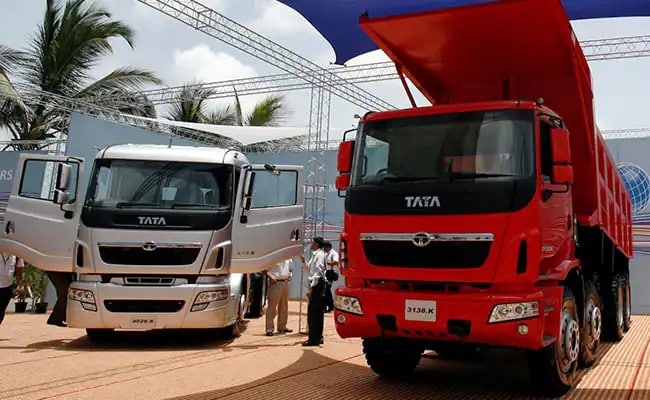
Shares of luxury car maker owner Jaguar Land Rover, Tata Motors, fell as much as 5.85 per cent to hit an intraday low of Rs 313 on the National Stock Exchange after it reported surprise loss in quarter ended March 2021. On a consolidated basis, Tata Motors reported net loss of Rs 7,605 crore against an expectation of profit of Rs 2,672 crore, according to Refinitiv IBES data.
The company's revenue from operations came in at Rs 88,628 crore for the fourth quarter, up 42 per cent from the revenue of Rs 62,492 crore clocked in the same quarter last year.
On a standalone basis, Tata Motors reported a net profit of Rs 1,646 crore as against a loss of Rs 4,871 crore in the year-ago period.
During the quarter Tata Motors undertook $2.05 billion charge at the luxury Jaguar Land Rover (JLR) unit, warning that a global chip crunch and surging COVID-19 cases in the country would hurt its business.
Like other carmakers in India, Tata Motors was navigating the pandemic's impact on sales when a global chip shortfall piled on more pressure, forcing it to suspend operations at two JLR car factories in April.
The disruptions have become more difficult to mitigate and are now impacting production plans for the first quarter, Tata Motors said.
"The CV business consistently posted sequential quarter on quarter growth on back of improved consumer sentiments, buoyancy in e-business, firming freight rates and higher infrastructure demand including road construction and mining. We have successfully improved our operational and financial performance by reducing cost," said CEO and Managing Director of Tata Motors, Guenter Butschek.
As of 9:29 am, Tata Motors shares traded 4.47 per cent lower at Rs 317.60, underperforming the Nifty which was down 0.6 per cent. The stock was also the top loser in the Nifty 50 basket of shares.

-
One El Nino, India Can Handle. Two Could Break The Granary

India's grain stocks can absorb one bad year, but a second El Nino could drain the buffer in two to three years, economists say.
-
India's Troika Of Good Luck | Joining The Dots
As Jensen Huang's exit drags Nvidia down, a cooling AI trade and resilient earnings have revived investor interest in India. A likely RBI rate hike looms.
-
Talking Points This Week: Leadership Shock At Nvidia, Earnings Strength, And The Fog Over Hormuz
The Anthropic IPO pricing and first trading day, Nvidia's upcoming earnings, and any fresh signals from Iran will set the tone for the following week.
-
Signature Play: The Classic Cocktail Is Dead. Or Is It?
Classic cocktails are disappearing from India's cocktail menus. But they're still being ordered, taught to bartenders and borrowed from. So, who's really having the last drink?
-
A New Samvat Wishlist: Inclusive Prosperity And Human Development
India has strengthened its economic foundations through infrastructure, digital access and enterprise. Its next growth chapter must deepen productivity, create better livelihoods and widen participation in prosperity.
-
Love, Sex Aur Dhokha: The Audacious Plot To Spy On Jensen Huang
A Taipei dinner, a Singapore chip buyer and a suspected Chinese asset: inside the alleged spy operation that got close to NVIDIA's Jensen Huang.
-
Ten Things I Learnt This Samvat
Patience can be a trap. Cheap stocks can stay cheap. Leverage can wipe you out. What did Samvat 2082 teach us? Niraj Shah writes on 10 lessons from the year gone by.
-
Talking Points This Week: Tech Nerves, FII Buying, And A Faraway Banking Shock
The global markets are not shining this Diwali. The exception in the large markets is, India.
-
Midterm Rally Lasted A Day. The Hard Reality Of A Divided US May Last Two Years | Opinion
Between a contested AI boom, a debt ceiling that arrives in 2027 and a president with every incentive to act alone, the next two years may prove more volatile than the first day's rally suggests.
-
Blue Wave Will Derail the AI Trade but Won't Dismantle the AI Era | Unhedged Position
The Democrats' sweep of the US Congress will see politics collide with economic forces both over the long and short term.









