Tamil Nadu Argues For Extended GST Compensation Period
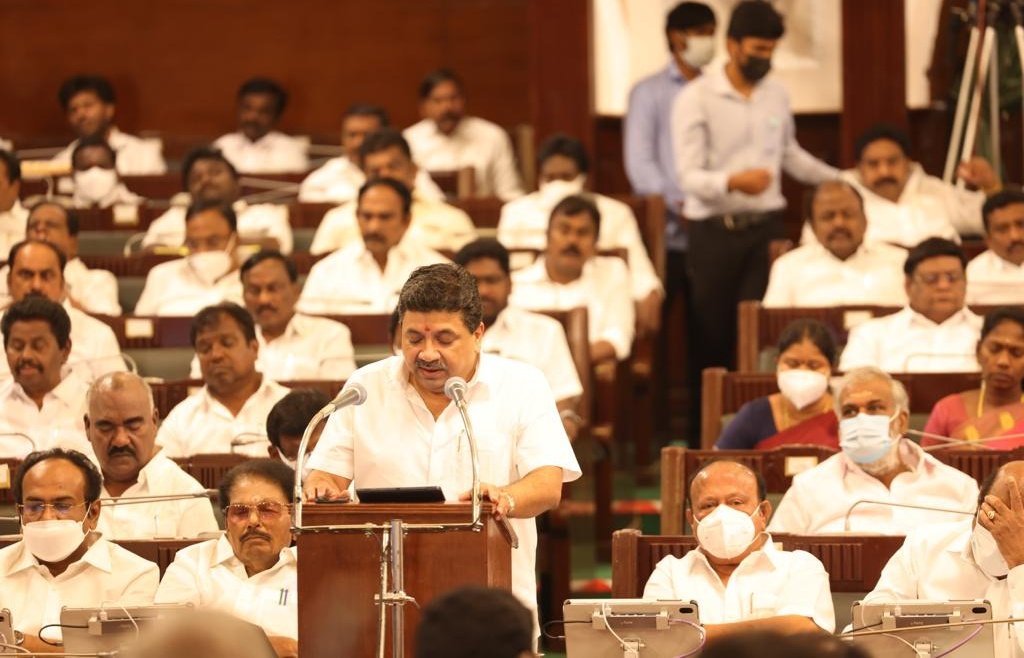
Tamil Nadu is arguing for an extension in the period of compensation promised to states after the implementation of the Goods and Services Tax.
In 2017, when the Goods and Services Tax was introduced, in return for giving up their taxation rights, states had been assured that the centre would compensate them for five years for any shortfall in revenue, assuming a 14% increase in states' indirect tax revenue per year. The centre has since levied a compensation cess on luxury items and sin goods to fund this compensation.
The period of compensation ends in June this year, although arrears from previous years will continue to be paid out to states.
In his budget speech on March 18, Tamil Nadu Finance Minister Palanivel Thiaga Rajan said the end of compensation will mean that Tamil Nadu will face a revenue loss of approximately Rs 20,000 crore.
Since the revenues of States are yet to recover from the impact of the pandemic, the Honorable Chief Minister [of Tamil Nadu] has requested the Union Government to extend this [GST] compensation for two more years.Palanivel Thiaga Rajan, Finance Minister, Tamil Nadu
The former banker-turned-politician also argued for more 'untied' grants from the central government, which would give the state greater flexibility in spending.
"The Fifteenth Central Finance Commission has recommended certain sector specific and state specific grants. We urge the Union Government to provide these grants untied, instead of tying them to ongoing centrally sponsored and central sector schemes," Thiaga Rajan said.
The Fifteenth Central Finance Commission has recommended a 4.079% share for Tamil Nadu in the divisible pool of taxes. The state has been allocated Rs.21,246 crore as the local body grant for a period of five years, compared to the Rs.17,010 crore earmarked by the Fourteenth Central Finance Commission.
Curtailing Fiscal Deficit, Revenue Deficit
Tamil Nadu will see a reduction in the absolute level of the revenue deficit by over Rs.7,000 crore in FY22. This reverses a trend of increasing deficits every year since 2014, Thiaga Rajan said.
Further, we are poised to see a significant reduction of the fiscal deficit, from 4.61% down to 3.80% even during such a challenging year.Palanivel Thiaga Rajan, Finance Minister, Tamil Nadu
For financial year 2022-23, Tamil Nadu hopes to bring down the fiscal deficit to within 3.5% of the gross state domestic product. Nominal GSDP growth for Tamil Nadu is estimated to be 14% in 2022-23
The state, according to the Medium Term Fiscal Plan, will see revenue expenditure rise by 9.6% in FY23 over the revised estimates of FY22. Capital expenditure is expected to rise a sharper 13.46%.
"Now, as we see the economy bouncing back, we must rebalance our priorities and focus on social infrastructure and development without compromising on welfare schemes," said Thiaga Rajan.
The state plans to borrow a net amount of Rs 90,116 in FY23. This excludes an amount of Rs 6,500 crore anticipated from the central government towards back-to-back loan for GST compensation shortfall.
The state's outstanding debt as a percentage of GSDP is expected to be 26.29% at the end of FY23, declining to 25.93% in 2024-25, which is within the norms prescribed by Fifteenth Finance Commission. "Thus the State aims to maintain debt sustainability as part of its fiscal consolidation roadmap," the Medium Term Framework said.

-
Indians Are Travelling, But Not Every Journey Is A Holiday | The Week In Whys

Pilgrims, patients and working women are the real travellers, and the system hasn't quite caught up with them.
-
Getting To Work Costs Women More | The Reason Why
It is not just about women paying more than men. It is about women paying much more in cities than in villages.
-
AI Bias In Investing Cannot Be Eliminated, But It Can Be Governed
Framing is a particularly important example as identical financial information presented in terms of gains rather than losses can lead an LLM to reach a different assessment.
-
Joining The Dots | Dark Skies, Steady Diya: Why Hope Holds This Diwali
With war, a weak rupee and foreign outflows weighing on sentiment, policymakers at the NDTV World Summit and market veterans at NDTV Profit Ignite: Diwali Edition offered the same advice: stay invested and filter out the noise.
-
The Curious Case of Equitas Small Finance Bank And A CEO Who Quit For Stock
PN Vasudevan believes persistent investor concerns over a perceived conflict of interest had become a governance overhang on Equitas Small Finance Bank's stock, even as the lender improved profitability and asset quality.
-
Talking Points This Week: AI Cash Burn, A Tiger Comeback And An India That Still Finds Its Own Path
India is not immune to higher oil or tighter global liquidity, yet its earnings base is broader, its domestic policy levers are still available.
-
Foreign Investors Own Half Of HDFC Bank and ICICI Bank. An LTCG Cut Could Matter Most Here
Foreign portfolio investors have US$115 billion parked in HDFC Bank, ICICI Bank. If the government cuts long-term capital gains tax, Jefferies says returning foreign money could land here first.
-
'Never Seen This Level Of Negativity': Sandeep Tandon Says The Next Rally May Be Closer Than You Think
Veteran investor Sandeep Tandon says foreign selling is easing, large-caps are due a comeback and mid-caps are crowded, while he turns positive on gold, power and pharma this Diwali.
-
Indians Stay With Family, Not In Hotels | The Reason Why
India still lacks enough clean, reliable and affordable hotels for budget-conscious travellers.
-
The Economic Imperative: Analysing The Material Driving Force Behind India-Canada Strategic Reset
This economic complementarity is further reinforced by deep institutional investment ties and talent mobility, which form the bedrock of the bilateral framework.










