Supreme Court Refers Unstamped Arbitration Agreement Case To A Seven-Judge Bench
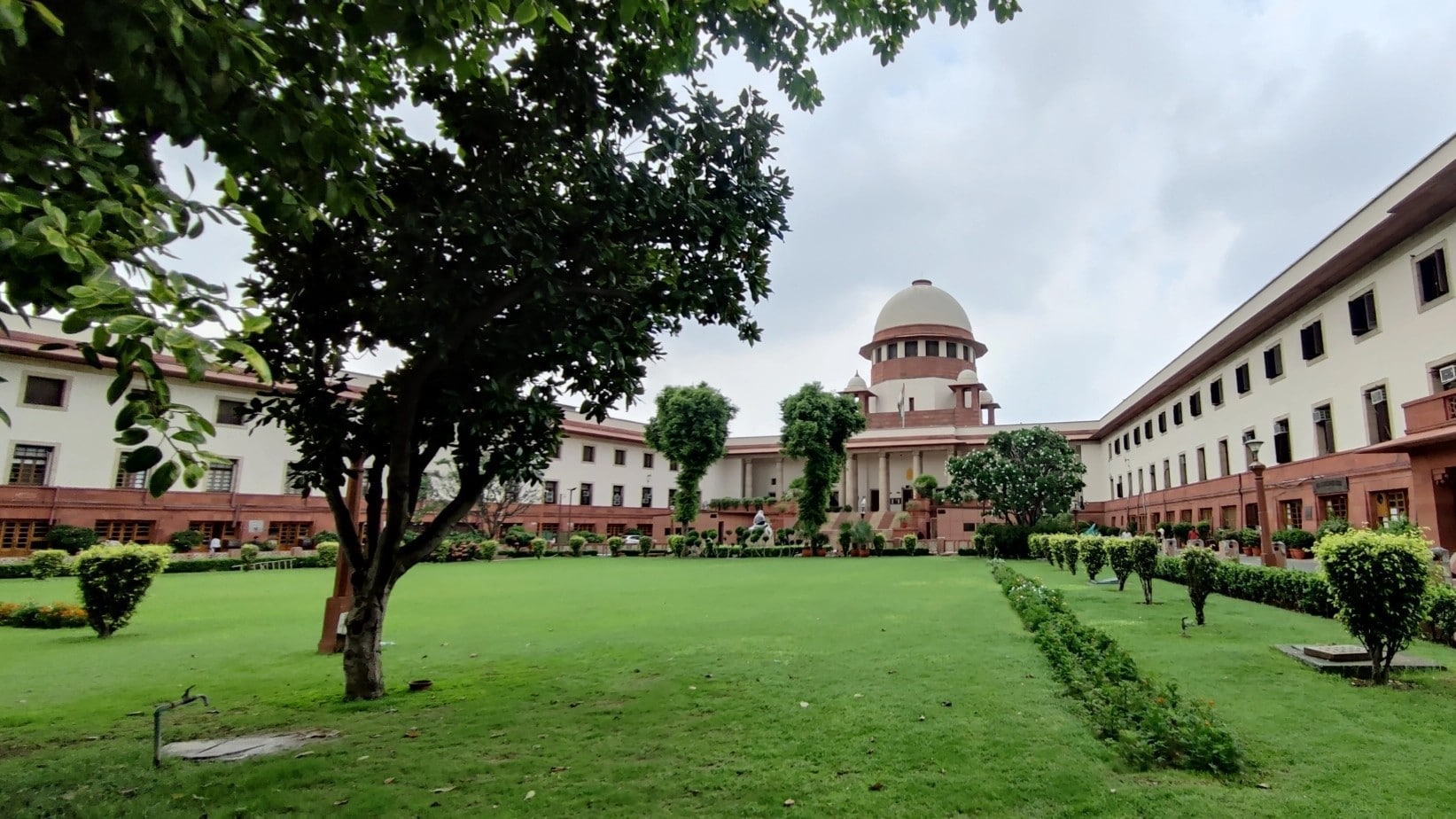
The Supreme Court on Tuesday referred a seven-judge bench to reconsider the issue of whether an arbitration agreement in an unstamped contract is enforceable or not.
The reference was made by a five-judge bench led by the Chief Justice of India, DY Chandrachud.
The court said that arbitrators across the country were facing uncertainties in the backdrop of the five-judge bench judgement and that the issue was of significant importance.
The case will now come up for a hearing on Oct. 11.
In April 2023, a constitution bench of the top court held that an arbitration agreement in an unstamped contract would be considered non-existent in law.
The judgement was fractured, with three judges ruling in its favour and two against it.
Laying out the dissenting opinion, Justice Hrishikesh Roy said the objective behind the Arbitration and Conciliation Act, 1996, was to avoid procedural complexity and litigation between courts.
He said that enforcement of the arbitration agreement should not be stalled on an issue that is capable of being resolved at a later stage by the arbitrator.
Justice Ajay Rastogi, in his minority view, said an examination of the arbitration agreement should be done cautiously so that the legislative intent behind the provisions is not disturbed by opening the door wide open for judicial intervention.
The case reached the Supreme Court in 2020. A bench of Justices DY Chandrachud, Indu Malhotra, and Indira Banerjee held that just because a commercial contract is unstamped, it doesn't mean that the arbitration clause in it will become invalid.
However, the case was referred to a larger bench as the court was of the view that the issue required to be authoritatively settled by a constitutional bench.

-
One Battle After Another: India's Corporate Dynasties Battle For Control

2026 could go down as Corporate India's year of succession wars, governance battles and family fault lines.
-
Rs 50-Lakh Gold In Bank Locker, Rs 3 Lakh Of Protection: The Gap Most Families Don't Know About
The RBI ties a bank's liability to the annual locker rent and families who want to insure their jewellery face a separate question about how to prove what was inside.
-
The More Food Turns Into Fuel, The Harder It Is To Read Agricultural Markets | The Reason Why
A policy designed to reduce dependence on imported fuel can create new pressures elsewhere in the food economy.
-
Your iPhone Costs 12 Grams Of Gold, A Car About 100. What Does Your Life Weigh?
Measured in rupees, almost everything looks more expensive than it did a generation ago. Measured in grams of gold, a lot of it has become cheaper.
-
Gold Is Rs 22,000 Cheaper Than A Month Ago. Should You Buy Amid The Wedding Season?
Gold's potential slide to $3,500 could save around Rs 4,700 per 10 grams, but a soft inflation print could just as easily push prices back up. One way to split the risk is to buy in parts, some now and the rest after the Fed's Dec. 9 decision.
-
AI Agents Are Gaining Power. Who Governs Them?
Artificial intelligence agents promise to transform productivity by moving machines from assisting decisions to executing them. But as organisations delegate greater authority to these AI-agents, they must first establish who controls that authority and who remains accountable when things go wrong.
-
Why Swapping Your Old Gold Can Trigger A Rs 5 Lakh Tax Bill, And How You Can Avoid It Legally
Swapping old gold for new is taxed as a sale and a fresh purchase. Getting your own gold remade can cut most of that bill, though it has its own costs.
-
The AI Trade is Done. The Real Opportunity for Investors Starts in 2027 | Unhedged Position
As pureplay AI stocks plunge and circular, capex-led financing unwinds, 2027 is set to be a year of reckoning for AI companies. Yet the bust clears the way for a better opportunity for investors in 2027 -- shifting the spotlight from AI builders to the companies using AI.
-
Leadership As Mission: Why The Age Of AI Demands More Human Leadership
Debjani Ghosh examines how AI is changing leadership, arguing that its success must be measured by its impact on people and the accountability of those guiding its use.
-
We May Need Another Tukaram Mundhe To Fight Air Pollution | The Reason Why
Developers may install basic measures such as sprinklers and green nets, resume work, and continue violating rules when this equipment stops working.









