Support Price For Rabi Crops Exceeds Production Cost, Says Government
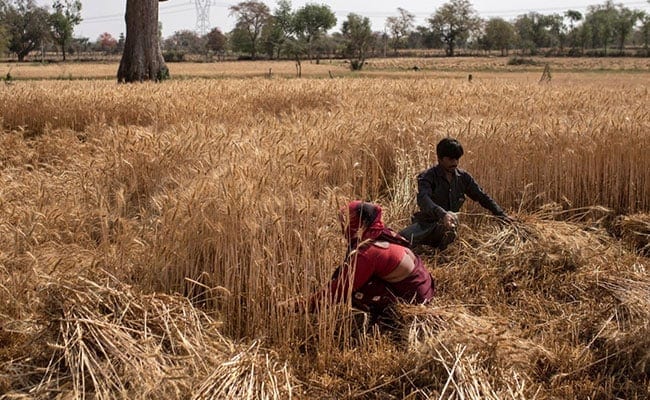
The government on Monday said that the minimum support price (MSP) approved for Rabi crops for the 2022-23 Rabi marketing season is higher or equal to 1.5 times of their cost of production.
According to a statement issued by the Ministry of Agriculture, the expected returns to farmers over their cost of production is to be highest in case of wheat as well as rapeseed and mustard, at 100 per cent each.
In case of lentils, gram, barley and safflower, the expected returns are 79 per cent, 74 per cent, 60 per cent and 50 per cent respectively.
Last week the the Cabinet Committee on Economic Affairs (CCEA) had approved the increase in the MSP for all designated Rabi crops for Rabi marketing season 2022-23, when in advance of the sowing season.
The decision taken by the government can be seen in the light of the ongoing farmers agitation over the three controversial farm laws, where apprehensions by growers that the issue of MSP getting compromised, is key.
The ministry's statement went on to add that MSP is an integral component of agriculture price policy and it is aimed at ensuring support price to farmers and affordable prices to the consumers as well.
Based on the recommendations of the Commission for Agricultural Costs and Prices (CACP), the government declares MSP, for which it also considers views of states and Central ministries.
The factors considered by CACP for fixing MSP include cost of production, domestic and international prices, demand-supply conditions, inter-crop price parity, as well as terms of trade between agricultural and non-agricultural sectors.

-
We May Need Another Tukaram Mundhe To Fight Air Pollution | The Reason Why

Developers may install basic measures such as sprinklers and green nets, resume work, and continue violating rules when this equipment stops working.
-
Extracting Value From Battery Scrap Could Be Challenging For India | The Reason Why
A discarded lithium-ion battery still contains valuable materials such as lithium, nickel and cobalt. These can be recovered and reused. When such batteries are crushed and shredded, they produce a dark powder called black mass.
-
One El Nino, India Can Handle. Two Could Break The Granary
India's grain stocks can absorb one bad year, but a second El Nino could drain the buffer in two to three years, economists say.
-
India's Troika Of Good Luck | Joining The Dots
As Jensen Huang's exit drags Nvidia down, a cooling AI trade and resilient earnings have revived investor interest in India. A likely RBI rate hike looms.
-
Talking Points This Week: Leadership Shock At Nvidia, Earnings Strength, And The Fog Over Hormuz
The Anthropic IPO pricing and first trading day, Nvidia's upcoming earnings, and any fresh signals from Iran will set the tone for the following week.
-
Signature Play: The Classic Cocktail Is Dead. Or Is It?
Classic cocktails are disappearing from India's cocktail menus. But they're still being ordered, taught to bartenders and borrowed from. So, who's really having the last drink?
-
A New Samvat Wishlist: Inclusive Prosperity And Human Development
India has strengthened its economic foundations through infrastructure, digital access and enterprise. Its next growth chapter must deepen productivity, create better livelihoods and widen participation in prosperity.
-
Love, Sex Aur Dhokha: The Audacious Plot To Spy On Jensen Huang
A Taipei dinner, a Singapore chip buyer and a suspected Chinese asset: inside the alleged spy operation that got close to NVIDIA's Jensen Huang.
-
Ten Things I Learnt This Samvat
Patience can be a trap. Cheap stocks can stay cheap. Leverage can wipe you out. What did Samvat 2082 teach us? Niraj Shah writes on 10 lessons from the year gone by.
-
Talking Points This Week: Tech Nerves, FII Buying, And A Faraway Banking Shock
The global markets are not shining this Diwali. The exception in the large markets is, India.









