Once Fast-growing Solar Company SunEdison Files For Bankruptcy
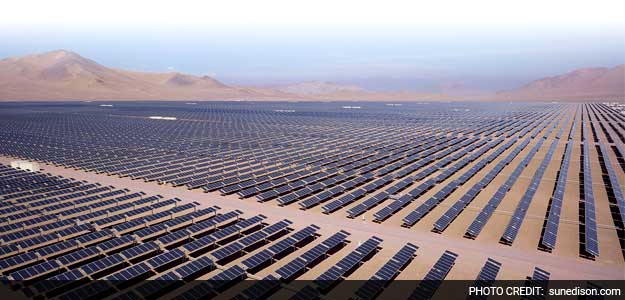
SunEdison Inc, once the fastest-growing U.S. renewable energy company, filed for Chapter 11 bankruptcy protection on Thursday as years of debt-fueled acquisitions proved unsustainable.
In its bankruptcy filing, the company said it had assets of $20.7 billion and liabilities of $16.1 billion as of Sept. 30.
The company said its two publicly traded subsidiaries, TerraForm Power Inc and TerraForm Global Inc, were not part of the bankruptcy.
The company said it secured up to $300 million in new financing from its first-lien and second-lien lenders, which is subject to court approval. The money will be used to support SunEdison's operations during its bankruptcy, such as paying wages and vendors, and proceeding with ongoing projects.
"Our decision to initiate a court-supervised restructuring was a difficult but important step to address our immediate liquidity issues," said Ahmad Chatila, SunEdison chief executive officer.
He said the company planned to use Chapter 11 to reduce debt, shed non-core operations and take steps to get the most value out of its technology and intellectual property.
Although solar project developers continue to benefit from robust demand, their shares have been hit by investor concerns that demand could fall in tandem with weak oil prices.
Shares of SunEdison were halted, and last traded at about 34 cents on the New York Stock Exchange. The company's stock traded as high as $33.44 in July 2015. Shares of First Solar Inc were up slightly and shares of SolarCity Corp were up 4.2 percent in early trading. An index of solar shares gained 1 percent.
Major SunEdison shareholders include OppenheimerFunds Inc with a 11.9 percent stake, BlackRock Inc with a 6.5 percent stake, The Vanguard Group with a 6.4 percent stake and Adage Capital Partners GP LLC with a 5.4 percent stake, according to court documents.
Shareholders generally lose their investment in a bankruptcy.
SunEdison has struggled with a list of problems.
Breakneck expansion during 2014 and 2015 left the company saddled with huge debt. Investors began to lose confidence when SunEdison last year launched its biggest deal for Vivint Solar Inc, worth $2.2 billion at the time it was announced.
In March, Vivint terminated the cash-and-stock deal after SunEdison failed to close on the planned acquisition. Vivint shares were up 4.9 percent on Thursday.
The Vivint deal touched off litigation involving its yieldcos, the listed subsidiaries that own and operate renewable energy assets, some of which were acquired from SunEdison.
Billionaire David Tepper's Appaloosa Management sued to prevent TerraForm Power from buying some Vivint assets as part of SunEdison's proposed purchase of the company.
Appaloosa is also seeking to overhaul TerraForm Power's Conflicts Committee, claiming the company's controlling shareholder, SunEdison, breached its fiduciary duties.
SunEdison is also being investigated by the U.S. Department of Justice and the U.S. Securities and Exchange Commission over the failed Vivint Solar deal and other issues.
SunEdison is also being sued by TerraForm Global, its other yieldco, for breach of contract, alleging SunEdison misappropriated $231 million of TerraForm's cash.
TerraForm Global said last month that SunEdison, its controlling shareholder, might not transfer to it some solar energy projects in India and Uruguay, and also may not complete other deals.
SunEdison itself faces about two dozen legal claims, mainly by shareholders who accuse the company of misleading them about its financial position.
The company has delayed filing its annual report twice after identifying material weaknesses in its financial reporting controls.
SunEdison's financial troubles have imperiled dozens of projects underway globally. The company has sold or is trying to unload some of them, while others are scrambling to line up new financing.
The case is in U.S. Bankruptcy Court, Southern District of New York, Case No: 16-10992
(This story has not been edited by NDTV staff and is auto-generated from a syndicated feed.)

-
Why Swapping Your Old Gold Can Trigger A Rs 5 Lakh Tax Bill, And How You Can Avoid It Legally

Swapping old gold for new is taxed as a sale and a fresh purchase. Getting your own gold remade can cut most of that bill, though it has its own costs.
-
The AI Trade is Done. The Real Opportunity for Investors Starts in 2027 | Unhedged Position
As pureplay AI stocks plunge and circular, capex-led financing unwinds, 2027 is set to be a year of reckoning for AI companies. Yet the bust clears the way for a better opportunity for investors in 2027 -- shifting the spotlight from AI builders to the companies using AI.
-
Leadership As Mission: Why The Age Of AI Demands More Human Leadership
Debjani Ghosh examines how AI is changing leadership, arguing that its success must be measured by its impact on people and the accountability of those guiding its use.
-
We May Need Another Tukaram Mundhe To Fight Air Pollution | The Reason Why
Developers may install basic measures such as sprinklers and green nets, resume work, and continue violating rules when this equipment stops working.
-
Extracting Value From Battery Scrap Could Be Challenging For India | The Reason Why
A discarded lithium-ion battery still contains valuable materials such as lithium, nickel and cobalt. These can be recovered and reused. When such batteries are crushed and shredded, they produce a dark powder called black mass.
-
One El Nino, India Can Handle. Two Could Break The Granary
India's grain stocks can absorb one bad year, but a second El Nino could drain the buffer in two to three years, economists say.
-
India's Troika Of Good Luck | Joining The Dots
As Jensen Huang's exit drags Nvidia down, a cooling AI trade and resilient earnings have revived investor interest in India. A likely RBI rate hike looms.
-
Talking Points This Week: Leadership Shock At Nvidia, Earnings Strength, And The Fog Over Hormuz
The Anthropic IPO pricing and first trading day, Nvidia's upcoming earnings, and any fresh signals from Iran will set the tone for the following week.
-
Signature Play: The Classic Cocktail Is Dead. Or Is It?
Classic cocktails are disappearing from India's cocktail menus. But they're still being ordered, taught to bartenders and borrowed from. So, who's really having the last drink?
-
A New Samvat Wishlist: Inclusive Prosperity And Human Development
India has strengthened its economic foundations through infrastructure, digital access and enterprise. Its next growth chapter must deepen productivity, create better livelihoods and widen participation in prosperity.









