Oil Prices Rise Over 3% On Fears Suez Blockage May Last Weeks
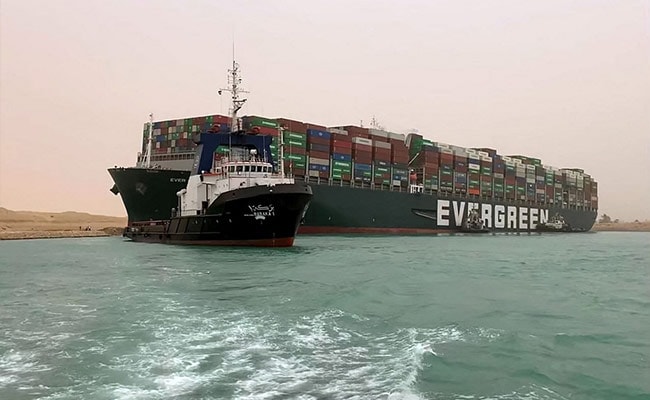
Oil prices rose more than 3 per cent on Friday, rebounding on concerns it could take weeks to dislodge a giant container ship blocking the Suez Canal, which would squeeze supplies of crude and refined products. Prices, however, were still headed for a third consecutive weekly loss, with the outlook for demand dented by fresh coronavirus lockdowns in Europe. Brent crude was up $2.12, or 3.4 per cent, to $64.07 a barrel at 1338 GMT, after dropping 3.8 per cent on Thursday. U.S. West Texas Intermediate (WTI) crude was up $2.16, or 3.7 per cent, at $60.72 a barrel, having tumbled 4.3 per cent a day earlier.
Both benchmarks were on track for weekly losses, following a more than six per cent decline last week. Egypt's Suez Canal Authority said on Friday operations to free the stranded container ship would resume after completing dredging operations, which are 87 per cent complete. The salvage company said on Thursday dislodging the ship could take weeks.
Of the 39.2 million barrels per day (bpd) of total seaborne crude in 2020, 1.74 million bpd went through the Suez Canal, according to data intelligence firm Kpler. Additionally, 1.54 million bpd of refined oil products flow through the canal, about nine per cent of global seaborne oil product trade, Kpler said.
On Friday, there were ten vessels waiting at the entry points of the Canal carrying around 10 million barrels of oil, Kpler said. Reeling from the blockage in the Suez Canal, shipping rates for oil product tankers have nearly doubled this week, and several vessels were diverted.
The oil markets were also lifted by worries over escalating geopolitical risk in the Middle East. Yemen's Houthi forces on Friday said they launched attacks on facilities owned by Saudi Aramco. Expectations that the Organization of the Petroleum Exporting Countries and its allies will likely maintain their lower production also supported prices.
Big oil importer India said Saudi Arabia telling it to tap its oil stockpiles to tackle high prices was "undiplomatic". Acting a week ahead of the OPEC+ meeting, Abu Dhabi National Oil Company (ADNOC) has deepened crude oil supply cuts to Asian customers in June to 10 per cent-15 per cent from 5 per cent-15 per cent in May, several sources said.

-
The Economic Imperative: Analysing The Material Driving Force Behind India-Canada Strategic Reset

This economic complementarity is further reinforced by deep institutional investment ties and talent mobility, which form the bedrock of the bilateral framework.
-
Medicine Pricing: Where Must Profit Stop?
India must confront excessive margins, hidden incentives and regulatory gaps that threaten the integrity of medicine.
-
Why Amazon And Flipkart Are Struggling To Beat Meesho In India's Smaller Cities
With 274 million users and lowest-cost logistics, Meesho is defending its value commerce crown against giants like Amazon and Flipkart.
-
High US Salaries, No Green Card Certainty: The Financial Calculation Facing Indian H-1B Families
The suspension of PERM processing at eight technology employers does not cancel existing H-1B visas. What it does is force a question many Indian families have been avoiding: is the US salary worth tying your career and family plans to one employer?
-
Swiggy vs Eternal: Food Delivery's Two Rivals Are No Longer In The Same Race
Eternal is building a private AI assistant, dark.ai. Swiggy is still working out how to make Instamart pay, with an operating loss of Rs 895 crore in the July-September quarter while Blinkit stayed profitable.
-
Where You Live Shapes How You Get To Work | The Reason Why
Two-wheelers are the most popular way to get to work in India, accounting for nearly 43% of workplace commutes.
-
Unhedged Position: Can India See An Indonesia-Style Time Correction?
The Nifty is trading below levels it first clocked in 2024. Is there, then, as I have suggested in the headline, potential that the current time correction drags on painfully for the next three-five, even ten years?
-
Navigating Friction And Energy Realities: An Analysis Of Marco Rubio's October Visit To India
Occurring at a critical juncture marked by stalled trade negotiations and escalating geopolitical pressures over global energy supplies, the visit offers a profound window into modern US-India relations.
-
India Exports Capital. Why Not Export Trusteeship?
The big question, then, is whether India can build an institution that global borrowers, investors, banks, and lawyers can trust, even without an Indian connection.
-
France's Economy & Politics Are In Crisis | The Reason Why
Let's look at how the French economy and politics evolved under Nicolas Sarkozy, Franois Hollande and Emmanuel Macron.










