The Pandemic Is Over But Our Pandemic Stress Isn’t
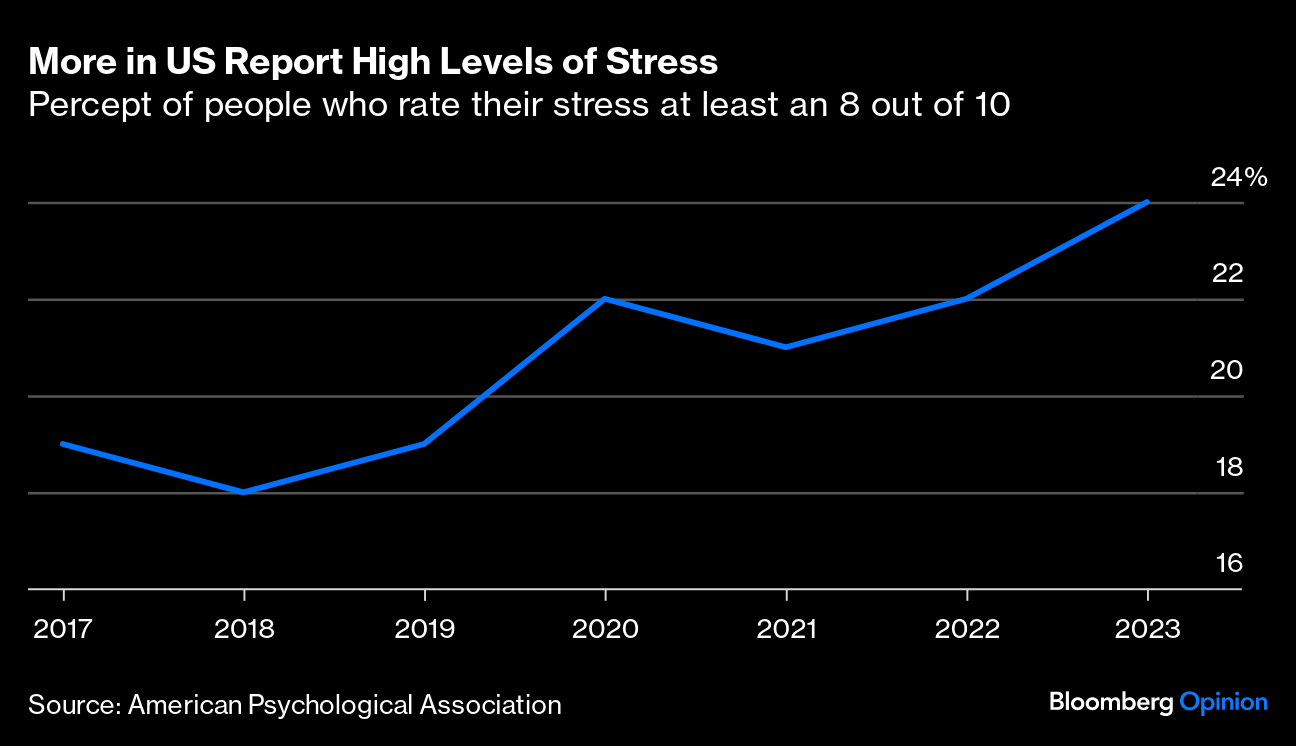
(Bloomberg Opinion) -- Survey after survey tells us that Americans are struggling. The latest, the American Psychological Association's annual gauge of stress in the US, reveals that people continue to feel worse than before the pandemic. The question is what to do about it.
And it's no wonder that people are so stressed out: Humans have finite mental resources, and they've been decidedly depleted by years of dealing with Covid and its fallout, plus economic woes and worries about geopolitical upheaval. In the APA survey, which was conducted in August, nearly a quarter of adults reported operating at the highest levels of stress, rating it at least an 8 out of 10. Among parents, self-reported stress was so extreme that nearly half said it was “completely overwhelming” on most days, and 41% reported that it impedes their function.
In the last year or two, much of the focus has been on addressing the declining mental well-being of adolescents and teens. Kids were already struggling before Covid, but the alarming data on higher levels of anxiety, depression and thoughts of self-harm during Covid has mobilized everyone from policymakers to educators and parents to do whatever it takes to address kids in crisis.
But we shouldn't forget that adults also were deeply affected by a protracted period of relentless uncertainty, fear, loss and social isolation. The APA's survey of adults shows stress levels are highest among those age 18 – 45, who reported the biggest increases since pre-pandemic times.
That group also saw a marked increase in chronic health and mental health diagnoses compared to before the pandemic. The pandemic prompted a more open national conversation about mental health, and the survey can't separate out how much the rise could be due to more people seeking help than in the past. But the increase was big enough in younger groups — 44% of adults aged 34-44 reported a mental health diagnosis compared to 31% in 2019 — that it's likely a combination of more attention to care and more strain.
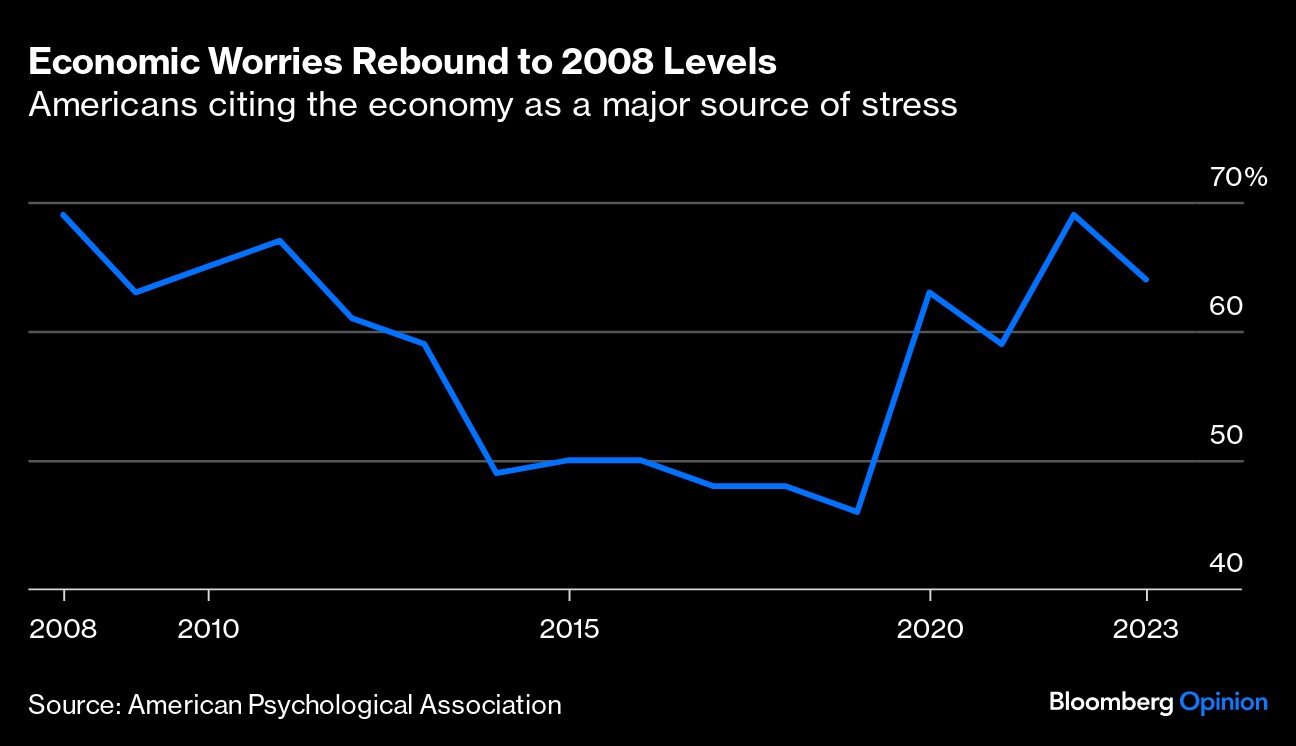
And adults under the age of 45 are currently most worried about the economy, with more than 70% citing it as a major stressor, compared to just over 50% of people in 2019. Parents again seem to be bearing the brunt, with two-thirds reporting they felt consumed by money woes.
We're not helpless in managing that stress, particularly when it comes to those who say they are experiencing it most intensely. Rajita Sinha, director of the Yale Interdisciplinary Stress Center, says she often suggests that people feeling extreme stress should pause and ask themselves, “Where's the fire?” If there's a real emergency, of course, we should react, but when there isn't, it can be grounding to run a basic inventory: “Am I okay? Is my family okay? Who can help?”
Reaching out for support from a friend or family member is the next step. While it might sound like stating the obvious to say that social connection is a vital part of coping, data suggest we're doing a terrible job at it. In the APA survey, 62% of respondents said they don't talk about how they're feeling because they don't want to be a burden, yet two-thirds of those surveyed also said that “they could have used more emotional support than they received.”
That dovetails with a report from earlier this year, when Vivek Murthy, the US surgeon general, warned that the US was experiencing an epidemic of loneliness that was as bad for our health as smoking. Recent research found a decline in the amount of time Americans spend engaging with others. Being intentional about rebuilding connections — even something as simple as texting a friend — can help us feel less isolated.
People could also do a better job of recognizing the sources of their stress and reining in our reactions to them. We can't control the ominous news giving us a feeling of existential dread, but we can control our exposure to such news, says Lynn Bufka, associate executive director for practice research and policy at the APA. “Figure out how much you need to know in order to make a decision for your life and then turn it off,” Bufka advises.
Such small changes, performed consistently, might help us shake off some of the residual effects of several very difficult years — and set us up better to cope with the fresh challenges that seem to keep coming.
More From Lisa Jarvis at Bloomberg Opinion:
- Telehealth Should Stick Around. Teens Need It.
- CDC Report on Teen Mental Health Is a Red Alert
- Social Media Is Just One Online Habit Hurting Teens
This column does not necessarily reflect the opinion of the editorial board or Bloomberg LP and its owners.
Lisa Jarvis is a Bloomberg Opinion columnist covering biotech, health care and the pharmaceutical industry. Previously, she was executive editor of Chemical & Engineering News.
More stories like this are available on bloomberg.com/opinion
©2023 Bloomberg L.P.

-
Talking Points This Week: Leadership Shock At Nvidia, Earnings Strength, And The Fog Over Hormuz

The Anthropic IPO pricing and first trading day, Nvidia's upcoming earnings, and any fresh signals from Iran will set the tone for the following week.
-
Signature Play: The Classic Cocktail Is Dead. Or Is It?
Classic cocktails are disappearing from India's cocktail menus. But they're still being ordered, taught to bartenders and borrowed from. So, who's really having the last drink?
-
A New Samvat Wishlist: Inclusive Prosperity And Human Development
India has strengthened its economic foundations through infrastructure, digital access and enterprise. Its next growth chapter must deepen productivity, create better livelihoods and widen participation in prosperity.
-
Love, Sex Aur Dhokha: The Audacious Plot To Spy On Jensen Huang
A Taipei dinner, a Singapore chip buyer and a suspected Chinese asset: inside the alleged spy operation that got close to NVIDIA's Jensen Huang.
-
Ten Things I Learnt This Samvat
Patience can be a trap. Cheap stocks can stay cheap. Leverage can wipe you out. What did Samvat 2082 teach us? Niraj Shah writes on 10 lessons from the year gone by.
-
Talking Points This Week: Tech Nerves, FII Buying, And A Faraway Banking Shock
The global markets are not shining this Diwali. The exception in the large markets is, India.
-
Midterm Rally Lasted A Day. The Hard Reality Of A Divided US May Last Two Years | Opinion
Between a contested AI boom, a debt ceiling that arrives in 2027 and a president with every incentive to act alone, the next two years may prove more volatile than the first day's rally suggests.
-
Blue Wave Will Derail the AI Trade but Won't Dismantle the AI Era | Unhedged Position
The Democrats' sweep of the US Congress will see politics collide with economic forces both over the long and short term.
-
It's Time To Take The GST Council's Bet On Trust Global
Payment records can prove India's services exports, and clear, proportionate rules can bring foreign digital sellers into the tax net.
-
Opinion | India at 38: From Innovation Overperformer to Innovation Powerhouse
India now has 453 VC-backed deep science startups, 18 of them late-stage, after 117 percent growth since 2020. Laurus Labs, at USD 9.3 billion, is the most valuable deep science company in any middle-income economy outside China.









