Stranded Homebuyers Of Jaypee Infra Prompt Dilution Of Insolvency Code?
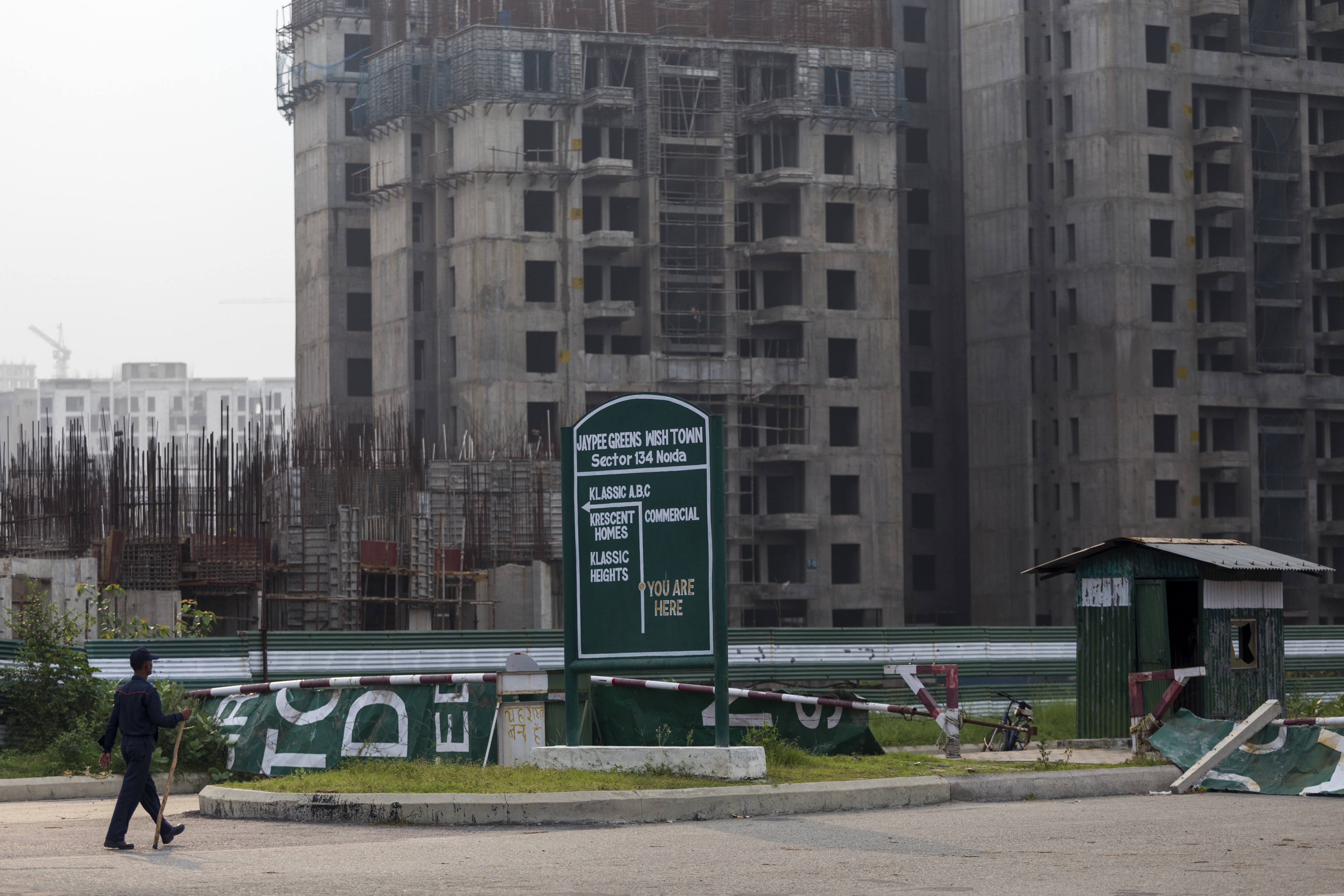
The Supreme Court provided relief to 32,000 stranded homebuyers of Jaypee Infratech Ltd. after the company failed to hand over apartments. But what it ordered is not entirely consistent with the framework of the Insolvency and the Bankruptcy Code, experts told BloombergQuint.
In its September order, the apex court had directed:
- Jaiprakash Associates Ltd., the parent of Jaypee Infratech Ltd., to deposit Rs 2,000 crore with the court.
- Directors of Jaypee Infra and the parent company to seek the court's permission before leaving the country.
- Amicus curiae to participate in meetings of the committee of creditors to espouse the cause of the homebuyers and protect their interests.
- The interim insolvency professional to submit within 45 days, an interim resolution plan that protects the interests of the homebuyers.
In a unique situation, the apex court has taken egalitarian measures to protect the interests of the homebuyer by lifting the corporate veil and directing the parent company of the builder, which is not party to the proceedings, to deposit a hefty amount with the court, Arjun Gupta, head of insolvency law practice at Nishith Desai Associates, told BloombergQuint.
In the present case, the homebuyers' liability of around Rs 20,000 crore is significant, which has led the Supreme Court to take steps that are beyond the scope and ambit of the Insolvency and Bankruptcy Code.Arjun Gupta, Head Of Insolvency Law Practice, Nishith Desai Associates
Abir Roy, litigation partner at Lakshmikumaran & Sridharan, said the Supreme Court has used its inherent powers under Article 142 of the Constitution of India to do complete justice.
Under the code, the committee of creditors consists of financial creditors only. In including Jaypee Infra's homebuyers in this committee, the Supreme Court has gone beyond the mandate of the code.Abir Roy, Litigation Partner At Lakshmikumaran & Sridharan
Gupta, however, argued that this may just be the need of the hour to protect the needs of the homebuyers who have no further recourse.

The lack of any other option stems from provisions of the code that prevent any legal action against a company facing insolvency proceedings. The homebuyers were rendered remediless, Ashwarya Sinha, the lawyer representing them, told BloombergQuint.
That's because the National Company Law Appellate Tribunal, in another matter involving AMR Infrastructure, laid down that consumers don't qualify as creditors under the insolvency code. Left with no remedy either before a consumer court or under the insolvency code, Jaypee Infratech's homebuyers had filed a public interest litigation challenging the constitutionality of the code.
Also Read: Will Homebuyers Get Parity With Jaypee Infratech Lenders?
The Bankruptcy Board Fix
The insolvency application against Jaypee Infra led to critical decisions not just by the Supreme Court but also the Insolvency and Bankruptcy Board of India.
The board in August paved the way for a fourth category of “other creditors” to submit their claims. Till then, claims by only financial creditors (lenders), operational creditors (vendors) and workmen (employees) were accepted by the interim resolution professional.
This, however, does not improve the position of homebuyers, Gupta pointed out.
Till you change the substantive rights of “other creditors” within which homebuyers are currently bracketed or decide to put homebuyers in the category of financial creditors, the position does not change.Arjun Gupta, Head Of Insolvency Law Practice, Nishith Desai Associates
The substantive rights include, for instance, the right to receive proceeds on par with secured financial creditors in the event of liquidation.
In another change, the bankruptcy board last week notified an amendment - that the resolution plan must include a statement as to how it has dealt with the interests of all stakeholders, including financial and operational creditors.
Roy of Lakshmikumaran & Sridharan said ‘stakeholders' could apply to anybody who is affected by insolvency of a company.
It could mean the shareholders, creditors, workmen, homebuyers, consumers, etc. This is a welcome step since this would impart a sense of fiduciary duty towards all stakeholders, akin to the good faith duty of a director under the Companies Act.Abir Roy, Litigation Partner At Lakshmikumaran & Sridharan
The extent of the benefit to all stakeholders is, however, unclear. It remains to be seen what the impact of including this statement in the resolution plan will be, Roy added.
Most of the insolvency matters are at the admission stage. When a resolution plan gets approved by the committee of creditors and the NCLT, the courts will again see a flurry of cases filed by such ‘stakeholders' aggrieved by the resolution plan.Abir Roy, Litigation Partner At Lakshmikumaran & Sridharan
The code provides limited grounds for admitting an appeal against the plan, such as violation of an existing law, material irregularity in exercise of powers by the resolution professional and when dues of operational creditors have not been accounted for.
The courts may admit these petitions on grounds of public interest, much like in the Jaypee case, if the interests of stakeholders are not taken care of, Roy said.
Also Read: Lenders, Jaypee Homebuyer Representatives Meet To Discuss Interim Solution
Nilang Desai, a banking and finance partner at law firm AZB & Partners, said, “To ‘deal with a stakeholder' does not, to my mind, mean that you have to make payments. It simply implies that you tell them what is going to happen to them pursuant to the resolution plan and not leave uncertain how their claim or interest will be treated.”
This amendment to the regulations does not change the rights conferred on the stakeholders under the insolvency code, he said.
(Corrects to remove incorrect creditor liability figure in Arjun Gupta's quote)

-
Indians Are Travelling, But Not Every Journey Is A Holiday | The Week In Whys

Pilgrims, patients and working women are the real travellers, and the system hasn't quite caught up with them.
-
Getting To Work Costs Women More | The Reason Why
It is not just about women paying more than men. It is about women paying much more in cities than in villages.
-
AI Bias In Investing Cannot Be Eliminated, But It Can Be Governed
Framing is a particularly important example as identical financial information presented in terms of gains rather than losses can lead an LLM to reach a different assessment.
-
Joining The Dots | Dark Skies, Steady Diya: Why Hope Holds This Diwali
With war, a weak rupee and foreign outflows weighing on sentiment, policymakers at the NDTV World Summit and market veterans at NDTV Profit Ignite: Diwali Edition offered the same advice: stay invested and filter out the noise.
-
The Curious Case of Equitas Small Finance Bank And A CEO Who Quit For Stock
PN Vasudevan believes persistent investor concerns over a perceived conflict of interest had become a governance overhang on Equitas Small Finance Bank's stock, even as the lender improved profitability and asset quality.
-
Talking Points This Week: AI Cash Burn, A Tiger Comeback And An India That Still Finds Its Own Path
India is not immune to higher oil or tighter global liquidity, yet its earnings base is broader, its domestic policy levers are still available.
-
Foreign Investors Own Half Of HDFC Bank and ICICI Bank. An LTCG Cut Could Matter Most Here
Foreign portfolio investors have US$115 billion parked in HDFC Bank, ICICI Bank. If the government cuts long-term capital gains tax, Jefferies says returning foreign money could land here first.
-
'Never Seen This Level Of Negativity': Sandeep Tandon Says The Next Rally May Be Closer Than You Think
Veteran investor Sandeep Tandon says foreign selling is easing, large-caps are due a comeback and mid-caps are crowded, while he turns positive on gold, power and pharma this Diwali.
-
Indians Stay With Family, Not In Hotels | The Reason Why
India still lacks enough clean, reliable and affordable hotels for budget-conscious travellers.
-
The Economic Imperative: Analysing The Material Driving Force Behind India-Canada Strategic Reset
This economic complementarity is further reinforced by deep institutional investment ties and talent mobility, which form the bedrock of the bilateral framework.










