Stocks Win Some, Lose Some, Global Triggers Hold The Cards
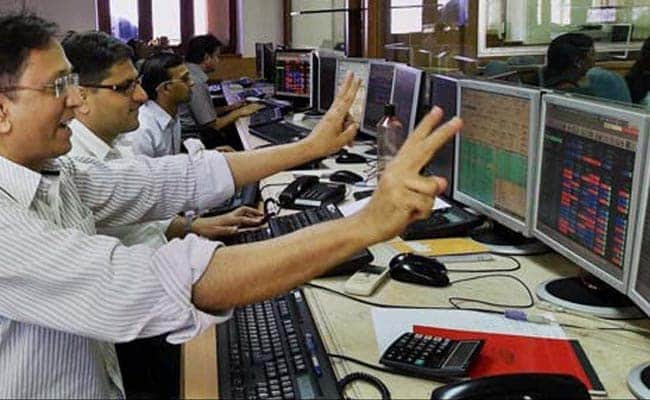
Mumbai: Good rains and a growth-oriented budget laid the perfect pitch for a dream run for stocks, but that was not to be as the market got a scare after heavy capital pullout by FIIs in the concluding two months of 2016. In the end, the early gains almost evaporated, leaving behind an almost flat closing.
The BSE 30-share Sensex soared to a high of 29,077.28 in September backed by consistent FII inflows, which totalled Rs 51,293 crore in the first nine months, but later crashed to a low of 22,494.61 before ending at 26,213.44 on December 27, registering a net gain of 95.9 points, or 0.36 per cent from its last year-end close of 26,117.54.
To begin with, the market got a shot in the arm from a favourable monsoon and a promising Union budget, ratcheting up investor interest in the equity market. But it took a knock of by over 3,000 points, or 10 per cent, from its yearly high, hit by fears of acute cash crunch after the government's demonetisation move and anticipation of more aggressive rate hikes by the Federal Reserve.
FIIs poured in nearly Rs 51,293 crore in the first nine months of the year, but later offloaded shares worth Rs 22,551 crore from October onwards, according to data released by the Securities and Exchange Board of India.
The market saw its worst intra-day fall of 1,689 points in nearly 15 months on November 9, reacting negatively to Donald Trump's surprise win in the US presidential election and the Union government's crackdown on black money.
Amid the uncertainty over the Brexit fallout, analysts downgraded revenue estimate for some of the exports-oriented companies from Indian IT, automobiles, metal and pharma sectors that were hit the hardest.
But the government's decision to open up foreign direct investment in defence, pharma aviation, single-brand retail and broadcasting, among others, was music to investors' ears.
The long-delayed GST Constitution Bill too was passed by Parliament on August 8, marking a historic step for tax reforms that Prime Minister Narendra Modi said was "crucial" for ending tax terrorism besides dealing with corruption and blackmoney and making consumer the king.
On the inflation front, the government and RBI agreed to maintain a target of 4 per cent. Investors took a cautious line after appointment of Urjit Patel as the new RBI Governor.
In the first review under Patel, the repo rate was cut by 0.25 per cent to a 6-year low of 6.25 per cent in a unanimous decision by the new monetary policy committee (MPC).
In the second, Patel left the policy rate -- at which RBI lends to banks for short term -- intact at 6.25 per cent and the cash reserve ratio -- the share of deposits lenders park with the central bank -- at 4 per cent.
However, in the mid of December, the Federal Reserve decided to raise the benchmark interest rate by 0.25 per cent, the second time in a decade, a reflection of the confidence over the state of the world's biggest economy. Tata group stocks on October 25 ended by up to 3 per cent lower after Cyrus Mistry was removed as Chairman of India's largest conglomerate.
China's move to weaken the yuan to fight a slowing economy triggered a massive global sell-off. China's central bank devalued the the yuan in January against the US dollar by 0.51 per cent to 6.5646, the lowest since March 2011.
Sentiment also got a hit after global crude prices softened to multi-year lows below USD 30 a barrel following China's weakening currency and rising global stock reserves. Depreciation of the rupee against the dollar also affected market sentiment as the rupee touched a low of 68.86
on November 24.
(This story has not been edited by NDTV staff and is auto-generated from a syndicated feed.)

-
AI Bias In Investing Cannot Be Eliminated, But It Can Be Governed

Framing is a particularly important example as identical financial information presented in terms of gains rather than losses can lead an LLM to reach a different assessment.
-
Joining The Dots | Dark Skies, Steady Diya: Why Hope Holds This Diwali
With war, a weak rupee and foreign outflows weighing on sentiment, policymakers at the NDTV World Summit and market veterans at NDTV Profit Ignite: Diwali Edition offered the same advice: stay invested and filter out the noise.
-
The Curious Case of Equitas Small Finance Bank And A CEO Who Quit For Stock
PN Vasudevan believes persistent investor concerns over a perceived conflict of interest had become a governance overhang on Equitas Small Finance Bank's stock, even as the lender improved profitability and asset quality.
-
Talking Points This Week: AI Cash Burn, A Tiger Comeback And An India That Still Finds Its Own Path
India is not immune to higher oil or tighter global liquidity, yet its earnings base is broader, its domestic policy levers are still available.
-
Foreign Investors Own Half Of HDFC Bank and ICICI Bank. An LTCG Cut Could Matter Most Here
Foreign portfolio investors have US$115 billion parked in HDFC Bank, ICICI Bank. If the government cuts long-term capital gains tax, Jefferies says returning foreign money could land here first.
-
'Never Seen This Level Of Negativity': Sandeep Tandon Says The Next Rally May Be Closer Than You Think
Veteran investor Sandeep Tandon says foreign selling is easing, large-caps are due a comeback and mid-caps are crowded, while he turns positive on gold, power and pharma this Diwali.
-
Indians Stay With Family, Not In Hotels | The Reason Why
India still lacks enough clean, reliable and affordable hotels for budget-conscious travellers.
-
The Economic Imperative: Analysing The Material Driving Force Behind India-Canada Strategic Reset
This economic complementarity is further reinforced by deep institutional investment ties and talent mobility, which form the bedrock of the bilateral framework.
-
Medicine Pricing: Where Must Profit Stop?
India must confront excessive margins, hidden incentives and regulatory gaps that threaten the integrity of medicine.
-
Why Amazon And Flipkart Are Struggling To Beat Meesho In India's Smaller Cities
With 274 million users and lowest-cost logistics, Meesho is defending its value commerce crown against giants like Amazon and Flipkart.










