Stocks, Oil And Bond Yields Fall On Taiwan Political Tensions
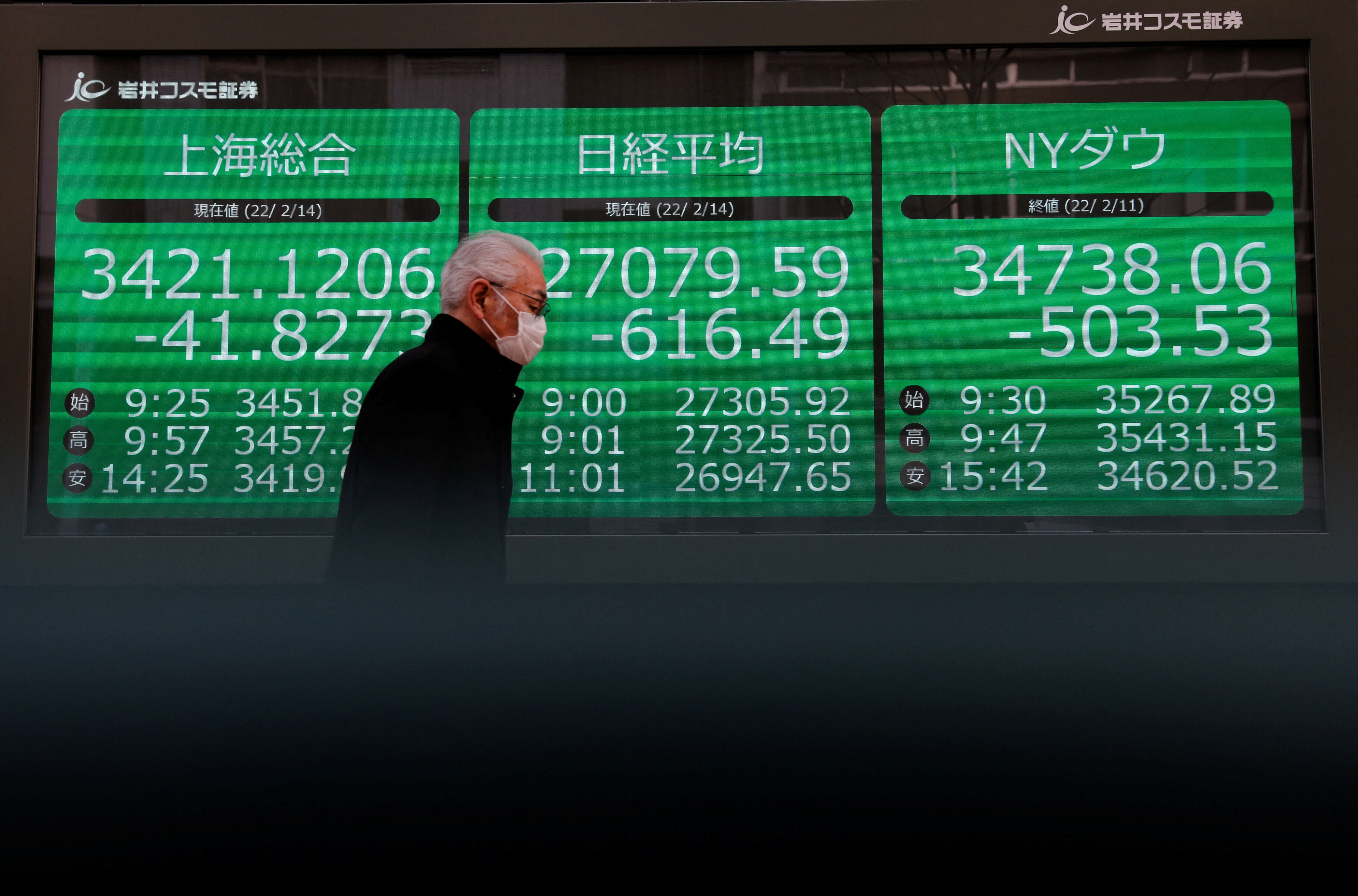
Global stocks slipped and bond yields fell on Tuesday, compounding fears of a global recession, on concern that a visit by US House of Representatives Speaker Nancy Pelosi to Taiwan would further harm relations between China and the United States.
Investors sought safer assets after China threatened repercussions if Pelosi visited the self-ruled island, which Beijing claims as its territory.
US long-term Treasury yields dropped to a four-month low, while euro zone bond yields fell. The dollar and Japanese yen gained. Crude oil also sank as investors amid signs of a global manufacturing downturn.
Ms Pelosi was expected to arrive in Taipei later on Tuesday, with several Chinese warplanes flying close to the median line dividing the Taiwan Strait, a source told Reuters.
China has repeatedly warned against Pelosi going to Taiwan. Washington said on Monday it would not be intimidated by China.
MSCI world equity index, which tracks shares in 47 countries, fell 0.4 per cent. The broad Euro STOXX 600 shed 0.7 per cent before clawing back some of its losses.
Wall Street stocks were set to fall around 0.7 per cent, futures gauges showed.
"It's all about the Taiwan threat," said Robert Alster, chief investment officer at Close Brothers Asset Management. "There's no way you can say its not moved up to geopolitical agenda."
The Taiwan issue added to a sense of unease sparked by China, Europe and the United States on Monday reporting weakening factory activity, with that in the US decelerating to its lowest level since August 2020.
The benchmark 10-year US Treasury yield fell as low as 2.53 per cent in Tokyo trade, the lowest since April 5, also benefitting from bets a slowdown could spur the US Federal Reserve to ease off the policy-tightening pedal.
Germany's 10-year government bond yield fell 4.5 basis points to 0.72 per cent, after hitting its lowest since early April.
Brent futures edged down to $99.55 a barrel after losing almost $4 overnight. US West Texas Intermediate futures also eased to $93.59, extending Monday's almost $5 slide.
MSCI's broadest index of Asia-Pacific shares retreated 1.3 per cent. Taiwan's stock index dropped as much as 1.9 per cent, while Chinese blue chips tumbled 2.5 per cent before making u some of their losses.
Aussie Weakens
The flight for safety played out in currency markets, too.
The US dollar slid to as low as 130.40 against the Japanese yen, levels not seen for almost two months. Against a basket of currencies, the dollar rose 0.25 per cent to 105.61.
The Taiwan dollar slipped to its lowest level in more than two years on the weaker side of 30 per US dollar.
Australian stocks pared declines and the Aussie dollar weakened after the central bank raised the key rate by an as-expected 50 basis points, with markets interpreting changes to the accompanying policy statement as dovish.
The Aussie was 0.51 per cent lower at $0.69910, extending a 0.14 per cent retreat following the Reserve Bank of Australia's policy decision.
It had hit the highest since June 17, at $0.7048, in the previous session but that was after bouncing off a 26-month trough at $0.66825 in the middle of last month.
"The Aussie has been underperforming other major currencies lately given global growth concerns so it really needed a hawkish surprise to reignite its recovery from 2-year lows," said Sean Callow, a currency strategist at Westpac in Sydney.
"Instead, it got the RBA leaving the door wide open to slowing the pace of tightening at future meetings."
Cryptocurrencies, a barometer for risk appetite, also fell, with bitcoin slipping 2.3 per cent to $22,753.

-
Why Swapping Your Old Gold Can Trigger A Rs 5 Lakh Tax Bill, And How You Can Avoid It Legally

Swapping old gold for new is taxed as a sale and a fresh purchase. Getting your own gold remade can cut most of that bill, though it has its own costs.
-
The AI Trade is Done. The Real Opportunity for Investors Starts in 2027 | Unhedged Position
As pureplay AI stocks plunge and circular, capex-led financing unwinds, 2027 is set to be a year of reckoning for AI companies. Yet the bust clears the way for a better opportunity for investors in 2027 -- shifting the spotlight from AI builders to the companies using AI.
-
Leadership As Mission: Why The Age Of AI Demands More Human Leadership
Debjani Ghosh examines how AI is changing leadership, arguing that its success must be measured by its impact on people and the accountability of those guiding its use.
-
We May Need Another Tukaram Mundhe To Fight Air Pollution | The Reason Why
Developers may install basic measures such as sprinklers and green nets, resume work, and continue violating rules when this equipment stops working.
-
Extracting Value From Battery Scrap Could Be Challenging For India | The Reason Why
A discarded lithium-ion battery still contains valuable materials such as lithium, nickel and cobalt. These can be recovered and reused. When such batteries are crushed and shredded, they produce a dark powder called black mass.
-
One El Nino, India Can Handle. Two Could Break The Granary
India's grain stocks can absorb one bad year, but a second El Nino could drain the buffer in two to three years, economists say.
-
India's Troika Of Good Luck | Joining The Dots
As Jensen Huang's exit drags Nvidia down, a cooling AI trade and resilient earnings have revived investor interest in India. A likely RBI rate hike looms.
-
Talking Points This Week: Leadership Shock At Nvidia, Earnings Strength, And The Fog Over Hormuz
The Anthropic IPO pricing and first trading day, Nvidia's upcoming earnings, and any fresh signals from Iran will set the tone for the following week.
-
Signature Play: The Classic Cocktail Is Dead. Or Is It?
Classic cocktails are disappearing from India's cocktail menus. But they're still being ordered, taught to bartenders and borrowed from. So, who's really having the last drink?
-
A New Samvat Wishlist: Inclusive Prosperity And Human Development
India has strengthened its economic foundations through infrastructure, digital access and enterprise. Its next growth chapter must deepen productivity, create better livelihoods and widen participation in prosperity.









