Stock Trading Competitions Can Bring New Investors: Experts
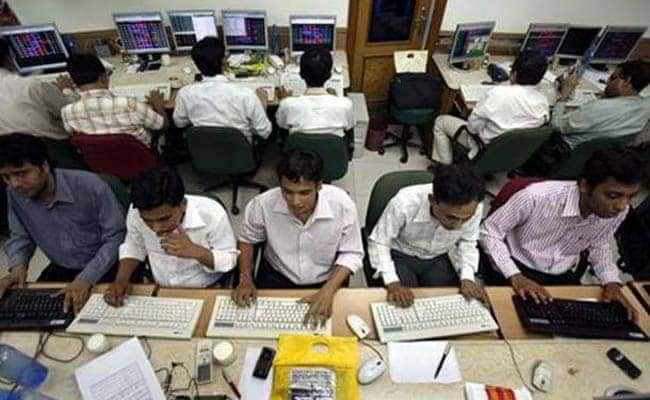
Mumbai: With capital markets seeking to attract new investors, regulator Sebi's proposal to ban competition or leagues related to stock trading could defeat this very purpose, experts say, adding that such initiatives are training ground for investments.
In a recent set of proposed regulations, the Securities and Exchange Board of India (Sebi) is planning a blanket ban on practice of offering schemes, competitions, games or leagues to protect investors from being misled.
Pointing out that various countries like the US and Australia have been holding market competitions for many years without major restrictions from their respective regulators, analysts feel Sebi should reconsider the move to ban stock market competitions/leagues as it is one of the alternatives to expand the investor base.
"The number of investors as a percentage of total population is very low (2 per cent) and among those who invest in the equity markets, the percentage allocation too is low. Thus, it is pertinent to find ways and means of improving participation," market expert Ambareesh Baliga told PTI.
According to Mr Baliga, a certain amount of excitement is necessary to attract investors to the markets which can be provided by competitions or leagues.
"To draw a corollary, the number of dance and talent competitions in the last decade and a half have brought out the best talents in the country which otherwise wouldn't have been possible through the traditional approach," he said.
Echoing the sentiment, Kejriwal Research and Investment Services founder Arun Kejriwal said "markets itself have to do certain things to bring in new investors and improve retail participation".
"The world over, trading competitions and games have proved to be successful in bringing in new retail investors and ultimately healthy growth," Mr Kejriwal said.
"Educating the masses and making investing fun is how this market will grow. These are also the natural evolution of the market. Banning competitions and games is ill advised and regressive," he noted.
Suggesting that there is need to distinguish between gambling dens from competitions that provide skill-based training albeit with some money involved, Finsec Law Advisor founder and Sebi's former executive director Sandeep Parekh added that many business schools run competitions where portfolios are made as a game.
"While the first one (gambling) is clearly illegal, the second (competitions/leagues) is not really an illegal exchange and is a training ground for investments," Mr Parekh said, adding that "the two should be distinguished clearly and only the first one banned".
Asserting that leagues are part of the education process for investors, Jimeet Modi, CEO of Samco Securities, which operates stock trading competition the Indian Trading League, said: "Financial competitions are successfully operating in many countries like the US and Europe and help in development and financial inclusion."
Mr Modi, who is planning to make a formal representation to Sebi to rethink the proposed ban on competitions, noted that the regulator should instead mandate organisers of such games and competitions to make relevant disclosures so as to enable investors make an informed decision.
According to Mr Modi, organisers should be required to disclose the risk of investing in securities markets and the scheme or competition, conflict of interest policy and disclosure of conflicts to investors and grievance redressal mechanism by compulsory inclusion of arbitration clause, among others.
Agreeing that Sebi should regulate the competitions instead of banning them, Baliga proposed that a criteria should be prescribed to operate such schemes.
"Sebi should ensure only those individuals who qualify for the minimum criteria are allowed to participate. This will ensure the basic hygiene factor and serve the purpose of attracting more investors and traders to equity markets," he said.
(This story has not been edited by NDTV staff and is auto-generated from a syndicated feed.)

-
Gold Is Rs 22,000 Cheaper Than A Month Ago. Should You Buy Amid The Wedding Season?

Gold's potential slide to $3,500 could save around Rs 4,700 per 10 grams, but a soft inflation print could just as easily push prices back up. One way to split the risk is to buy in parts, some now and the rest after the Fed's Dec. 9 decision.
-
AI Agents Are Gaining Power. Who Governs Them?
Artificial intelligence agents promise to transform productivity by moving machines from assisting decisions to executing them. But as organisations delegate greater authority to these AI-agents, they must first establish who controls that authority and who remains accountable when things go wrong.
-
Why Swapping Your Old Gold Can Trigger A Rs 5 Lakh Tax Bill, And How You Can Avoid It Legally
Swapping old gold for new is taxed as a sale and a fresh purchase. Getting your own gold remade can cut most of that bill, though it has its own costs.
-
The AI Trade is Done. The Real Opportunity for Investors Starts in 2027 | Unhedged Position
As pureplay AI stocks plunge and circular, capex-led financing unwinds, 2027 is set to be a year of reckoning for AI companies. Yet the bust clears the way for a better opportunity for investors in 2027 -- shifting the spotlight from AI builders to the companies using AI.
-
Leadership As Mission: Why The Age Of AI Demands More Human Leadership
Debjani Ghosh examines how AI is changing leadership, arguing that its success must be measured by its impact on people and the accountability of those guiding its use.
-
We May Need Another Tukaram Mundhe To Fight Air Pollution | The Reason Why
Developers may install basic measures such as sprinklers and green nets, resume work, and continue violating rules when this equipment stops working.
-
Extracting Value From Battery Scrap Could Be Challenging For India | The Reason Why
A discarded lithium-ion battery still contains valuable materials such as lithium, nickel and cobalt. These can be recovered and reused. When such batteries are crushed and shredded, they produce a dark powder called black mass.
-
One El Nino, India Can Handle. Two Could Break The Granary
India's grain stocks can absorb one bad year, but a second El Nino could drain the buffer in two to three years, economists say.
-
India's Troika Of Good Luck | Joining The Dots
As Jensen Huang's exit drags Nvidia down, a cooling AI trade and resilient earnings have revived investor interest in India. A likely RBI rate hike looms.
-
Talking Points This Week: Leadership Shock At Nvidia, Earnings Strength, And The Fog Over Hormuz
The Anthropic IPO pricing and first trading day, Nvidia's upcoming earnings, and any fresh signals from Iran will set the tone for the following week.









