Sensex Jumps Over 600 Points; Financials, IT Outshine
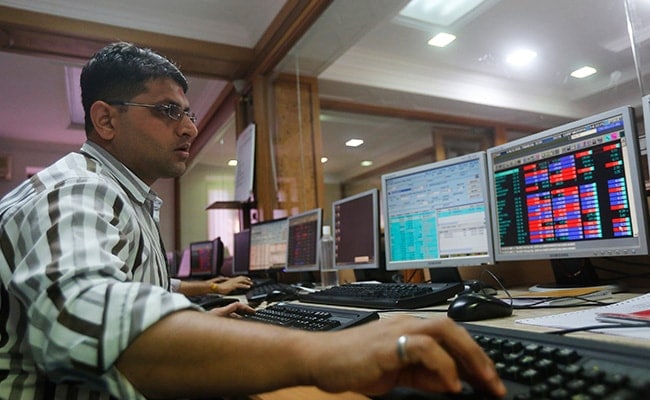
The domestic stock markets ended on a strong note due to value buying at lower levels amid positive global cues. The US markets had a firm closing overnight, and Asian and European markets shrugged off coronavirus concerns, and the positive sentiment led to rebound on Dalal Street after a corrective phase that lasted all of three days. The BSE Sensex ended the session at 52,837.21, higher by 638.70 points or 1.22 per cent and NSE Nifty was at 15,824.05, up 191.95 points or 1.23 per cent.
The broader markets also had a good session, with the BSE Midcap index and BSE Smallcap index gaining 1.5 per cent each.
All the sectoral indices ended in the green, with the exception of the FMCG space. The FMCG space was dragged by weakness on the Hindustan Unilever counter post its June quarter results.
The rupee ended higher by 15 paise at 74.46 per dollar amid buying in the domestic equity markets. It opened 18 paise higher at 74.43 per dollar against Tuesday's close of 74.61.
In corporate news, Hindustan Unilever - the country's leading fast-moving consumer goods maker - reported a net profit of Rs 2,061 crore in the April-June quarter, a growth of 9.5 per cent compared to Rs 1,881 crore in the same quarter last year. The shares of Hindustan Unilever, however, ended lower by 2.3 per cent at Rs 2,379 on the BSE.
The day belonged to financial and metal stocks, with Tech Mahindra, Bajaj Finance, Bajaj Finserv and Infosys gaining 2-5 per cent each on the BSE. Bharti Airtel, Tata Steel and L&T were the other significant gainers on the BSE.
On the other hand, Hindustan Unilever, Asian Paints, Bajaj Auto and M&M lost up to a per cent each on the BSE.
The BSE market breadth was strong. Out of 3,387 stocks traded on the BSE, there were 2,184 advancing stocks as against 1,065 declines.

-
We May Need Another Tukaram Mundhe To Fight Air Pollution | The Reason Why

Developers may install basic measures such as sprinklers and green nets, resume work, and continue violating rules when this equipment stops working.
-
Extracting Value From Battery Scrap Could Be Challenging For India | The Reason Why
A discarded lithium-ion battery still contains valuable materials such as lithium, nickel and cobalt. These can be recovered and reused. When such batteries are crushed and shredded, they produce a dark powder called black mass.
-
One El Nino, India Can Handle. Two Could Break The Granary
India's grain stocks can absorb one bad year, but a second El Nino could drain the buffer in two to three years, economists say.
-
India's Troika Of Good Luck | Joining The Dots
As Jensen Huang's exit drags Nvidia down, a cooling AI trade and resilient earnings have revived investor interest in India. A likely RBI rate hike looms.
-
Talking Points This Week: Leadership Shock At Nvidia, Earnings Strength, And The Fog Over Hormuz
The Anthropic IPO pricing and first trading day, Nvidia's upcoming earnings, and any fresh signals from Iran will set the tone for the following week.
-
Signature Play: The Classic Cocktail Is Dead. Or Is It?
Classic cocktails are disappearing from India's cocktail menus. But they're still being ordered, taught to bartenders and borrowed from. So, who's really having the last drink?
-
A New Samvat Wishlist: Inclusive Prosperity And Human Development
India has strengthened its economic foundations through infrastructure, digital access and enterprise. Its next growth chapter must deepen productivity, create better livelihoods and widen participation in prosperity.
-
Love, Sex Aur Dhokha: The Audacious Plot To Spy On Jensen Huang
A Taipei dinner, a Singapore chip buyer and a suspected Chinese asset: inside the alleged spy operation that got close to NVIDIA's Jensen Huang.
-
Ten Things I Learnt This Samvat
Patience can be a trap. Cheap stocks can stay cheap. Leverage can wipe you out. What did Samvat 2082 teach us? Niraj Shah writes on 10 lessons from the year gone by.
-
Talking Points This Week: Tech Nerves, FII Buying, And A Faraway Banking Shock
The global markets are not shining this Diwali. The exception in the large markets is, India.









