Ugly Global Sell-Off Derails Domestic Stocks' 4-Day Winning Streak After Red Hot US Inflation Data
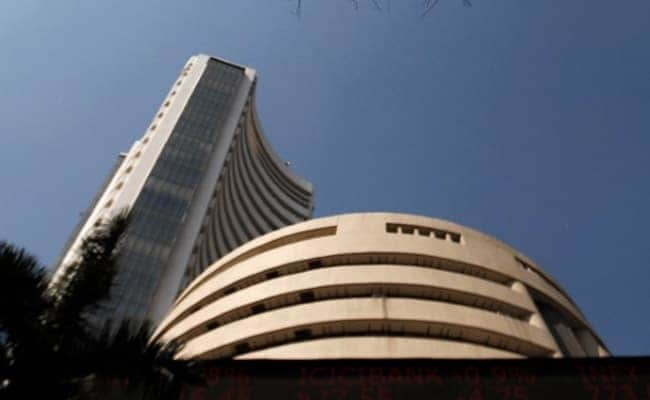
Equity benchmarks crashed early on Wednesday, stalling a four-session winning streak, tracking a sea of red in Asian bourses after an ugly selloff on Wall Street after data showed no respite from red-hot US inflation could drive more aggressive policy path bets.
The 30-share BSE Sensex index crashed 714.66 points to 59,856.42, and the broader NSE Nifty-50 index tanked 198.55 points to 17,871.50, a day after hitting the 18,000 mark for the first time since April.
Both the benchmark indexes posted their biggest intraday fall in over two weeks.
Twenty-one of the 30 stocks on the BSE fell, including Reliance Industries in early trade amid significant volatility.
V K Vijayakumar, Chief Investment Strategist at Geojit Financial Services, told PTI that the 4.32 per cent and 5.12 per cent cut in S&P 500 and Nasdaq on Tuesday again reminds that there is more uncertainty about inflation and growth and more volatility ahead for markets.
"The worse-than-expected CPI inflation data in the US, despite cooling gas prices, was a surprise. Now the market fears that inflation is getting entrenched and an ultra-hawkish Fed might trigger a hard landing for the US economy," he said.
Among the Nifty 50 companies, 38 declined and the remaining 12 rose, according to the National Stock Exchange data.
The Nifty IT index took the biggest hit, sliding 3.7 per cent, with IT majors Infosys and Tata Consultancy Services dropping around 3.5 per cent each. That comes a day after reports showed Infosys had warned employees against moonlighting.
Ahead of the markets open, Prashanth Tapse, Senior Vice President for Research at Mehta Equities, in a research note said, "local share indices are likely to see a negative opening Wednesday on the back of a sea of red across the global equity markets, after the US August inflation data came above the estimate,"
"With stronger inflation, the US Federal Reserve's hawkish stance could continue in this month's policy meeting, leading to worries of a growth slowdown in key economies," he added.
Following a widespread selloff on Wall Street, Asian equities, bonds, and currencies sank.
The safe-haven dollar registered its biggest gain since early 2020 as Wall Street experienced its steepest decline in two years, and US two-year Treasury yields, which climb in response to speculators' anticipation of increasing Fed Fund rates, reached their highest level in fifteen years.
The biggest four-day surge in the S&P 500 since June was completely erased by the stock market crash on Tuesday.
That spooked investors in early Asia trade on Wednesday, with the MSCI index of Asia-Pacific shares outside of Japan falling 1.3 per cent. Australia, a country rich in natural resources, fell 2.8 per cent, while the Nikkei was down 2.7 per cent.
"Markets have reacted violently to what I would consider to be a modest miss in US CPI. Stocks and bonds were smoked, taken to the principal's office for a good old-fashioned, old-school pre-woke thrashing," Scott Rundell, Chief Investment Officer at Mutual Limited, told Reuters.
"Futures have stabilised, so we might see a dead-cat bounce tonight."
In contrast to projections for a 0.1 per cent fall, US Labor Department statistics late on Tuesday revealed that the headline Consumer Price Index (CPI) increased by 0.1 per cent on a monthly basis and core inflation, which excludes volatile costs for food and energy, rose 0.6 per cent.
US equity futures edged higher, while European contracts fell.
"US CPI data caught markets completely off guard, though in all fairness, there had been a lot of complacency about a figure that was only going to fall because of the volatility in energy markets," said Robert Carnell, Regional Head of Research for Asia-Pacific at ING.
"Equity futures suggest that the rout stops here. I'm not sure I would put a big bet on that outcome," he added.
The Fed will increase interest rates by three-quarters of a percentage point next week, according to swaps traders, with some bets suggesting a full percentage point increase.
Investors are once again contemplating the possibility of tighter conditions across markets after returning to risky assets in recent days on expectations that inflation would continue to decline.
"Markets had tried desperately to spin a bull case and fight the Fed, basically, and that's a dangerous place to be," Carol Schleif, deputy chief investment officer at BMO Family Office, said on Bloomberg TV. She pointed to "a great deal of fiscal stimulus on its way into the market to take some of the places of the monetary stimulus being withdrawn."
Early on Wednesday, crude prices inched higher as OPEC (Organization of the Petroleum Exporting Countries) maintained its projections for strong global fuel demand growth, which outweighed worries over another large-sized Fed hike after consumer prices surprisingly rose in August.

-
Midterm Rally Lasted A Day. The Hard Reality Of A Divided US May Last Two Years | Opinion

Between a contested AI boom, a debt ceiling that arrives in 2027 and a president with every incentive to act alone, the next two years may prove more volatile than the first day's rally suggests.
-
Why Prashant Jain's 3P Investment Managers Bought 2.5% Stake In This Healthcare Firm
After slowing acquisitions, Entero now has the opportunity to extract greater value from the network. The key, however, will be execution.
-
Taxing A Promise: The Unsettled Story Of GST On Corporate Guarantees
These concerns are particularly relevant for businesses in the infrastructure, real estate, power and EPC sectors, where guarantees run for several years over the duration of the project and involve substantial amounts.
-
Who Will Care When Women Work? That Is The Wrong Question
The debate on women and work becomes strangely patronising when even our most enlightened elites assume that care is a woman's natural duty.
-
AI Disruption Is Exponential, Businesses Need A Margin Of Safety: HDFC AMC's Navneet Munot
According to Munot, one of the biggest challenges in assessing AI's impact is that the pace of change is exponential rather than linear.
-
The AI Race Is Bigger Than AI Models | The Week In Whys
The AI race and the humanoid race may look like two different technology stories. But underneath, they are increasingly about the same thing: who controls the ecosystem needed to build the technology.
-
FCNR Deposits Beat Estimates, RBI To Pull Out Rs 6-7 Lakh Crore: Pranjul Bhandari
HSBC's chief India economist says the central bank must drain up to Rs 7 lakh crore of surplus liquidity within a fortnight, either through a cash reserve ratio hike or dollar sales, as Foreign Currency Non-Resident (Bank) deposits far outpace expectations
-
Joining The Dots | CAS Turmoil, The Large-Cap Debate And Zee's Almost Rs 22,000-Crore Haircut
Time bends on Dalal Street, Dylan's lyrics haunt the large-cap debate, and Zee's promoter picks up the bargain of the year.
-
India Wants To Be Vietnam; Vietnam Wants To Be China | The Reason Why
India may become a global hub for smartphones. It could also make more camera modules, batteries and semiconductor packaging over the years.