Sensex Reverses Sharp Early Losses To Surge Over 220 Points
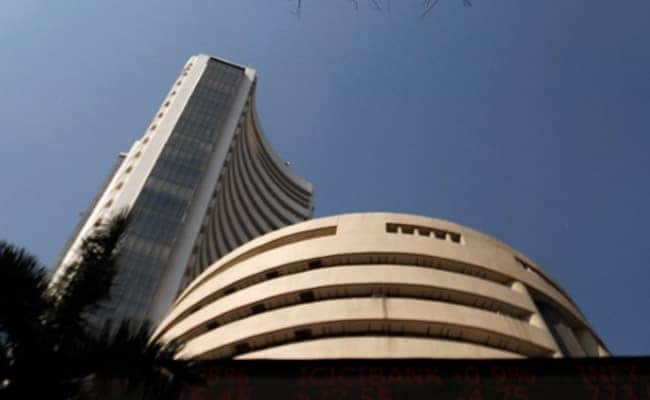
Indian equity benchmarks reversed sharp losses from earlier in the session to end with gains near the fag end on Thursday, with traders positioning on the expiry of the futures and options (F&O) contracts boosting domestic stocks.
After falling over 300 points earlier in the session, the BSE Sensex index rose 223.60 points, or 0.37 per cent, to close at 61,133.88, and the broader NSE Nifty index gained 68.50 points, or 0.38 per cent, to end at 18,191.
The rupee, too, gained slightly on Thursday against a steady dollar.
Global stocks, though, declined in thin trading volumes due to the holiday season as investors worried that China's outbreak could stall a long-awaited domestic and international economic rebound.
Indeed, on Thursday, with just one trading day left for the year, worries over the spread of COVID-19 from China led to a dip in European stocks and a decline in Asian stocks.
On low trading activity, equity benchmarks declined in South Korea, Australia, China, and Japan. After the S&P 500 index fell 1.2 per cent to its lowest in more than a month, futures contracts for the index see-sawed.
China's reopening "complicates the Fed's job with respect to putting a little bit of a bid under oil prices, putting a little bit of a bid under inflation globally, to aggregate demand," said Sameer Samana, Senior Global Market Strategist for Wells Fargo Investment Institute, on Bloomberg TV.
"That's going to be one of the biggest things that we'll be watching in the first half," he added.
The technology-heavy Nasdaq fell to end 1.35 per cent lower, marking a new bear-market closing low, as investors stayed away from growth firms and riskier bets. From Nasdaq's record-breaking closing high in November, Wednesday's loss represented a decline of more than 36 per cent.
MSCI's broadest index of international stocks fell 0.92 per cent, with the index projected to have its largest yearly decline since the financial crisis of 2008 towards the end of 2022, with a decline of more than 20 per cent.
Thomas Hayes, Chairman of Great Hill Capital LLC in New York, told Reuters that reopening the world's second-largest economy should ultimately benefit the US economy.
"The speed at which they have reversed their stance has caught people off guard," he said. "People are sceptical because the last two years have been such a debacle in China."
But Amit Sinha, Head of Multi-Asset Strategy at Voya Investment Management, told Reuters that Wednesday's stock declines stemmed from "noise" such as low liquidity and tax loss harvesting where investors sell money-losing investments.
"Today, there's nibbling away at risk and selling for tax loss harvesting purposes," said Mr Sinha. "Markets have been going down for the course of December. There's a negative sentiment and momentum already."
Mr Sinha sees "reasons why people want to sell" with 2023 presenting uncertainties around the Fed's rate hiking path regarding whether it can control inflation without damaging the economy.
"There's no compelling reason to be on the other side. It exaggerates the price decline," he said.
With a surge in COVID-19 cases in China, there was less hope for a recovery in fuel demand in the world's second-largest oil user, which led to a decline in crude prices.
That crude price fall capped the domestic shares losses as India depends on imports for over 85 per cent of its oil needs.

-
Getting To Work Costs Women More | The Reason Why

It is not just about women paying more than men. It is about women paying much more in cities than in villages.
-
AI Bias In Investing Cannot Be Eliminated, But It Can Be Governed
Framing is a particularly important example as identical financial information presented in terms of gains rather than losses can lead an LLM to reach a different assessment.
-
Joining The Dots | Dark Skies, Steady Diya: Why Hope Holds This Diwali
With war, a weak rupee and foreign outflows weighing on sentiment, policymakers at the NDTV World Summit and market veterans at NDTV Profit Ignite: Diwali Edition offered the same advice: stay invested and filter out the noise.
-
The Curious Case of Equitas Small Finance Bank And A CEO Who Quit For Stock
PN Vasudevan believes persistent investor concerns over a perceived conflict of interest had become a governance overhang on Equitas Small Finance Bank's stock, even as the lender improved profitability and asset quality.
-
Talking Points This Week: AI Cash Burn, A Tiger Comeback And An India That Still Finds Its Own Path
India is not immune to higher oil or tighter global liquidity, yet its earnings base is broader, its domestic policy levers are still available.
-
Foreign Investors Own Half Of HDFC Bank and ICICI Bank. An LTCG Cut Could Matter Most Here
Foreign portfolio investors have US$115 billion parked in HDFC Bank, ICICI Bank. If the government cuts long-term capital gains tax, Jefferies says returning foreign money could land here first.
-
'Never Seen This Level Of Negativity': Sandeep Tandon Says The Next Rally May Be Closer Than You Think
Veteran investor Sandeep Tandon says foreign selling is easing, large-caps are due a comeback and mid-caps are crowded, while he turns positive on gold, power and pharma this Diwali.
-
Indians Stay With Family, Not In Hotels | The Reason Why
India still lacks enough clean, reliable and affordable hotels for budget-conscious travellers.
-
The Economic Imperative: Analysing The Material Driving Force Behind India-Canada Strategic Reset
This economic complementarity is further reinforced by deep institutional investment ties and talent mobility, which form the bedrock of the bilateral framework.
-
Medicine Pricing: Where Must Profit Stop?
India must confront excessive margins, hidden incentives and regulatory gaps that threaten the integrity of medicine.










