Sensex, Nifty Fall Sharply, Snapping A Two Session Winning Streak
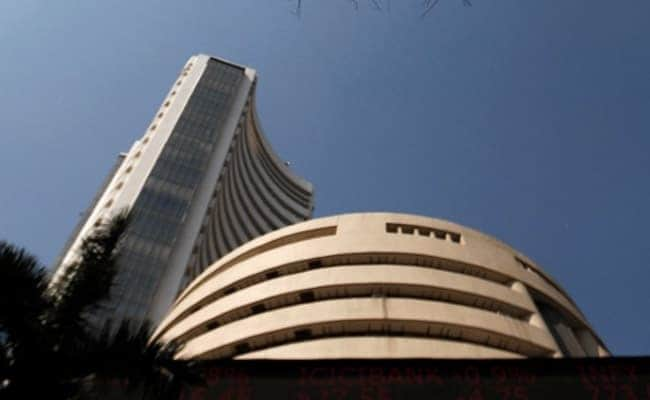
Indian equity benchmarks fell sharply on Thursday, snapping a two-session winning streak as investors waited to hear the latest reaction of the world's top central bankers to soaring inflation on Friday.
After remaining in the positive territory for most part of the trade, the BSE Sensex suddenly came under heavy selling pressure during the last half-hour of the session, declining 310.71 points or 0.53 per cent to settle at 58,774.72. During the day, it hit a high of 59,484.35 and a low of 58,666.41.
Similarly, the broader NSE Nifty dropped 82.50 points or 0.47 per cent to end at 17,522.45.
From the Sensex pack, Bajaj Finance, IndusInd Bank, Infosys, Tata Consultancy Services, Axis Bank, Power Grid, NTPC, Larsen & Toubro and HDFC were the major laggards.
Maruti Suzuki India, State Bank of India, Dr Reddy's and Titan were the gainers.
The Nifty IT index was down 0.87 per cent with IT major Infosys Ltd the top loser, shedding 1.3 per cent. Consumer stocks also fell, as heavyweights ITC, Hindustan Unilever dropped 0.5 per cent each.
Adani Ports and Special Economic Zone was the top loser on the Nifty 50 after it fell 2.4 per cent.
Mid-cap stocks have been an active participant in the Indian market recently, with the Nifty Mid-cap 100 index rising 4.4 per cent this month. The index closed 0.06 per cent lower on Thursday.
Bucking the trend, the Nifty PSU Bank index was up 2.7 per cent to its highest in over four months.
"“Amid heightened volatility, investors pruned their long positions on the F&O expiry day due to the uncertain global economic scenario," said Shrikant Chouhan, Head of Equity Research for Retail at Kotak Securities.
"There are concerns that the Federal Reserve Chairman Jerome Powell's speech at the Jackson Hole symposium on Friday would focus on more rate hikes to rein in inflation. Also, benchmark indices had come close to slipping into negative zones in the last two sessions, and hence correction was on expected lines," he added.
But reversed gains on Thursday to settle lower on fag-end sell-off.
Investors were jittery ahead of the US Federal Reserve's annual Jackson Hole conference for clues on how sharp future interest rate hikes might be.
That even as Wall Street gains from overnight were followed by a rise in Asian bourses today,
European stock exchanges followed suit as oil and gas equities rose another 1.5 per cent amid growing concerns over a Russian gas supply issue.
Relief also came from GDP data from Germany, the continent's largest economy. The bruised euro was encouraged to rise back above parity versus the US dollar by news that the nation narrowly avoided a recession in the second quarter.
On Friday, the annual meeting of the Federal Reserve's monetary policy committee in Jackson Hole, Wyoming, was set to begin. The main focus is how much higher US interest rates may have to go if inflation there continues to rise.
"It's all treading water until we get a hold on what Fed chief (Jerome) Powell has to say at Jackson Hole," Saxo Bank's head of FX strategy, John Hardy, told Reuters.
On the euro, which had clawed its way to $1.0003, he added: "We need to see some relief from the gas and power price surge to get some real traction... There is dire pressure on that front."
Reuters Graphic: Gas Crisis Pummels Euro To Parity
Commodity bulls saw Brent crude climb back up to $101.83 per barrel and Europe's benchmark gas price jumped to another record high of 313.50 euros per megawatt hour. They are now up 640 per cent over the last year.
Deutsche Bank strategist Jim Reid said the worry was that the energy situation in Europe keeps getting worse.
"That's adding to fears that “peak inflation” might not actually have arrived yet for some countries," he said. "Policymakers are about to face some unenviable choices as they grapple with the worst stagflation we've seen in decades."
The benchmark crude is now up more than $10 from the lows witnessed last week.
Still, the 47-country MSCI index of world shares rose 0.4 per cent as a result of the 0.7 per cent increase in European stocks, and futures for US stocks indicate that the S&P 500 will follow suit later.
After American stocks ended the prior session with modest gains, MSCI's broadest index of shares outside of Japan from the Asia-Pacific region increased 0.7 per cent.
Australian stocks and the Nikkei market index in Japan increased by about 0.7 per cent.
China's CSI300 rose 0.8 per cent while Hong Kong's Hang Seng Index surged 3.6 per cent in a shortened trading session due to a typhoon.
"Equities markets at the moment see bad news about the economy as being essentially good news because to them it means that the Fed might not tighten as much as thought," Rob Subbaraman, Nomura's head of global macro research, told Reuters.
"But equities markets could have to reassess that after Jackson Hole."

-
Indians Are Travelling, But Not Every Journey Is A Holiday | The Week In Whys

Pilgrims, patients and working women are the real travellers, and the system hasn't quite caught up with them.
-
Getting To Work Costs Women More | The Reason Why
It is not just about women paying more than men. It is about women paying much more in cities than in villages.
-
AI Bias In Investing Cannot Be Eliminated, But It Can Be Governed
Framing is a particularly important example as identical financial information presented in terms of gains rather than losses can lead an LLM to reach a different assessment.
-
Joining The Dots | Dark Skies, Steady Diya: Why Hope Holds This Diwali
With war, a weak rupee and foreign outflows weighing on sentiment, policymakers at the NDTV World Summit and market veterans at NDTV Profit Ignite: Diwali Edition offered the same advice: stay invested and filter out the noise.
-
The Curious Case of Equitas Small Finance Bank And A CEO Who Quit For Stock
PN Vasudevan believes persistent investor concerns over a perceived conflict of interest had become a governance overhang on Equitas Small Finance Bank's stock, even as the lender improved profitability and asset quality.
-
Talking Points This Week: AI Cash Burn, A Tiger Comeback And An India That Still Finds Its Own Path
India is not immune to higher oil or tighter global liquidity, yet its earnings base is broader, its domestic policy levers are still available.
-
Foreign Investors Own Half Of HDFC Bank and ICICI Bank. An LTCG Cut Could Matter Most Here
Foreign portfolio investors have US$115 billion parked in HDFC Bank, ICICI Bank. If the government cuts long-term capital gains tax, Jefferies says returning foreign money could land here first.
-
'Never Seen This Level Of Negativity': Sandeep Tandon Says The Next Rally May Be Closer Than You Think
Veteran investor Sandeep Tandon says foreign selling is easing, large-caps are due a comeback and mid-caps are crowded, while he turns positive on gold, power and pharma this Diwali.
-
Indians Stay With Family, Not In Hotels | The Reason Why
India still lacks enough clean, reliable and affordable hotels for budget-conscious travellers.
-
The Economic Imperative: Analysing The Material Driving Force Behind India-Canada Strategic Reset
This economic complementarity is further reinforced by deep institutional investment ties and talent mobility, which form the bedrock of the bilateral framework.










