Sensex, Nifty Fall Reflecting Global Markets Rout After Fed's Aggressive Stance
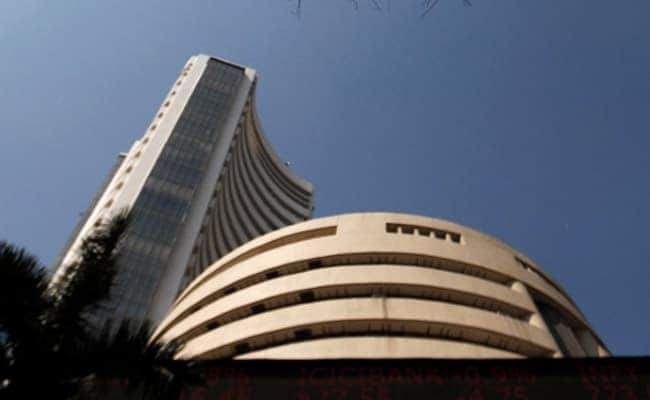
Equity benchmarks fell on Thursday to extend losses from the previous session, tracking a global markets rout after the Federal Reserve hiked rates by 0.75 per cent and projected a higher peak in policy rates in this tightening cycle.
While that Fed move was widely predicted, the projected path spooked global markets, sending equities sharply lower, the dollar to a new 20-year high, and deepened the inverting US Treasury yield curve.
"Local shares are likely to follow other Asian indices and drift lower in early trades Thursday after the US Fed Chairman signalled that rates may go up further in order to battle the decade-high inflation," Prashanth Tapse, Senior VP for Research at Mehta Equities, said before the opening bell.
"Earlier, the US Fed hiked policy rates by 75 bps as anticipated, but the central bank's statement suggesting that more rate hikes could be on the cards in the coming months soured the market sentiment, resulting in a steep fall in the US markets in overnight trades," he added.
The BSE Sensex index fell 483.71 points to 58,973.07 in early trade, and NSE Nifty declined 137.95 points to 17,580.40.
Bajaj Finserv, HDFC, Wipro, HDFC Bank, Tech Mahindra, HCL Technologies, Power Grid, and ICICI Bank were the main laggards among the 30-share Sensex group.
In the opening hours of trading, ITC, Maruti, IndusInd Bank, and Hindustan Unilever were among the winners.
"The big question from the Indian market perspective is whether India's outperformance will continue in the present global risk off context. Investors can remain optimistic but be cautious since India's valuations are on the higher side," V K Vijayakumar, Chief Investment Strategist at Geojit Financial Services, told ANI.
"Financials, capital goods, select autos, telecom and construction related stocks can be bought on declines," Mr Vijayakumar said.
The rupee hit a new record low as the dollar climbed to a fresh 20-year peak.
Russian President Vladamir Putin's mobilisation of more troops for the war in Ukraine also drove investors into safe-haven assets, hurting global risk assets.
As US futures sank following the overnight decline in the S&P 500, which has dropped more than 20 per cent from its record high in January, Asian stocks hit a two-year low, with shares tumbling in China, Japan, and South Korea. Hong Kong's benchmark equity indicator headed for lows last seen in 2011, with Chinese tech stocks leading falls.
Nikkei lost 1 per cent in Japan. While the Golden Dragon index of Chinese shares trading on US exchanges took a beating and dropped 5.9 per cent overnight, Hang Seng futures were unchanged.
Reuters reported that in a tumultuous overnight session, the US yield curve widened its inversion as investors priced out the possibility of a "soft" economic landing and braced for harm to longer-term growth while selling short-end Treasuries and buying longer-end ones.
"The chances of a soft landing are likely to diminish to the extent that policy needs to be more restrictive, or restrictive for longer," Fed Chair Jerome Powell told reporters after the rate hike announcement.
According to Bloomberg, sentiment took an additional hit from Russia's escalation of its war with Ukraine and tensions between Beijing and Taiwan.
"In terms of Asia, I think the Federal Reserve's outcome is likely to keep pressure on risk assets," Clara Cheong, a global market strategist at JPMorgan Asset Management, said on Bloomberg Radio. "It could especially hurt export-oriented companies due to the effect of a strong dollar."

-
We May Need Another Tukaram Mundhe To Fight Air Pollution | The Reason Why

Developers may install basic measures such as sprinklers and green nets, resume work, and continue violating rules when this equipment stops working.
-
Extracting Value From Battery Scrap Could Be Challenging For India | The Reason Why
A discarded lithium-ion battery still contains valuable materials such as lithium, nickel and cobalt. These can be recovered and reused. When such batteries are crushed and shredded, they produce a dark powder called black mass.
-
One El Nino, India Can Handle. Two Could Break The Granary
India's grain stocks can absorb one bad year, but a second El Nino could drain the buffer in two to three years, economists say.
-
India's Troika Of Good Luck | Joining The Dots
As Jensen Huang's exit drags Nvidia down, a cooling AI trade and resilient earnings have revived investor interest in India. A likely RBI rate hike looms.
-
Talking Points This Week: Leadership Shock At Nvidia, Earnings Strength, And The Fog Over Hormuz
The Anthropic IPO pricing and first trading day, Nvidia's upcoming earnings, and any fresh signals from Iran will set the tone for the following week.
-
Signature Play: The Classic Cocktail Is Dead. Or Is It?
Classic cocktails are disappearing from India's cocktail menus. But they're still being ordered, taught to bartenders and borrowed from. So, who's really having the last drink?
-
A New Samvat Wishlist: Inclusive Prosperity And Human Development
India has strengthened its economic foundations through infrastructure, digital access and enterprise. Its next growth chapter must deepen productivity, create better livelihoods and widen participation in prosperity.
-
Love, Sex Aur Dhokha: The Audacious Plot To Spy On Jensen Huang
A Taipei dinner, a Singapore chip buyer and a suspected Chinese asset: inside the alleged spy operation that got close to NVIDIA's Jensen Huang.
-
Ten Things I Learnt This Samvat
Patience can be a trap. Cheap stocks can stay cheap. Leverage can wipe you out. What did Samvat 2082 teach us? Niraj Shah writes on 10 lessons from the year gone by.
-
Talking Points This Week: Tech Nerves, FII Buying, And A Faraway Banking Shock
The global markets are not shining this Diwali. The exception in the large markets is, India.









