Sensex Crashes Over 630 Points, Extending Losses For Second Straight Day
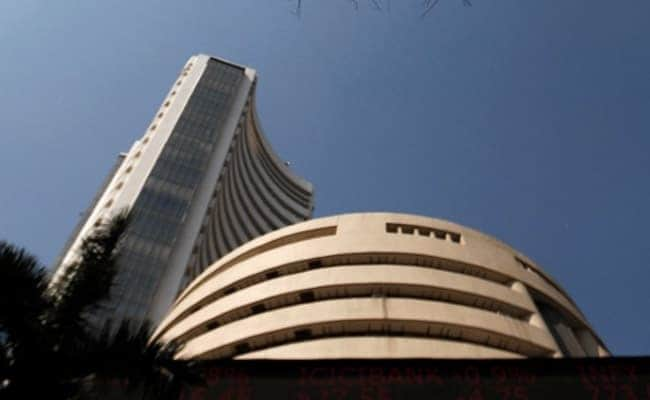
Indian equity benchmarks reversed gains from earlier in the session to crash on Wednesday, extending losses for the second straight day ahead of the Reserve Bank of India's latest policy meeting minutes and key US macroeconomic data.
Lingering global recession risks and China Covid fears drove the deep sell-off in domestic stocks towards the fag end of the session.
The BSE Sensex plunged 635.05 points, or 1.03 per cent, to close at 61,067.24, and the broader NSE Nifty index fell 186.20 points, or 1.01 per cent, to end at 18,199.10.
Among the leading laggards on the Sensex index were IndusInd Bank, Bajaj Finserv, Maruti, UltraTech Cement, Tata Motors, Axis Bank, State Bank of India, and Kotak Mahindra Bank.
Among the companies that finished in the black were Sun Pharma, HCL Technologies, Tata Consultancy Services, Tech Mahindra, Nestle, Wipro, and Infosys.
"Indian markets underperformed their Asian peers and came down crumbling on broad-based sell-off, mainly over concerns that recessionary fears in key major economies will have a spill-over effect on the local growth prospects going ahead," Shrikant Chouhan, Head of Equity Research for Retail at Kotak Securities.
"Investors are also worried that mounting Covid cases in China may lead to further deterioration in global economic health prompting traders to cut their equity market exposure," he added.
Markets now focus on the minutes of the Reserve Bank of India's (RBI) most recent policy meeting, which is scheduled for release later today. Investors eye the central bank's views on inflation trajectory and growth outlook.
"RBI's bulletin signalled that India's growth will be driven by domestic demand", Anita Gandhi, director at Arihant Capital Markets, said, adding that domestic macroeconomic indicators such as advance tax collections, GST collections, and auto sales have shown strength.
Asian markets, though, recovered after Tuesday's slide triggered by Japan's surprise policy review, while the the rupee fell slightly against the dollar, even as global risks assets made a modest recovery.
After the S&P 500 closed higher for the first time in four sessions on Tuesday, European markets rose along with US stock futures on Wednesday, offering some relief in one of the worst years for stocks and bonds in more than ten years.
Price pressures impacted bonds and equities simultaneously, unhinged their ability to counterbalance one another as inflation resisted aggressive central bank rate hikes to reduce it.
Citi analysts said the calm in equity markets might not last, and things could get volatile in thinned year-end trading.
"Our equity traders caution that the most under-priced market risks are roughly how high the structural inflation floor will settle in a post-COVID world," the analysts at Citi, told Reuters.
"We know the Fed is resolutely committed to seeing inflation taper down to 2 per cent and stay there, which suggests it may need to create a lot more pain than markets currently discount in order to reach its target," they added.
The traditional strategy of investing 60 per cent in equities and 40 per cent in fixed income fell 17 per cent in 2022, the worst performance since 2008, reported Bloomberg.
Fund managers are cautiously approaching the beginning of 2023, so trading conditions are scarce and extremely volatile.
"We think recessions are coming in the US and Europe, but it is very hard to gauge the amplitude of these recessions right now. This makes it very hard to evaluate earnings potential for 2023, and so it is also very hard to do the usual reasoning about valuations," Bastien Drut, Chief Thematic Macro Strategist at CPR, a unit of Amundi, Europe's largest asset manager, told Reuters.
"We've taken profits from the rally in November, and our positioning in equities is rather low," he added.
The price of gold pushed toward six-month highs, while crude oil was supported as the dollar dipped versus a basket of major currencies.
In addition, oil managed to maintain a two-day rise as supply disruptions and a report showing a decline in US crude stocks allayed fears of a slowdown.

-
Getting To Work Costs Women More | The Reason Why

It is not just about women paying more than men. It is about women paying much more in cities than in villages.
-
AI Bias In Investing Cannot Be Eliminated, But It Can Be Governed
Framing is a particularly important example as identical financial information presented in terms of gains rather than losses can lead an LLM to reach a different assessment.
-
Joining The Dots | Dark Skies, Steady Diya: Why Hope Holds This Diwali
With war, a weak rupee and foreign outflows weighing on sentiment, policymakers at the NDTV World Summit and market veterans at NDTV Profit Ignite: Diwali Edition offered the same advice: stay invested and filter out the noise.
-
The Curious Case of Equitas Small Finance Bank And A CEO Who Quit For Stock
PN Vasudevan believes persistent investor concerns over a perceived conflict of interest had become a governance overhang on Equitas Small Finance Bank's stock, even as the lender improved profitability and asset quality.
-
Talking Points This Week: AI Cash Burn, A Tiger Comeback And An India That Still Finds Its Own Path
India is not immune to higher oil or tighter global liquidity, yet its earnings base is broader, its domestic policy levers are still available.
-
Foreign Investors Own Half Of HDFC Bank and ICICI Bank. An LTCG Cut Could Matter Most Here
Foreign portfolio investors have US$115 billion parked in HDFC Bank, ICICI Bank. If the government cuts long-term capital gains tax, Jefferies says returning foreign money could land here first.
-
'Never Seen This Level Of Negativity': Sandeep Tandon Says The Next Rally May Be Closer Than You Think
Veteran investor Sandeep Tandon says foreign selling is easing, large-caps are due a comeback and mid-caps are crowded, while he turns positive on gold, power and pharma this Diwali.
-
Indians Stay With Family, Not In Hotels | The Reason Why
India still lacks enough clean, reliable and affordable hotels for budget-conscious travellers.
-
The Economic Imperative: Analysing The Material Driving Force Behind India-Canada Strategic Reset
This economic complementarity is further reinforced by deep institutional investment ties and talent mobility, which form the bedrock of the bilateral framework.
-
Medicine Pricing: Where Must Profit Stop?
India must confront excessive margins, hidden incentives and regulatory gaps that threaten the integrity of medicine.










