Nifty, Sensex Fall, Reversing Late Gains From Previous Session
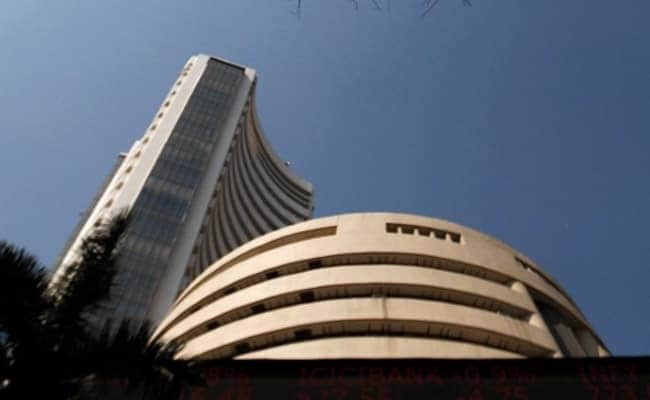
Indian equity benchmarks fell early on Wednesday, reversing positive returns made at the fag end of the previous session after see-sawing between gains and losses, with volatility expected to be a broader theme across global financial markets.
The 30-share BSE Sensex index was down 144.29 points, or 0.24 per cent, at 58,887.01, and the NSE Nifty index fell 41.10 points, or 0.23 per cent, to 17,536.40.
From the Sensex pack, Asian Paints, Titan, Larsen & Toubro, Maruti, Hindustan Unilever, Nestle, Tata Steel, Bharti Airtel and State Bank of India were among the major laggards.
On the other hand, IndusInd Bank, Sun Pharma, Reliance Industries, ITC and Power Grid were the gainers.
Gains in banking stocks were offset by losses in the energy sector as crude oil prices surged above $100 per barrel.
After nose-diving on Monday and earlier in the previous session, the Sensex index recovered to gain 257.43 points, or 0.44 per cent, to close on Tuesday at 59,031.30, and the Nifty rose 86.70 points, or 0.5 per cent, to 17,577.50.
"The steady buying by FIIs even in the midst of strengthening the Dollar is significant from the market perspective. There is a near consensus now that India will be an outperformer in the deteriorating global growth environment," V K Vijayakumar, Chief Investment Strategist at Geojit Financial Services, told ANI.
"So, FII inflows will be more country-specific rather than emerging market-oriented," Mr Vijayakumar added.
Foreign Institutional Investors (FIIs) were net buyers in the Indian capital market on Tuesday as they purchased shares worth ₹ 563.00 crore, according to the latest exchange data.
Since July, foreign portfolio investors infused over Rs 50,000 crore worth of equities in India, National Securities Depository data showed.
On Wednesday, the SGX Nifty pointed to a slightly worse beginning for Indian stocks. Trading professionals will examine daily equities flow data to determine whether a recent decline in risk appetite affected flows.
As investors remained cautious in advance of this week's Jackson Hole symposium, Asian stock markets declined for an eighth straight session on Wednesday, and the dollar loomed big.
Neel Kashkari, president of the Minneapolis Federal Reserve Bank, was the most recent representative to reaffirm the Fed's priority of containing inflation above all else, and he stated on Tuesday that his greatest concern is underestimating the magnitude of price pressures.
The MSCI index of Asian shares outside of Japan lost 0.2 per cent in morning trade, marking the index's eighth straight day of decline. Nikkei in Japan decreased by 0.6 per cent.
Wall Street stabilised overnight after two days of significant losses as weaker US data raised concerns about rate hikes.
"US stocks managed not to fall sharply yesterday. But that's about the best that can be said of them. An initial rally in line with equity futures indications dissipated quite quickly, and it doesn't feel like we will see any substantial moves higher this side of Powell's Jackson Hole speech on Friday," said Robert Carnell, Regional Head of Research for Asia-Pacific, at ING.
"On that front, Neel Kashkari yesterday was quoted talking about the need for the Fed to dampen inflation. No hints about a slowdown of rates or 2023 cuts. That could be a clue as to Powell's tone on Friday," he added.
On Tuesday, US services and manufacturing surveys came in below expectations. At the same time, new home sales in July hit a 6-1/2 year low, adding to the gloom from Europe data, which pointed to recessionary risks.
"In some ways, it's good news; the softer the data is now, the less the Fed has to do," said ING's Mr Carnell, but he said there weren't too many reasons to expect a shift in tone from the Fed at this week's Jackson Hole symposium.
"It might be a bit early to be jumping that gun just yet...if you start to give the market a little sop that it might get better in time, you might end up undermining your own approach."
Early on Wednesday, S&P 500 futures decreased by 0.3 per cent, while FTSE and European futures also slightly eased.
Due to indications of US demand and Saudi Arabia's rhetoric of supply reduction, Brent oil futures are currently trading at around $100 per barrel. The increasing price of oil supported Australian energy stocks.
With few events scheduled before the Jackson Hole conference, there were little changes elsewhere, and the dollar maintained close to a two-decade high against the euro.

-
Joining The Dots | Dark Skies, Steady Diya: Why Hope Holds This Diwali

With war, a weak rupee and foreign outflows weighing on sentiment, policymakers at the NDTV World Summit and market veterans at NDTV Profit Ignite: Diwali Edition offered the same advice: stay invested and filter out the noise.
-
The Curious Case of Equitas Small Finance Bank And A CEO Who Quit For Stock
PN Vasudevan believes persistent investor concerns over a perceived conflict of interest had become a governance overhang on Equitas Small Finance Bank's stock, even as the lender improved profitability and asset quality.
-
Talking Points This Week: AI Cash Burn, A Tiger Comeback And An India That Still Finds Its Own Path
India is not immune to higher oil or tighter global liquidity, yet its earnings base is broader, its domestic policy levers are still available.
-
Foreign Investors Own Half Of HDFC Bank and ICICI Bank. An LTCG Cut Could Matter Most Here
Foreign portfolio investors have US$115 billion parked in HDFC Bank, ICICI Bank. If the government cuts long-term capital gains tax, Jefferies says returning foreign money could land here first.
-
'Never Seen This Level Of Negativity': Sandeep Tandon Says The Next Rally May Be Closer Than You Think
Veteran investor Sandeep Tandon says foreign selling is easing, large-caps are due a comeback and mid-caps are crowded, while he turns positive on gold, power and pharma this Diwali.
-
Indians Stay With Family, Not In Hotels | The Reason Why
India still lacks enough clean, reliable and affordable hotels for budget-conscious travellers.
-
The Economic Imperative: Analysing The Material Driving Force Behind India-Canada Strategic Reset
This economic complementarity is further reinforced by deep institutional investment ties and talent mobility, which form the bedrock of the bilateral framework.
-
Medicine Pricing: Where Must Profit Stop?
India must confront excessive margins, hidden incentives and regulatory gaps that threaten the integrity of medicine.
-
Why Amazon And Flipkart Are Struggling To Beat Meesho In India's Smaller Cities
With 274 million users and lowest-cost logistics, Meesho is defending its value commerce crown against giants like Amazon and Flipkart.
-
High US Salaries, No Green Card Certainty: The Financial Calculation Facing Indian H-1B Families
The suspension of PERM processing at eight technology employers does not cancel existing H-1B visas. What it does is force a question many Indian families have been avoiding: is the US salary worth tying your career and family plans to one employer?










