Nifty, Sensex Fall For Third Straight Session, With No Let-Up In Safety Bets
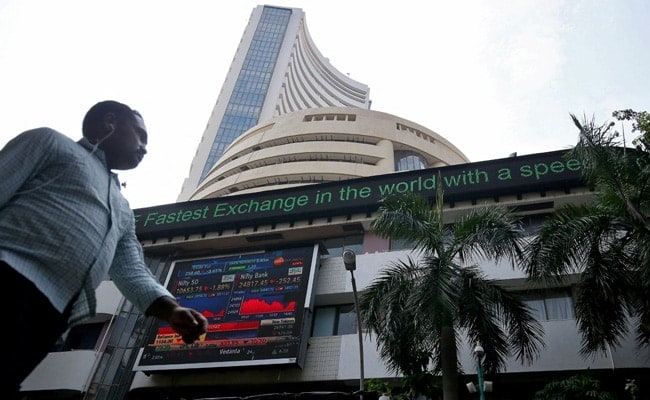
Indian equity benchmarks fell for the third day in a row on Tuesday, tracking weak Asian bourses, which were down for a sixth straight session after a renewed spike in European energy prices stoked fears of recession and unease over China's economy.
The 30-share BSE Sensex index plunged 324.85 points, or 0.55 per cent, to 58,449.02, and the NSE Nifty opened 115.70 points, or 0.66 per cent, lower at 17,375.
From the Sensex pack, Infosys, Tech Mahindra, HCL Technologies, Wipro, Tata Consultancy Services, IndusInd Bank, Dr Reddy's Lab and HDFC Bank were the major laggards in early trade.
On the other hand, Mahindra & Mahindra, Bajaj Finserv, Tata Steel and UltraTech Cement were trading higher.
The Nifty metal index was up 1 per cent while IT stocks declined with the Nifty IT index down 1.3 per cent.
The Nifty 50 index had risen 4.6 per cent this month until August 18, after which investors began to book profits. The index shed 2.6 per cent in the last two sessions.
"Early fall in other Asian indices could prompt investors to extend their profit-booking," Prashanth Tapse, Senior VP for Research at Mehta Equities, told Reuters.
That comes a day after both the benchmark indexes crashed about 1.5 per cent amid investors' angst that most central banks keep raising rates despite increasing global economic risks.
"The correction was very sharp in the last few days and this isn't a trend reversal... Market is moving down," AK Prabhakar, head of research at IDBI Capital, told Reuters adding that there was pressure on both ends with the derivative expiry on Thursday.
According to preliminary BSE statistics, FIIs (Foreign Institutional Investors) sold shares worth Rs 453.77 crore on Monday, turning net sellers of Indian equities.
In Asia, concerns over China's economy persisted as discussions of new official loans to real estate developers and a reduction in lending rates highlighted strains in the industry.
"It would be bad enough for Chinese equities if the economy's struggles were confined to the property sector," Oliver Allen a market economist at Capital Economics, told Reuters.
"But growth in the services sector seems unlikely to accelerate by much so long as China's zero-COVID policies remain in place; the pandemic-linked export boom is coming to an end; and power shortages due to droughts in parts of the country look set to hobble industry in the near term."
Blue-chip stocks in China were down 0.2 per cent, having only briefly benefited from the latest policy easing there.
The largest MSCI index of Asia-Pacific shares outside of Japan fell 0.4 per cent, continuing a week of daily declines.
After a PMI survey revealed that manufacturing activity in Japan dropped to a 19-month low in August despite ongoing increases in raw material and energy costs, the Nikkei fell 1.2 per cent.
EUROSTOXX 50 futures and FTSE futures were both off a fraction after sliding overnight, as European and British manufacturing surveys due later on Tuesday were expected to highlight the damage being done to activity, with Germany seen deeper in contractionary territory.
Benchmark gas prices in the European Union doubled in just one month to be 14 times more than the average of the previous ten years, and they jumped 13 per cent overnight to a record high.
"Europe's dire energy situation suggests the peak of inflation is not here yet, and the risk remains that high inflation is sticky for longer without further aggressive central bank action," Tapas Strickland, a director of economics at NAB, told Reuters.
"No surprise then to see the USD at near multi-decade highs against a falling EUR and GBP," he added.
The euro was in trouble at $0.9937, having fallen 1 per cent to a 20-year low of $0.99265. With little remaining chart support, the break of the July low at $0.9952 was interpreted as a bearish indicator for a further push lower.
After falling as low as $1.1743 and reaching levels last seen in March 2020 at the beginning of the epidemic, the British pound was down at $1.1766.
As a result, the dollar index rose to 108.870, just below its July top.
Both the S&P 500 and Nasdaq futures eked out a 0.1 per cent gain, although that came after significant declines on Monday when increasing bond yields hurt tech shares.
On Monday, the benchmark 10-year US yield reached a five-week high of 3.040 per cent, and the 30-year yield increased to a seven-week high of 3.268 per cent.
10-year rates last traded at 3.029 per cent, an increase of 50 basis points from early August lows.
The surge partly reflects the Federal Reserve's hawkish comments, which have caused the market to price in a 55 per cent likelihood of a 75 basis-point increase to 3.0-3.25 per cent in September and a peak for rates at 3.75 per cent.
"US stocks posted their worst daily drop in two months Monday on fears that the recent rally was based on an overly optimistic view that the Federal Reserve would pivot away from sharply higher interest rates to fight inflation," Deepak Jasani, Head of Retail Research at HDFC securities, told ANI.
Oil prices climbed after overnight volatility as Saudi Arabia indicated that the OPEC+ producing group would reduce output.
Demand worries and the possibility of a nuclear agreement, which may allow Iranian oil that has been sanctioned to return to the market, have impacted oil prices.
US crude increased 78 cents to $91.14 a barrel, while Brent rose 78 cents to $97.26.

-
Getting To Work Costs Women More | The Reason Why

It is not just about women paying more than men. It is about women paying much more in cities than in villages.
-
AI Bias In Investing Cannot Be Eliminated, But It Can Be Governed
Framing is a particularly important example as identical financial information presented in terms of gains rather than losses can lead an LLM to reach a different assessment.
-
Joining The Dots | Dark Skies, Steady Diya: Why Hope Holds This Diwali
With war, a weak rupee and foreign outflows weighing on sentiment, policymakers at the NDTV World Summit and market veterans at NDTV Profit Ignite: Diwali Edition offered the same advice: stay invested and filter out the noise.
-
The Curious Case of Equitas Small Finance Bank And A CEO Who Quit For Stock
PN Vasudevan believes persistent investor concerns over a perceived conflict of interest had become a governance overhang on Equitas Small Finance Bank's stock, even as the lender improved profitability and asset quality.
-
Talking Points This Week: AI Cash Burn, A Tiger Comeback And An India That Still Finds Its Own Path
India is not immune to higher oil or tighter global liquidity, yet its earnings base is broader, its domestic policy levers are still available.
-
Foreign Investors Own Half Of HDFC Bank and ICICI Bank. An LTCG Cut Could Matter Most Here
Foreign portfolio investors have US$115 billion parked in HDFC Bank, ICICI Bank. If the government cuts long-term capital gains tax, Jefferies says returning foreign money could land here first.
-
'Never Seen This Level Of Negativity': Sandeep Tandon Says The Next Rally May Be Closer Than You Think
Veteran investor Sandeep Tandon says foreign selling is easing, large-caps are due a comeback and mid-caps are crowded, while he turns positive on gold, power and pharma this Diwali.
-
Indians Stay With Family, Not In Hotels | The Reason Why
India still lacks enough clean, reliable and affordable hotels for budget-conscious travellers.
-
The Economic Imperative: Analysing The Material Driving Force Behind India-Canada Strategic Reset
This economic complementarity is further reinforced by deep institutional investment ties and talent mobility, which form the bedrock of the bilateral framework.
-
Medicine Pricing: Where Must Profit Stop?
India must confront excessive margins, hidden incentives and regulatory gaps that threaten the integrity of medicine.










