Nifty Reverses Early Gains To Fall Below 18,000 Level In A See-Saw Session
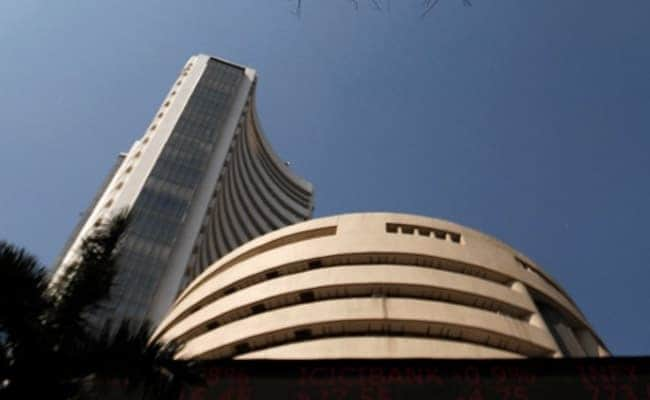
Equity benchmarks had their worst day in two weeks as IT, and banking stocks slipped, reversing a sharp rise to end significantly lower, extending a sell-off for the second straight day in a see-saw session oscillating between gains and losses, mirroring the moves in global stocks in a highly volatile session.
The 30-share BSE Sensex index ended over 400 points lower to below 60,000 mark, and the broader NSE Nifty-50 index closed Thursday below the 18,000 level.
"Markets are becoming nervous around the 18k mark and unable to sustain gains made on Wednesday. Nifty opened positive but wiped out its entire gains to close at day's low," said Siddhartha Khemka, Head of Retail Research at Motilal Oswal Financial Services.
The Sensex fell 412.96 points to close at 59,934.01 and the Nifty declined 126.35 points to settle at 17,877.40, after both benchmarks had opened at five-month highs. But they reversed those gains through the session.
"Defying the positive trend of global markets, domestic indices shed their early gains, dragged by losses in IT and pharma sectors, while mid & small caps outperformed. Fears of a recession in the global economy exacerbated selling pressure in IT and pharma stocks," Vinod Nair, Head of Research at Geojit Financial Services, told PTI.
Among the 30 stocks that make up the benchmark Sensex, only seven closed in the green.
Tech Mahindra, Infosys, Tata Steel, Bajaj Finserv, Axis Bank, and Indusind Bank were among of the Sensex pack's biggest laggards.
Infosys has lost more than 7 per cent over the last two sessions, hit in part, by a downgrade by Goldman Sachs to 'sell', a Reuters report showed.
Among the gainers were Maruti, Power Grid, NTPC, HDFC, Bharti Airtel, Larsen & Toubro, and State Bank of India.
“We saw markets rallying sharply over the past week, so profit-taking was on expected lines. Volatility would continue due to concerns of a hawkish stance on rate hikes from the central banks amid rising inflation," said Shrikant Chouhan, Head of Equity Research for Retail at Kotak Securities.
"In an uncertain market, stock & sector-specific buying activity could gain momentum," he added.
The S&P 500 and Nasdaq 100 futures contracts swung between small gains and losses, wavering on differing views in markets on US inflation data and the resultant Federal Reserve rate hikes, but pointed to a slow day on Wall Street later.
"Equity markets are presently in no-man's land," Sean Darby, global equity strategist at Jefferies in Hong Kong, told Reuters.
"Better macro news to support earnings is discounted as (there is) the need for further tightening to quash growth – while CPI prints are not declining fast enough," he said.
The MSCI Asia Pacific Index outside of Japan reversed early gains to trade lower, while European stocks marginally increased.
The mixed reaction in markets reflect the opposing views between US consumer price index-based inflation and a lower reading producer prices.
But the focus remains squarely on the Fed's rate hike path, with markets now increasingly penciling in a 100 basis point increase next week.
“While the Fed is now almost certain to hike by 75 basis points next week and more in the months that follow than previously anticipated, the view still seems to be that Tuesday was a setback rather than a game changer,” Craig Erlam, a senior markets analyst at Oanda Europe Ltd, told Bloomberg.
“Confidence that we are at or near peak inflation is dented but not broken and this week serves as a reminder that as was the case on the way up, the path back to 2 per cent will likely be littered with nasty surprises,” he added.
Fed funds futures contracts, which were dragged down along with markets following Tuesday's stubbornly high US inflation reading but were boosted by lower producer price data on Thursday, showed a 30 per cent chance for a 100 basis point rate hike next week, and by February, expectations are for the benchmark US interest rate to reach 4.3 per cent.
Two-year US yields, which reflect expectations for short-term rates, increased marginally to 3.029 per cent, bringing the week's increase to 23 basis points and marking the sixth consecutive week of gains.

-
Getting To Work Costs Women More | The Reason Why

It is not just about women paying more than men. It is about women paying much more in cities than in villages.
-
AI Bias In Investing Cannot Be Eliminated, But It Can Be Governed
Framing is a particularly important example as identical financial information presented in terms of gains rather than losses can lead an LLM to reach a different assessment.
-
Joining The Dots | Dark Skies, Steady Diya: Why Hope Holds This Diwali
With war, a weak rupee and foreign outflows weighing on sentiment, policymakers at the NDTV World Summit and market veterans at NDTV Profit Ignite: Diwali Edition offered the same advice: stay invested and filter out the noise.
-
The Curious Case of Equitas Small Finance Bank And A CEO Who Quit For Stock
PN Vasudevan believes persistent investor concerns over a perceived conflict of interest had become a governance overhang on Equitas Small Finance Bank's stock, even as the lender improved profitability and asset quality.
-
Talking Points This Week: AI Cash Burn, A Tiger Comeback And An India That Still Finds Its Own Path
India is not immune to higher oil or tighter global liquidity, yet its earnings base is broader, its domestic policy levers are still available.
-
Foreign Investors Own Half Of HDFC Bank and ICICI Bank. An LTCG Cut Could Matter Most Here
Foreign portfolio investors have US$115 billion parked in HDFC Bank, ICICI Bank. If the government cuts long-term capital gains tax, Jefferies says returning foreign money could land here first.
-
'Never Seen This Level Of Negativity': Sandeep Tandon Says The Next Rally May Be Closer Than You Think
Veteran investor Sandeep Tandon says foreign selling is easing, large-caps are due a comeback and mid-caps are crowded, while he turns positive on gold, power and pharma this Diwali.
-
Indians Stay With Family, Not In Hotels | The Reason Why
India still lacks enough clean, reliable and affordable hotels for budget-conscious travellers.
-
The Economic Imperative: Analysing The Material Driving Force Behind India-Canada Strategic Reset
This economic complementarity is further reinforced by deep institutional investment ties and talent mobility, which form the bedrock of the bilateral framework.
-
Medicine Pricing: Where Must Profit Stop?
India must confront excessive margins, hidden incentives and regulatory gaps that threaten the integrity of medicine.










