Startups Must Self-Regulate, Says India-Led G20 Group
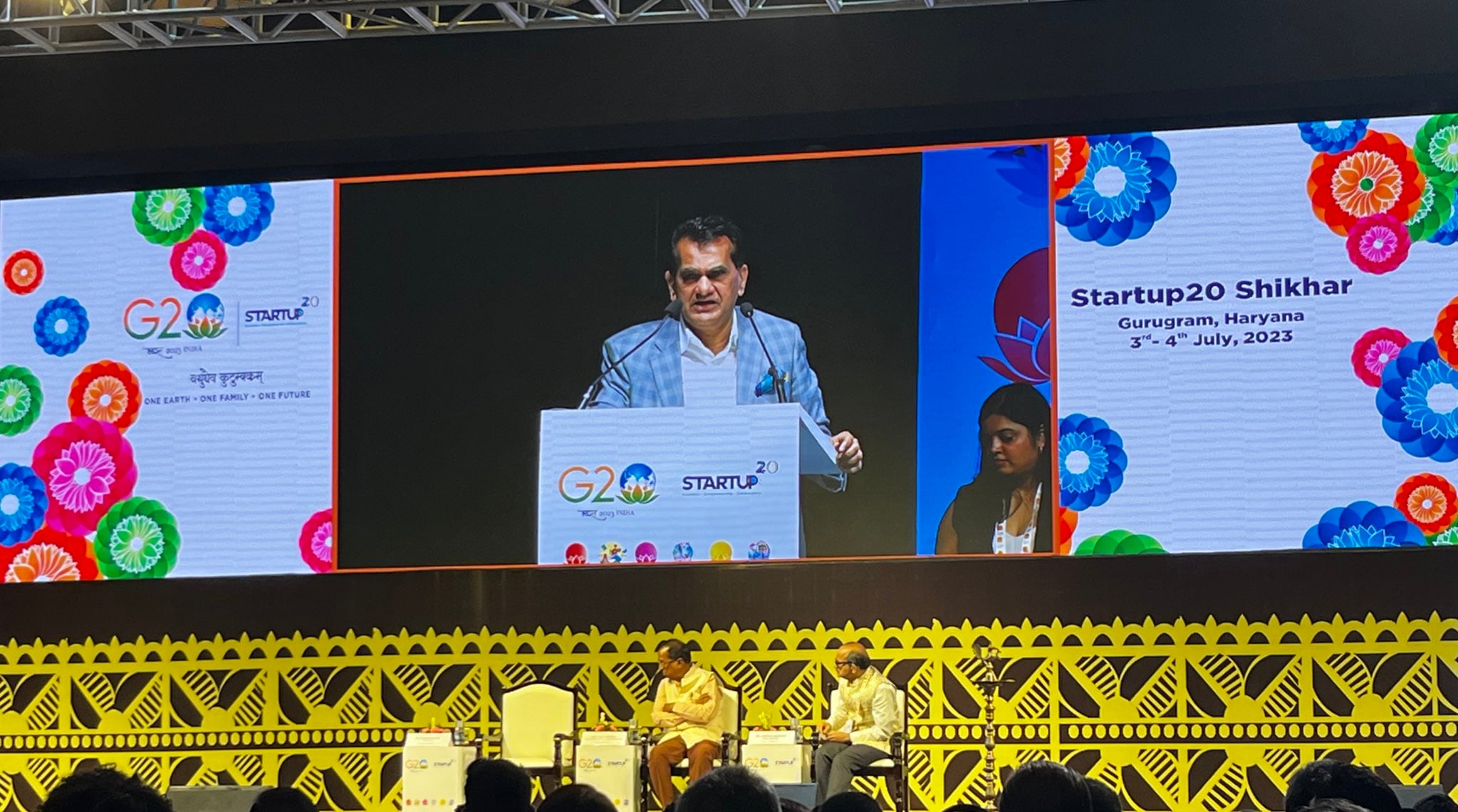
The engagement group for startups created under India's G20 presidency has suggested self-regulation, instead of government intervention, as multiple cases of alleged misgovernance have been reported at some Indian ventures.
Startup20 India has designed a governance framework aimed at equipping startups with a "practical guide for adhering to corporate governance and financial management best practices", said a communique by the Startup20 Engagement Group released on Monday. It has been created based on research and consultation with experts and can accommodate the "unique needs of startups across various industries".
Companies including UpGrad, MakeMyTrip, and PayTm and venture capital funds Blume Ventures and Avendus Capital were part of the consultations.
Investor sentiment in India's startup ecosystem has been hit by a string of corporate misgovernance incidents at BharatPe, Trell, Zilingo, GoMechanic, and most recently, Byju's and Mojocare. That has only increased investor scrutiny, making due diligence longer. Funding is only coming to the firms that are lean and have demonstrated free cash flow or a path to profitability.
Financial propriety and governance are very important and startups must focus on self-regulating, said Amitabh Kant, India's G20 Sherpa, at the Startup20 event on Monday.
"The government must remain at an arm's length. If the government gets into startup regulations, they'll finish off these startups," Kant said. "So founders must act towards being self-regulating."
The Startup20 Engagement Group, the first such initiative established under India's presidency, also urged G20 leaders to raise the joint annual investment in startups to $1 trillion by 2030.
It urged G20 nations to:
Create and adopt a global startup definition framework.
Ease access to global capital, markets, mentors and talent for startups.
Emphasize the inclusion of under-represented groups and communities in startup ecosystems.
Cultivate mechanisms to identify and scale startups of global interest.
Establish a networked institution across G20 nations.
G20 nations must establish a fund of funds, which will enable capital flow to startups, said Kant. "Each country should open a fund of funds which enables money to flow to VC funds," he said referring to the government-backed National Investment and Infrastructure Fund.
Countries must add more incubators and credit enhancement schemes to boost capital for startups, he said. "In a lot of these countries, the government must become the first buyer of some of these startups. The government must be the first buyer to create a market."

-
The Economic Imperative: Analysing The Material Driving Force Behind India-Canada Strategic Reset

This economic complementarity is further reinforced by deep institutional investment ties and talent mobility, which form the bedrock of the bilateral framework.
-
Medicine Pricing: Where Must Profit Stop?
India must confront excessive margins, hidden incentives and regulatory gaps that threaten the integrity of medicine.
-
Why Amazon And Flipkart Are Struggling To Beat Meesho In India's Smaller Cities
With 274 million users and lowest-cost logistics, Meesho is defending its value commerce crown against giants like Amazon and Flipkart.
-
High US Salaries, No Green Card Certainty: The Financial Calculation Facing Indian H-1B Families
The suspension of PERM processing at eight technology employers does not cancel existing H-1B visas. What it does is force a question many Indian families have been avoiding: is the US salary worth tying your career and family plans to one employer?
-
Swiggy vs Eternal: Food Delivery's Two Rivals Are No Longer In The Same Race
Eternal is building a private AI assistant, dark.ai. Swiggy is still working out how to make Instamart pay, with an operating loss of Rs 895 crore in the July-September quarter while Blinkit stayed profitable.
-
Where You Live Shapes How You Get To Work | The Reason Why
Two-wheelers are the most popular way to get to work in India, accounting for nearly 43% of workplace commutes.
-
Unhedged Position: Can India See An Indonesia-Style Time Correction?
The Nifty is trading below levels it first clocked in 2024. Is there, then, as I have suggested in the headline, potential that the current time correction drags on painfully for the next three-five, even ten years?
-
Navigating Friction And Energy Realities: An Analysis Of Marco Rubio's October Visit To India
Occurring at a critical juncture marked by stalled trade negotiations and escalating geopolitical pressures over global energy supplies, the visit offers a profound window into modern US-India relations.
-
India Exports Capital. Why Not Export Trusteeship?
The big question, then, is whether India can build an institution that global borrowers, investors, banks, and lawyers can trust, even without an Indian connection.
-
France's Economy & Politics Are In Crisis | The Reason Why
Let's look at how the French economy and politics evolved under Nicolas Sarkozy, Franois Hollande and Emmanuel Macron.










