Startup Stories: iD Fresh Food’s Long Road To Success
There is an entrepreneurial spirit in each one of us. Yet, not everyone dares to venture out of their comfort zone, exploring different avenues, taking endless risks. Looking back at my early life in a small village in Wayanad, sans electricity and basic material comforts, I'm pleasantly surprised by the turn of events.
In 2005, when my cousins—Abdul Nasser, Shamsudeen TK, Jaffer TK, Naushad TA—and I decided to start iD Fresh Food, we had no idea that one day we would be clocking monthly revenues to the tune of Rs 21 crore. And, our ambition would be to become a $10-billion company! Back then, we were just driven by the desire to do something on our own, to make a difference to people's lives—even if in small ways.

The Eureka Moment
About 15 years ago, when my cousins ran a kirana store in Bengaluru and I worked with a top multinational, we used to spend hours discussing prospective business ideas. Even as a child, I was bitten by the entrepreneurial bug. From setting up a rickety candy shop in my Kerala village to saving up to buy three goats—and then, a cow—and selling milk, the want of capital was never a deterrent for my business plans.
The idea of starting an idli-dosa batter venture first popped up rather casually by my cousin Shamsu, while I was pursuing my cherished dream of getting an MBA from IIM Bangalore. It was a common sight back then to see readymade idli-dosa batter being sold in unhygienic plastic covers sealed with rubber bands.
Customer complaints about poor quality notwithstanding, the demand was palpable.
So, we thought, ‘Why don't we do it better?' And that's how iD Fresh was born.
The Real Challenge
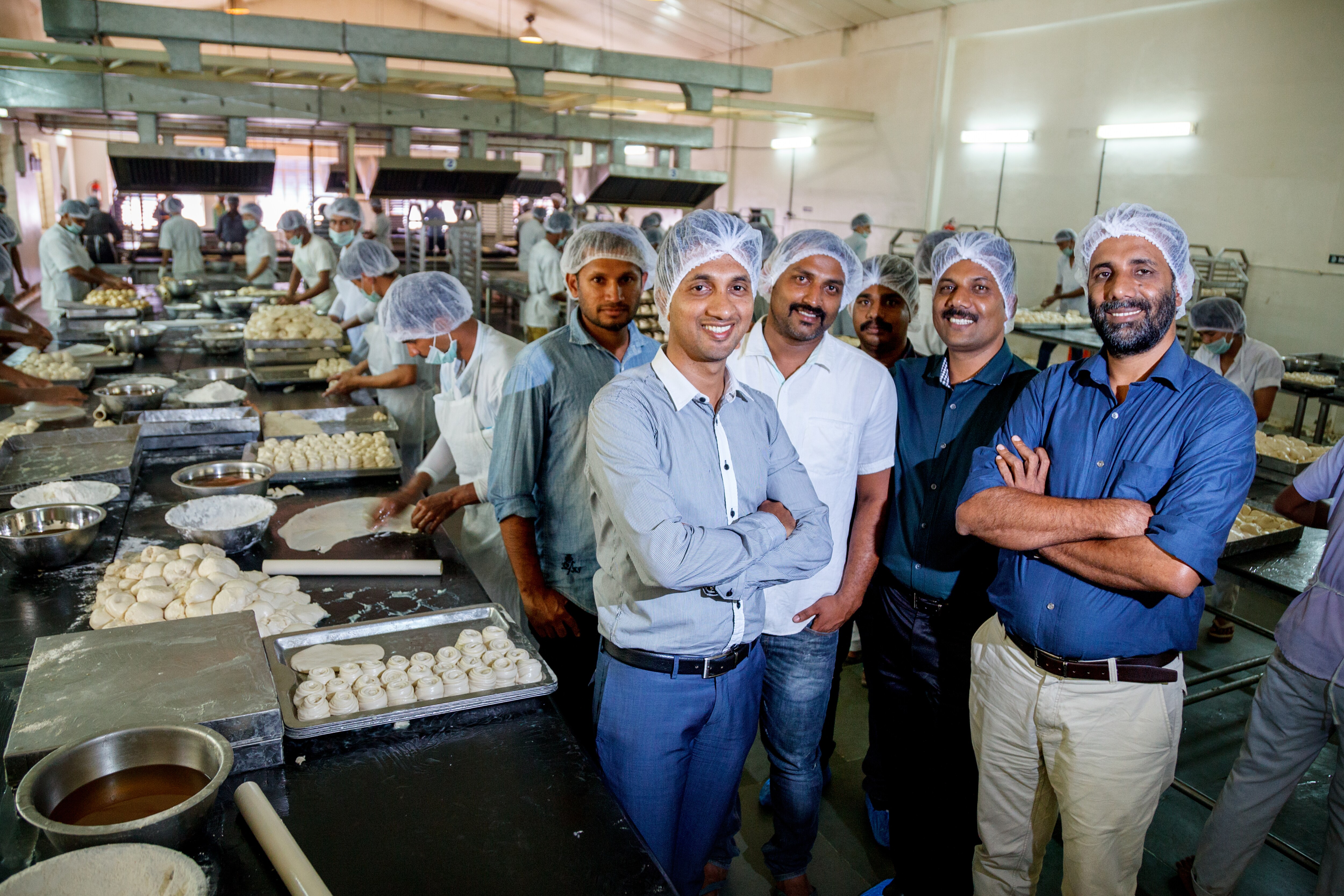
We soon realised that it takes more than an idea—no matter how brilliant—to run a successful business. With an initial investment of Rs 50,000 and a 50-square-feet kitchen with a grinder, mixer, weighing machine, sealing machine and second-hand scooter (for delivery), the five of us started making the idli-dosa batter and delivering it to neighbourhood stores.
We decided to give ourselves six months to turn things around. In the meanwhile, we started supplying the returned packets to B2B stores (before the expiry date) at a reduced price, thereby helping us stay afloat until the retail sales picked up. We continued to push our product with retailers as well as consumers. By the ninth month, we were selling 100 packets daily.
The Big Fail
The thing with success is that it is infectious. In no time, we scaled up the business. We made conscious efforts to hire young talent from remote villages and small towns, and trained them in manufacturing and sales. By 2009, we were supplying 3,000 kilograms of batter to stores in Bengaluru, clocking an annual revenue of Rs 1 crore.
And that's when we decided to expand to Chennai. For, where else would we find a bigger market for idli-dosa batter! We put in all our profit into the Chennai plant, only to realise that the competition there was fierce. And the only way to survive was to compromise on quality—which went against our company policy of adopting only a 100 percent-natural, home-made style of preparation, without the use of any chemicals, preservatives, synthetic stabilizers, artificial colours, or flavours.
Shutting down Chennai operations was one of the toughest decisions, but it was also the most prudent one.
The Rs 10 lakh loss hurt the business, but what worried us more was the likely loss in morale. How do we emerge stronger?
The Priceless Lessons
Our biggest asset has been our team. At a time when the company was facing its worst financial crisis, employees continued to work diligently—at one point, without any salary for three months. Their faith and dedication have driven us to greater heights. In 2012, within months of exiting Chennai, we expanded to Mumbai, Hyderabad, Pune, and Dubai. We also introduced new ready-to-cook product categories, including Malabar Parota, Whole Wheat Parota, and Whole Wheat Chapati.
The lessons from failures have scripted iD Fresh's success story. While the whole world was looking to increase the shelf-life of products, we focused on selling fresh batter. When traditional manufacturing failed to match our business expectations, we collaborated with a German company to co-develop a machine that could make 4,500 kg of batter an hour—100 times the output of traditional machines! We used common sense to be at the forefront of innovation. Whether it's our award-winning, boat-shaped, reusable packaging for the idli-dosa batter or our authentic South Indian Filter Coffee that comes in a unique ready-to-use liquid form, we are always trying something new.
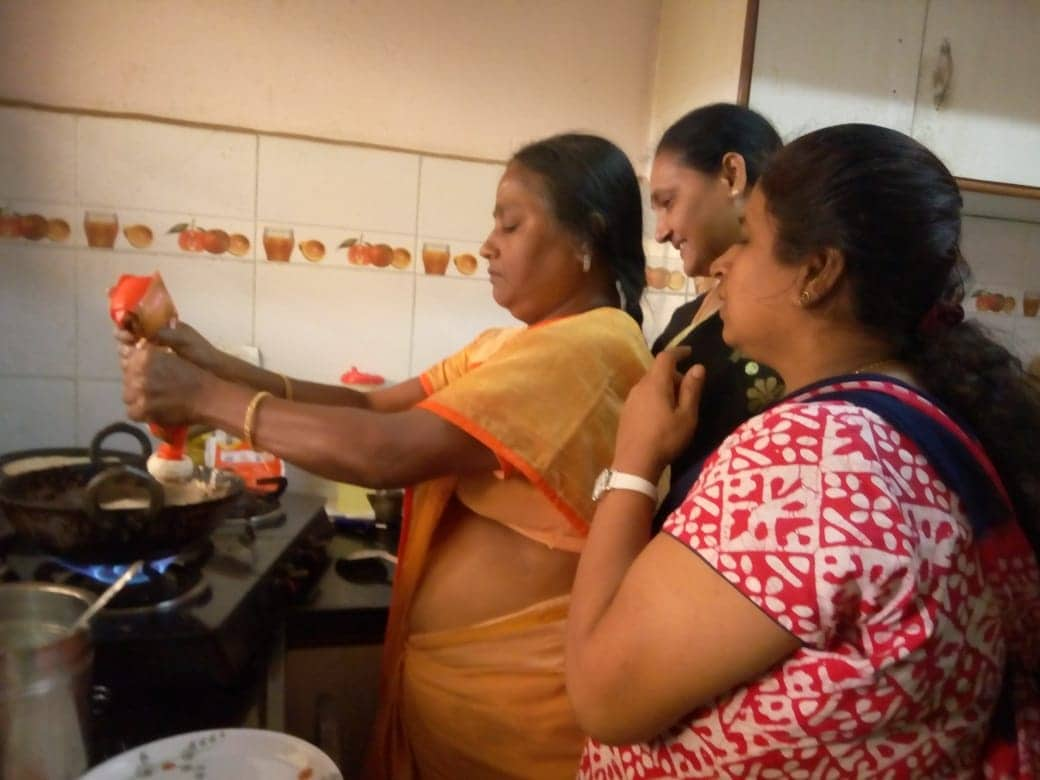
Even our patented, squeeze-and-fry vada batter packaging design, that blends the complex art of traditional vada making with the simple science of modern technology, was an important milestone.
For years, people have hand-rolled the Vada and perfected the iconic hole using their hands. With our innovative packaging, we have made it possible for everybody to Vada. #Innovember #EverybodyCanVada pic.twitter.com/Rcejya7h2I
November 5, 2018Similarly, re-entering the Chennai market, as a parota company and then slowly building a trusted network with retailers, was a strategic victory.
Patience is crucial. Especially with key decisions, such as deciding on investors.With Helion Ventures (2014) and Premji Invest (2017), we have been incredibly fortunate to find partners who share the same vision and ethical values.
The Journey Ahead
The world recognises us today as a brand that cares. Whether it is the iD Trust Shop—world's first branded shop with no salespersons—or #ShareTheGoodness initiative launched on World Idli Day, or social campaigns such as #KhaanaKhaaya for Mother's Day, #iDPledge for Independence Day, or ‘Meet Your Neighbour' initiative, iD Fresh has become synonymous with trust, tradition, and community. The journey hasn't been easy though; it has been fraught with myriad tricky decisions—often at the cost of lucrative deals.
Now, our vision is to become a fully organic company that makes organic food affordable and accessible for all. For a healthier and greener future, we need to invest in smart packaging, facilitated by cutting-edge technologies. iD Fresh is determined to find a sustainable replacement for plastic packaging—even if it is at the cost of profit margins.
For, as the son of a daily wage labourer for whom three meals a day was once a luxury, money will always be the means to an end. Never an end in itself.
PC Musthafa is CEO and co-founder of iD Fresh Food.
The views expressed here are those of the author and do not necessarily represent the views of Bloomberg Quint or its editorial team.

-
The More Food Turns Into Fuel, The Harder It Is To Read Agricultural Markets | The Reason Why

A policy designed to reduce dependence on imported fuel can create new pressures elsewhere in the food economy.
-
Your iPhone Costs 12 Grams Of Gold, A Car About 100. What Does Your Life Weigh?
Measured in rupees, almost everything looks more expensive than it did a generation ago. Measured in grams of gold, a lot of it has become cheaper.
-
Gold Is Rs 22,000 Cheaper Than A Month Ago. Should You Buy Amid The Wedding Season?
Gold's potential slide to $3,500 could save around Rs 4,700 per 10 grams, but a soft inflation print could just as easily push prices back up. One way to split the risk is to buy in parts, some now and the rest after the Fed's Dec. 9 decision.
-
AI Agents Are Gaining Power. Who Governs Them?
Artificial intelligence agents promise to transform productivity by moving machines from assisting decisions to executing them. But as organisations delegate greater authority to these AI-agents, they must first establish who controls that authority and who remains accountable when things go wrong.
-
Why Swapping Your Old Gold Can Trigger A Rs 5 Lakh Tax Bill, And How You Can Avoid It Legally
Swapping old gold for new is taxed as a sale and a fresh purchase. Getting your own gold remade can cut most of that bill, though it has its own costs.
-
The AI Trade is Done. The Real Opportunity for Investors Starts in 2027 | Unhedged Position
As pureplay AI stocks plunge and circular, capex-led financing unwinds, 2027 is set to be a year of reckoning for AI companies. Yet the bust clears the way for a better opportunity for investors in 2027 -- shifting the spotlight from AI builders to the companies using AI.
-
Leadership As Mission: Why The Age Of AI Demands More Human Leadership
Debjani Ghosh examines how AI is changing leadership, arguing that its success must be measured by its impact on people and the accountability of those guiding its use.
-
We May Need Another Tukaram Mundhe To Fight Air Pollution | The Reason Why
Developers may install basic measures such as sprinklers and green nets, resume work, and continue violating rules when this equipment stops working.
-
Extracting Value From Battery Scrap Could Be Challenging For India | The Reason Why
A discarded lithium-ion battery still contains valuable materials such as lithium, nickel and cobalt. These can be recovered and reused. When such batteries are crushed and shredded, they produce a dark powder called black mass.
-
One El Nino, India Can Handle. Two Could Break The Granary
India's grain stocks can absorb one bad year, but a second El Nino could drain the buffer in two to three years, economists say.









