Starship Launch Ushers In a New Space Economy
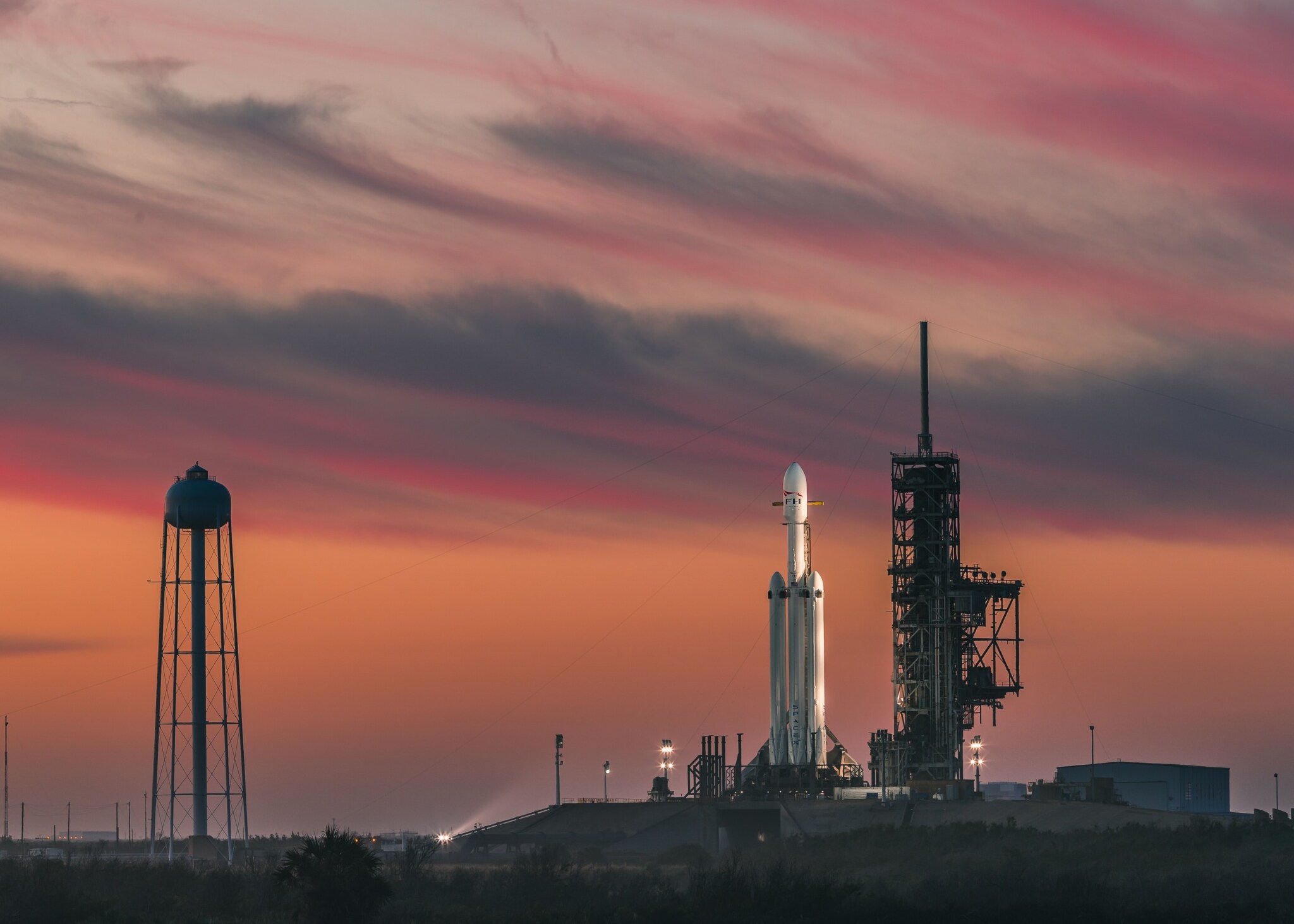
(Bloomberg Opinion) -- For decades, starry-eyed prospectors have dreamed about the riches to be had from mining the moon and asteroids. Starship, SpaceX's new rocket, didn't make it to space during its morning test flight. But it cleared the launch tower and climbed for nearly four minutes before exploding in mid-flight. As test flights go, that's a success that will soon lead to new destinations and opportunities. The massive rocket, designed to be refueled in space, will help to lift off an industry devoted to mining fuel from the moon. As costs drop, space will expand for miners, scientists and adventurers alike.
Dreams of off-world prospecting go back to 1898, at least, when a short story featured an asteroid that's mined for gold. Over the next century, storytellers and novelists repeated and refined the storyline about deep-space resources. It took until the late 1970s, however, for scientists and engineers to seriously explore whether it could be made real. Their conclusion half a century ago? Not anytime soon.
That didn't stop scientists — and later, entrepreneurs — from taking an expansive interest in the stuff from which the universe is made. Since the 1960s, robots and humans have collected and returned hundreds of pounds of moon rocks and soil (mostly during the Apollo moon landings), at a cost of hundreds of billions of dollars. More recently, Japan spent hundreds of millions of dollars collecting and returning less than an ounce of material collected from two asteroids.
None of these missions were intended as business cases. But collectively they demonstrated that the existing infrastructure for extracting space resources wasn't especially cost-efficient.
SpaceX changed the math. The introduction of its reusable rockets in the 2010s dropped the cost of reaching space to as little as $1,200 per pound of payload, a 96% reduction from its former $30,000 per pound price on the Space Shuttle. And that contributed to a surge of interest and funding for space mining. Though the model turned out to be quite different from the one dreamed up by novelists.
"There's just really not a business case to bring precious metals back to Earth," George Sowers, a professor in the Space Resources program at the Colorado School of Mines, told me in a recent conversation. Instead, Sowers, and a growing number of space agencies and companies, believe that money will be made mining water from the moon, and then processing it into hydrogen and oxygen that can fuel a rocket.
Prior to joining academia, Sower was chief scientist at United Launch Alliance LLC, the joint venture between Lockheed Martin Corp. and Boeing Co., that designs and launches rockets for NASA, the Department of Defense and others. While there, he and his team developed a concept for an orbiting fuel depot that rockets could use to top off on their way to the moon and other destinations. According to him, the cost savings could be dramatic: refueling a moon-bound rocket launched from Earth will lower costs by a factor of three. “And if you're coming back from the moon, and you can refuel on the surface of the moon with lunar propellant, the cost reduction is a factor of 70,” he said.
That lunar propellant, it turns out, can be mined and extracted from ancient water that's frozen all over the moon. Sowers and colleagues have published NASA-supported studies on how it could be done with existing technology adapted for lunar conditions. Just as important, Sowers has published studies showing that lunar water mining can be profitable with sufficient market demand.
Who is that market? Elon Musk and Starship, for starters. The rocket is designed and manufactured by SpaceX as a fully reusable space transportation system to travel beyond Earth's orbit and fulfill Musk's dream of colonizing Mars. NASA, in turn, is providing funding to develop a Starship lander that will deposit humans on the moon for its Artemis lunar program.
So far, Starship has made it to low-Earth orbit, but it will go much, much farther if it can refuel in orbit. Doing so will require making more Starships configured as tankers (a project also supported by NASA). And those tankers are coming: NASA is counting on Starship to land Americans on the moon before the end of the decade. Longer term, the plan is for those Americans to establish a base. And among the first tasks of any base will be a mining and processing operation that produces fuel to make it cheaper for humans to leave the moon.
Sowers estimates that it could take a decade to establish a mining operation akin to the ones that he's advocated. That may seem like an unrealistic timeframe for a market that hasn't yet even materialized. But it's worth noting that the new space economy moves fast. In 2010, SpaceX was just beginning to fly commercial payloads atop its Falcon 9 rocket; in 2022, the company averaged a launch every six days and accounted for one-third of all launches, worldwide. In the process, it lowered the cost of reaching space and spurred a new space economy.
It's not just SpaceX that will take an interest in lunar propellants, either. Other private space companies, including Blue Origin LLC, founded by Jeff Bezos, have expressed interest in mining lunar water. And China, which has made no secret of its lunar ambitions, is planning future missions to areas of the moon believed to be rich in water. Eventually, those sites could help China create its own cost-sustainable lunar outpost.
For now, Starship is the first mover. Coming test flights will prove out its still-mysterious in-space refueling system. If everything works, the moon beckons next — and then Mars and beyond. For space miners, supplying water to these explorers may not be as compelling as digging diamonds out of asteroids. But unlike that more fanciful prospect, water has a business case. Once proven, the sky's the limit.
More From Bloomberg Opinion:
- Our Space Junk Problem Just Got a Cheap Solution: Adam Minter
- Final Score in Space: Earth 1, Asteroid 0: Stephen L. Carter
- How the US Can Avoid Fighting China Over the Moon: Adam Minter
This column does not necessarily reflect the opinion of the editorial board or Bloomberg LP and its owners.
Adam Minter is a Bloomberg Opinion columnist covering Asia, technology and the environment. He is author, most recently, of “Secondhand: Travels in the New Global Garage Sale.”
More stories like this are available on bloomberg.com/opinion
©2023 Bloomberg L.P.

-
Gold Is Rs 22,000 Cheaper Than A Month Ago. Should You Buy Amid The Wedding Season?

Gold's potential slide to $3,500 could save around Rs 4,700 per 10 grams, but a soft inflation print could just as easily push prices back up. One way to split the risk is to buy in parts, some now and the rest after the Fed's Dec. 9 decision.
-
AI Agents Are Gaining Power. Who Governs Them?
Artificial intelligence agents promise to transform productivity by moving machines from assisting decisions to executing them. But as organisations delegate greater authority to these AI-agents, they must first establish who controls that authority and who remains accountable when things go wrong.
-
Why Swapping Your Old Gold Can Trigger A Rs 5 Lakh Tax Bill, And How You Can Avoid It Legally
Swapping old gold for new is taxed as a sale and a fresh purchase. Getting your own gold remade can cut most of that bill, though it has its own costs.
-
The AI Trade is Done. The Real Opportunity for Investors Starts in 2027 | Unhedged Position
As pureplay AI stocks plunge and circular, capex-led financing unwinds, 2027 is set to be a year of reckoning for AI companies. Yet the bust clears the way for a better opportunity for investors in 2027 -- shifting the spotlight from AI builders to the companies using AI.
-
Leadership As Mission: Why The Age Of AI Demands More Human Leadership
Debjani Ghosh examines how AI is changing leadership, arguing that its success must be measured by its impact on people and the accountability of those guiding its use.
-
We May Need Another Tukaram Mundhe To Fight Air Pollution | The Reason Why
Developers may install basic measures such as sprinklers and green nets, resume work, and continue violating rules when this equipment stops working.
-
Extracting Value From Battery Scrap Could Be Challenging For India | The Reason Why
A discarded lithium-ion battery still contains valuable materials such as lithium, nickel and cobalt. These can be recovered and reused. When such batteries are crushed and shredded, they produce a dark powder called black mass.
-
One El Nino, India Can Handle. Two Could Break The Granary
India's grain stocks can absorb one bad year, but a second El Nino could drain the buffer in two to three years, economists say.
-
India's Troika Of Good Luck | Joining The Dots
As Jensen Huang's exit drags Nvidia down, a cooling AI trade and resilient earnings have revived investor interest in India. A likely RBI rate hike looms.
-
Talking Points This Week: Leadership Shock At Nvidia, Earnings Strength, And The Fog Over Hormuz
The Anthropic IPO pricing and first trading day, Nvidia's upcoming earnings, and any fresh signals from Iran will set the tone for the following week.









