Stablecoins' Variant "Gold Coins" Emerging As First Choice For Crypto Trading
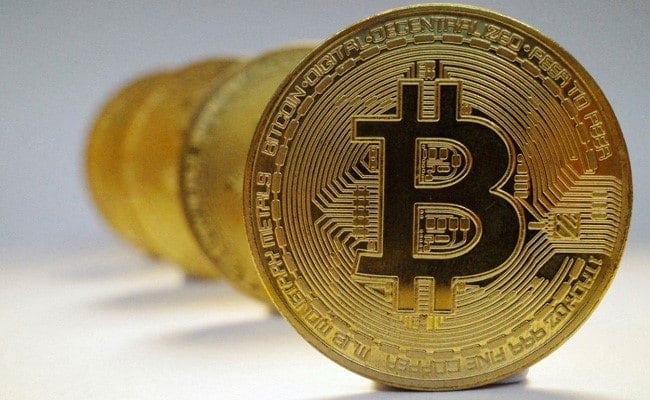
A fledgling class of crypto that feasts on risk is outshining a wider market paralysed by war and inflation.
Coins backed by gold are newer variants of "stablecoins", which are typically pegged to the dollar to tame volatility. The largest, Pax Gold or PAXG, has jumped 7.4 per cent in 2022, while main rival Tether Gold has leapt 8 per cent.
By contrast, bitcoin has lost over 13 per cent and ether is down 20 per cent.
"One of the main concerns that a lot of people who are new to crypto have is that it's not backed by anything. It just gets on a screen," said Everett Millman, chief market analyst at Gainesville Coins. "So attaching them or linking them to a real-world commodity, it does make some sense."
The reach for gold, a traditional hedge against geopolitical upheaval and inflation, is unsurprising. The demand for gold-backed cryptocurrencies, though, is new.
Stablecoins, a fast-growing breed of crypto, have emerged as a common medium of exchange, often used by traders seeking to move funds around. It is easier to swap major stablecoins for bitcoin or other crypto, for example, than it is to swap traditional money like US dollars for bitcoin.
Tether Gold has been buoyed by bigger investors, including "whales" with $1 million or more of cryptocurrency, using the token to change a portion of their holdings into gold, according to Paolo Ardoino, Tether's chief technology officer.
"Many of our investors were already involved in crypto, but were interested in not having their entire wealth in cryptos or in dollars, and were seeking more inflation-resistant assets like gold," he said.
Yet gold-backed coins are still a niche novelty in the crypto market at present - PAXG and Tether Gold are barely over two years old - with thin liquidity and little certainty about their long-term fortunes.
PAXG has seen its market value almost double to $627 million this year, while Tether Gold has risen 9 per cent to above $209 million. By comparison the latter's eight-year-old sibling, dollar-pegged Tether - the world's largest stablecoin - has a market cap of over $83 billion.
According to data from CoinMarketCap, daily PAX gold trading volumes ranged between $10 million to $520 million over the past month, compared to ether volumes which fluctuated between $8.7 billion and $25 billion in April. Dollar-pegged tether's 24-hour volumes ranged between $35 billion and $92 billion.
ALL THAT GLITTERS?
Sceptics argue that PAXG, developed by the company Paxos, and Tether Gold have merely risen on the coat-tails of a broad rush for gold; indeed they have tracked the price of physical gold, which is up about 8.5 per cent this year. PAXG is up 4.5 per cent since Feb. 23, the day before Russia invaded Ukraine, versus gold's 4 per cent.
The SPDR Gold Shares exchange-traded fund, which is managed by State Street Global Advisors, is up 7.6 per cent in 2022.
"The (crypto gold) tokens themselves aren't immutable. They're literally just IOUs that happen to be using blockchain infrastructure," said Alex Thorn, head of firmwide research for Galaxy Digital in New York.
He said investors would have to determine whether they should have the same level of confidence in the companies behind PAXG and the gold ETF.
"They're both basically synthetic gold exposure backed by gold holdings. Perhaps trust is part of the thing that people would consider when deciding whether we can trust Paxos the same way we trust State Street."
Nonetheless, advocates of such coins say they offer the ease of owning gold without having to worry about storing a physical coin or bar, while eliminating the minimum margin requirements often required to trade gold on traditional markets.
PAXG, for instance, requires a minimum investment of the equivalent of 0.01 ounce of gold, roughly $20, versus the $184 an investor would pay for each share of the SPDR Gold ETF.
Millman at Gainesville Coins also argued that gold-backed stablecoins bolstered the credibility of cryptocurrencies.
"One of the main criticisms of cryptos is that they have been so extremely volatile. Hence, the idea to back a token with a stable commodity," he said. "The marriage between those two things could actually also bolster confidence in cryptos."

-
Gold Is Rs 22,000 Cheaper Than A Month Ago. Should You Buy Amid The Wedding Season?

Gold's potential slide to $3,500 could save around Rs 4,700 per 10 grams, but a soft inflation print could just as easily push prices back up. One way to split the risk is to buy in parts, some now and the rest after the Fed's Dec. 9 decision.
-
AI Agents Are Gaining Power. Who Governs Them?
Artificial intelligence agents promise to transform productivity by moving machines from assisting decisions to executing them. But as organisations delegate greater authority to these AI-agents, they must first establish who controls that authority and who remains accountable when things go wrong.
-
Why Swapping Your Old Gold Can Trigger A Rs 5 Lakh Tax Bill, And How You Can Avoid It Legally
Swapping old gold for new is taxed as a sale and a fresh purchase. Getting your own gold remade can cut most of that bill, though it has its own costs.
-
The AI Trade is Done. The Real Opportunity for Investors Starts in 2027 | Unhedged Position
As pureplay AI stocks plunge and circular, capex-led financing unwinds, 2027 is set to be a year of reckoning for AI companies. Yet the bust clears the way for a better opportunity for investors in 2027 -- shifting the spotlight from AI builders to the companies using AI.
-
Leadership As Mission: Why The Age Of AI Demands More Human Leadership
Debjani Ghosh examines how AI is changing leadership, arguing that its success must be measured by its impact on people and the accountability of those guiding its use.
-
We May Need Another Tukaram Mundhe To Fight Air Pollution | The Reason Why
Developers may install basic measures such as sprinklers and green nets, resume work, and continue violating rules when this equipment stops working.
-
Extracting Value From Battery Scrap Could Be Challenging For India | The Reason Why
A discarded lithium-ion battery still contains valuable materials such as lithium, nickel and cobalt. These can be recovered and reused. When such batteries are crushed and shredded, they produce a dark powder called black mass.
-
One El Nino, India Can Handle. Two Could Break The Granary
India's grain stocks can absorb one bad year, but a second El Nino could drain the buffer in two to three years, economists say.
-
India's Troika Of Good Luck | Joining The Dots
As Jensen Huang's exit drags Nvidia down, a cooling AI trade and resilient earnings have revived investor interest in India. A likely RBI rate hike looms.
-
Talking Points This Week: Leadership Shock At Nvidia, Earnings Strength, And The Fog Over Hormuz
The Anthropic IPO pricing and first trading day, Nvidia's upcoming earnings, and any fresh signals from Iran will set the tone for the following week.









