SPVs For Judicial Infrastructure To Not Usurp Government Power: CJI Ramana
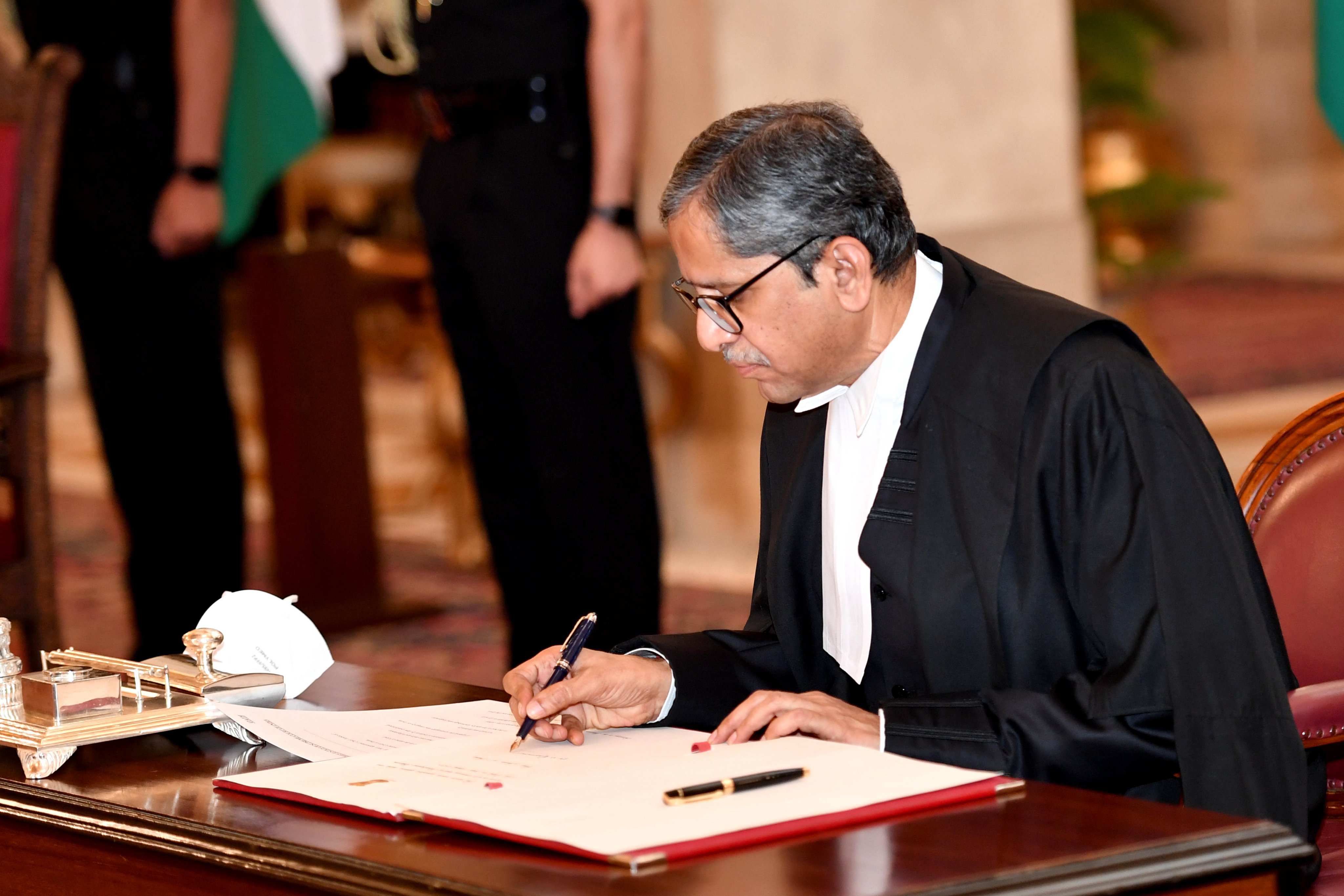
A proposal to introduce special purpose vehicles for development of judicial infrastructure is not aimed at usurping the powers of any government, and will include representation from all stakeholders, according to Chief Justice of India NV Ramana.
The SPVs—National Judicial Infrastructure Authority and State Judicial Authority—will be headed by the respective chief justices of the courts and include representatives of the central and state governments, Justice Ramana said at the 11th conference of Chief Justices and Chief Ministers in Delhi, organised after a gap of six years, on Saturday.
“I want to dispel apprehensions emerging from certain sections on this proposal… It must, however, be acknowledged that it's the judiciary which understands best its own needs and requirements.”
The Chief Justice also highlighted issues such as pendency of cases as well as filling up of judicial vacancies.
Government Litigation Contributing To Pendency
According to Justice Ramana, often litigation is triggered because of two major reasons:
Non-performance by the various wings of the executive.
Legislature not realising its full potential.
He cited instances of “avoidable burden” on the judiciary:
If a Tehsildar acts upon a grievance of a farmer regarding land survey, or a ration card, the farmer would not think of approaching the court.
If a municipal authority or a gram panchayat discharges its duties properly, the citizens need not look to courts.
If revenue authorities acquire land through due process of law, the courts would not be burdened by land disputes.
Apparently, these cases account for 66% of the pendency, said Justice Ramana. “It is beyond my understanding as to why intra- and inter-departmental disputes of the government or fights between PSUs and the government end up in courts.”
He also reiterated that views of the public must be solicited and bills are debate threadbare before they become a law. “If the legislature passes a law, with clarity of thought, foresight and with people's welfare in mind, the scope for litigation gets minimised.”
Need To Create And Fill More Posts
According to Chief Justice Ramana, earnest efforts are being made by the judiciary to fill the vacancies.
But he also called for creation of more posts and highlighted that India has around 20 judges per 10 lakh population, which is “alarmingly low”.
“When we last met in 2016, the sanctioned strength of judicial officers in the country was 20,811. Now, it is 24,112, an increase of 16% in six years. In the corresponding period, pendency in district courts has gone up from 2.65 crore to 4.11 crore, an increase of 54.64%. This data shows how inadequate the increase in the sanctioned strength is,” Chief Justice Ramana said.
Another issue he highlighted was to include local languages in proceedings before the high courts.
He said he has been receiving representations on the issue and now the time has come to take it to a logical conclusion. “The practice of law before constitutional courts should be based on one's intelligence and understanding of law, and not mere proficiency in language.”

-
Signature Play: The Classic Cocktail Is Dead. Or Is It?

Classic cocktails are disappearing from India's cocktail menus. But they're still being ordered, taught to bartenders and borrowed from. So, who's really having the last drink?
-
A New Samvat Wishlist: Inclusive Prosperity And Human Development
India has strengthened its economic foundations through infrastructure, digital access and enterprise. Its next growth chapter must deepen productivity, create better livelihoods and widen participation in prosperity.
-
Love, Sex Aur Dhokha: The Audacious Plot To Spy On Jensen Huang
A Taipei dinner, a Singapore chip buyer and a suspected Chinese asset: inside the alleged spy operation that got close to NVIDIA's Jensen Huang.
-
Ten Things I Learnt This Samvat
Patience can be a trap. Cheap stocks can stay cheap. Leverage can wipe you out. What did Samvat 2082 teach us? Niraj Shah writes on 10 lessons from the year gone by.
-
Talking Points This Week: Tech Nerves, FII Buying, And A Faraway Banking Shock
The global markets are not shining this Diwali. The exception in the large markets is, India.
-
Midterm Rally Lasted A Day. The Hard Reality Of A Divided US May Last Two Years | Opinion
Between a contested AI boom, a debt ceiling that arrives in 2027 and a president with every incentive to act alone, the next two years may prove more volatile than the first day's rally suggests.
-
Blue Wave Will Derail the AI Trade but Won't Dismantle the AI Era | Unhedged Position
The Democrats' sweep of the US Congress will see politics collide with economic forces both over the long and short term.
-
It's Time To Take The GST Council's Bet On Trust Global
Payment records can prove India's services exports, and clear, proportionate rules can bring foreign digital sellers into the tax net.
-
Opinion | India at 38: From Innovation Overperformer to Innovation Powerhouse
India now has 453 VC-backed deep science startups, 18 of them late-stage, after 117 percent growth since 2020. Laurus Labs, at USD 9.3 billion, is the most valuable deep science company in any middle-income economy outside China.









