Some Ports Declare Force Majeure, Could Delay Oil Discharges: Report
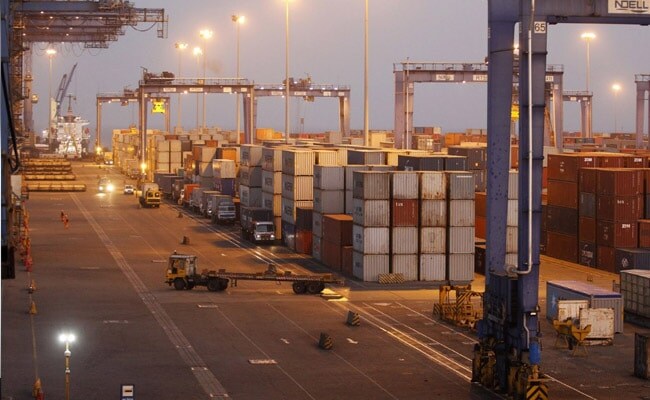
Some ports in the country including those owned by Adani Ports & SEZ Ltd have declared force majeure after Asia's third-biggest economy announced a 21-day lockdown to prevent the spread of the coronavirus, documents seen by Reuters showed.
The shipping ministry has issued a letter allowing ports to use the COVID-19 pandemic as valid grounds to declare force majeure clause, according to a separate shipping ministry order also seen by Reuters.
"All our ports are operating. Force majeure is for ensuring that wherever APSEZ has commercial contracts, the time taken for handling and delivery of cargo doesn't apply," APSEZ said in a statement.
Shipping ministry could not be immediately reached for comment.
The force majeure declaration could delay discharge of crude oil tankers, an Indian refining source told Reuters.
"Though FM is declared, some operations are continuing. Ports will not be responsible for any delay and any other thing as per the notification of Adani," said the source.
Port services are categorised as essential so ports are remaining open with minimal operations, the source said.
Ashok Sharma, managing director of shipbroker BRS Baxi in Singapore, said the lockdown would impact oil demand but not really imports at this stage.
"Indian (crude) imports are by and large term contracts and what may be impacted are the speculative spot lifting. Also, 21 days is a relatively short period of time, but if it is extended beyond this period and if the (coronavirus) really bites then we would see a slowing down (in crude imports) for sure," he said.
No government-owned ports have declared a force majeure as yet, although they have been given the liberty to do so, Sharma also said.
Besides APSEZ, Reuters has also seen letters from Krishnapatnam Port, Gopalpur Port, Karaikal Port and Gangavaram Port declaring force majeure on loading and unloading delays.
Calls to these ports seeking comment went unanswered.

-
Extracting Value From Battery Scrap Could Be Challenging For India | The Reason Why

A discarded lithium-ion battery still contains valuable materials such as lithium, nickel and cobalt. These can be recovered and reused. When such batteries are crushed and shredded, they produce a dark powder called black mass.
-
One El Nino, India Can Handle. Two Could Break The Granary
India's grain stocks can absorb one bad year, but a second El Nino could drain the buffer in two to three years, economists say.
-
India's Troika Of Good Luck | Joining The Dots
As Jensen Huang's exit drags Nvidia down, a cooling AI trade and resilient earnings have revived investor interest in India. A likely RBI rate hike looms.
-
Talking Points This Week: Leadership Shock At Nvidia, Earnings Strength, And The Fog Over Hormuz
The Anthropic IPO pricing and first trading day, Nvidia's upcoming earnings, and any fresh signals from Iran will set the tone for the following week.
-
Signature Play: The Classic Cocktail Is Dead. Or Is It?
Classic cocktails are disappearing from India's cocktail menus. But they're still being ordered, taught to bartenders and borrowed from. So, who's really having the last drink?
-
A New Samvat Wishlist: Inclusive Prosperity And Human Development
India has strengthened its economic foundations through infrastructure, digital access and enterprise. Its next growth chapter must deepen productivity, create better livelihoods and widen participation in prosperity.
-
Love, Sex Aur Dhokha: The Audacious Plot To Spy On Jensen Huang
A Taipei dinner, a Singapore chip buyer and a suspected Chinese asset: inside the alleged spy operation that got close to NVIDIA's Jensen Huang.
-
Ten Things I Learnt This Samvat
Patience can be a trap. Cheap stocks can stay cheap. Leverage can wipe you out. What did Samvat 2082 teach us? Niraj Shah writes on 10 lessons from the year gone by.
-
Talking Points This Week: Tech Nerves, FII Buying, And A Faraway Banking Shock
The global markets are not shining this Diwali. The exception in the large markets is, India.
-
Midterm Rally Lasted A Day. The Hard Reality Of A Divided US May Last Two Years | Opinion
Between a contested AI boom, a debt ceiling that arrives in 2027 and a president with every incentive to act alone, the next two years may prove more volatile than the first day's rally suggests.









