Some Fiscal Space Available For Income Transfer To Farmers, Says Neelkanth Mishra
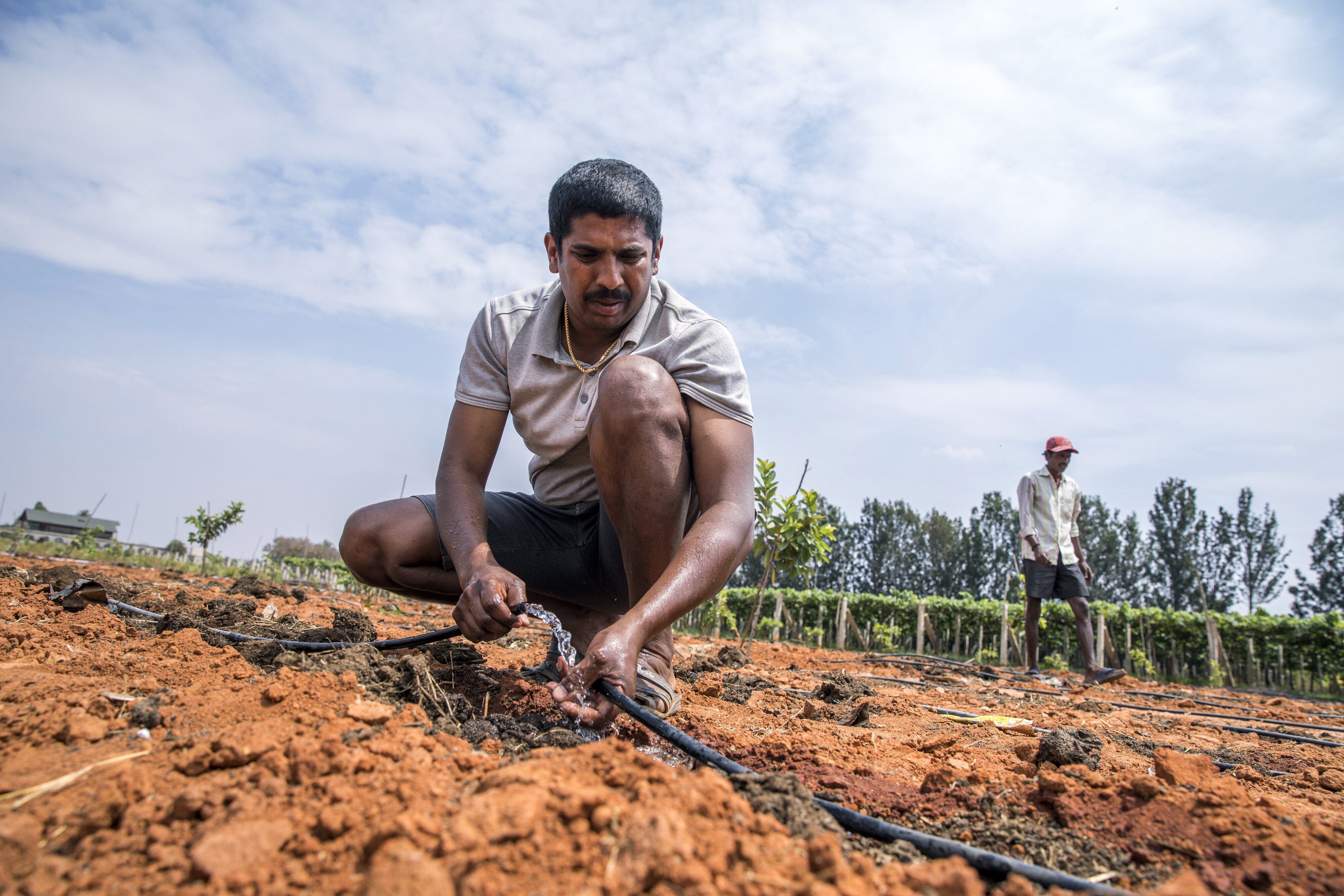
Credit Suisse believes that India does have some fiscal space to consider direct income transfers to farmers, which could prove to be the most effective way of addressing stress in the farm sector. Credit Suisse's view diverges from the common refrain that no fiscal room is available for such a large transfer even though most agree that some steps need to be taken to address rural distress.
Globally many countries have resorted to income transfers and purchases of agricultural produce and India may need to go down the same route, wrote Neelkanth Mishra and Prateek Singh in a report dated Jan.15. “Income transfers have fewer side-effects, as these do not distort acreage allocation, and are also cheaper as inventory handling has its own costs,” wrote the authors.
But does India, struggling to meet pre-set fiscal goals, have the room to make such transfers? There is some room, the authors argued.
Credit Suisse notes that since the seventh pay commission hikes are now over, salary plus pension expenses would rise slower than nominal Gross Domestic Product till 2026. As a percentage of GDP, this spend would fall 30 basis points in financial year 2020 and 1.1 percentage point by financial year 2023.
While details of any such scheme are yet to be announced, an income transfer scheme that targets 5 crore rural households with monthly transfers of Rs 1,500 per month would mean about Rs 90,000 crore per year in expenditure. “Such a scheme may have a split of expenditure between the centre and the states, so it is only at an aggregate level that the fiscal math needs to be assessed.”

Credit Suisse also believes that the infrastructure is in place to identify beneficiaries and make the direct transfers. It points to the socio-economic cast census data which was used to identify households eligible for benefits under the rural housing scheme. There are several tens of millions of direct benefits transfer touch points for the rural employment guarantee scheme as well, the brokerage house added.
In assessing the impact of such an income transfer on the economy, Credit Suisse said that a lot would depend on the design of the scheme. However, with food being the largest part of consumption spending across low income segments, an impact on the food economy is likely.
One way this could play out is that demand for basic food items like milk, meat and eggs, as well as fruits and vegetables could rise. This, in turn, would have an impact on inflation and, therefore, the interest rate trajectory. The extent of impact would depend on the size of the stimulus.
Weak food prices have slowed the transfer of income from the rich to the poor. An income transfer scheme would offset the slowdown in that channel. There is also a monetary angle here—the cash availability in the mostly informal rural economy is also dependent to some extent on food purchases. Thus, such a transfer could also stimulate growth.Neelkanth Mishra, India Economist & Strategist, Credit Suisse

The Counter View
In a report last week, Sajjid Chinoy, chief India economist at JPMorgan had argued it differently. “We think there is absolutely no space for new unfunded, liabilities,” Chinoy and Toshi Jain wrote in a report dated Jan.10.
India's consolidated fiscal deficit has remained stuck close to 6.5 percent of GDP over the last five years – amongst the highest in the world -- despite the collapse in oil prices, the report pointed out. While the central government fiscal deficit has reduced from over 4.5 percent to close to 3.3-3.5 percent, the deficit at the state level and off-balancesheet liabilities have been rising.
All taken together, the total public sector borrowing (center, states, off-balance sheet, PSEs) across all sources (market and non-market) was 8.2 percent of GDP in 2017-18, exactly the level it was five years ago, and almost 0.5 percent of GDP (net of asset sales) higher than the previous year.
Against this backdrop, any increase in deficits and borrowing – whether on account of loan waivers or cash transfers – is likely to be counter-productive, pushing up bond yields and borrowing costs and crowding out private economic activity.Sajjid Chinoy, Chief India Economist, JPMorgan

-
Getting To Work Costs Women More | The Reason Why

It is not just about women paying more than men. It is about women paying much more in cities than in villages.
-
AI Bias In Investing Cannot Be Eliminated, But It Can Be Governed
Framing is a particularly important example as identical financial information presented in terms of gains rather than losses can lead an LLM to reach a different assessment.
-
Joining The Dots | Dark Skies, Steady Diya: Why Hope Holds This Diwali
With war, a weak rupee and foreign outflows weighing on sentiment, policymakers at the NDTV World Summit and market veterans at NDTV Profit Ignite: Diwali Edition offered the same advice: stay invested and filter out the noise.
-
The Curious Case of Equitas Small Finance Bank And A CEO Who Quit For Stock
PN Vasudevan believes persistent investor concerns over a perceived conflict of interest had become a governance overhang on Equitas Small Finance Bank's stock, even as the lender improved profitability and asset quality.
-
Talking Points This Week: AI Cash Burn, A Tiger Comeback And An India That Still Finds Its Own Path
India is not immune to higher oil or tighter global liquidity, yet its earnings base is broader, its domestic policy levers are still available.
-
Foreign Investors Own Half Of HDFC Bank and ICICI Bank. An LTCG Cut Could Matter Most Here
Foreign portfolio investors have US$115 billion parked in HDFC Bank, ICICI Bank. If the government cuts long-term capital gains tax, Jefferies says returning foreign money could land here first.
-
'Never Seen This Level Of Negativity': Sandeep Tandon Says The Next Rally May Be Closer Than You Think
Veteran investor Sandeep Tandon says foreign selling is easing, large-caps are due a comeback and mid-caps are crowded, while he turns positive on gold, power and pharma this Diwali.
-
Indians Stay With Family, Not In Hotels | The Reason Why
India still lacks enough clean, reliable and affordable hotels for budget-conscious travellers.
-
The Economic Imperative: Analysing The Material Driving Force Behind India-Canada Strategic Reset
This economic complementarity is further reinforced by deep institutional investment ties and talent mobility, which form the bedrock of the bilateral framework.
-
Medicine Pricing: Where Must Profit Stop?
India must confront excessive margins, hidden incentives and regulatory gaps that threaten the integrity of medicine.










