SoftBank Has Either Reopened the IPO Market or Killed It
(Bloomberg Opinion) -- With almost all Wall Street involved, someone in the room knew how to make Arm Holdings Plc's initial public offering look like a textbook success.
Owner SoftBank Group Corp. ended up pricing the British chip designer's Nasdaq IPO at $51 per share. This is neatly at the top of the stated price range and followed 11th-hour reports that the deal could have been struck even higher. The impression is of pent-up demand that could help the share price once Arm starts trading.
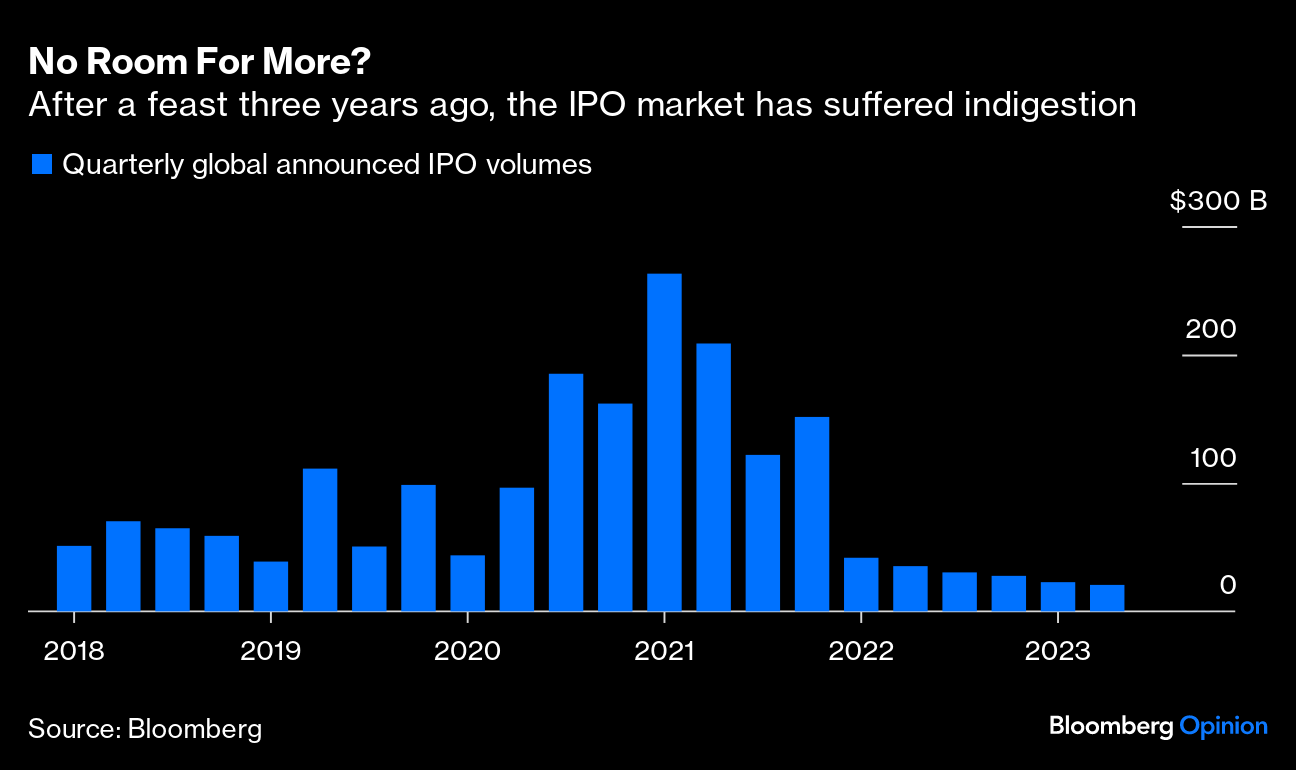
Is it time to say “thank you” to the Japanese tech investor for reopening a moribund IPO market? Not so fast. At this level, there's no guarantee Arm's stock will sustain upward momentum in the coming months. The starting equity valuation is $52 billion, based on the share count on admission. Equity analysts unconnected to the share sale are in a different ballpark. Those at AllianceBernstein Holding LP got to $47 billion, and the number crunchers at Canaccord Genuity Group Inc. reached only $39 billion. If Arm drifts below its issue price and stays there, the impact on sentiment could be dire.
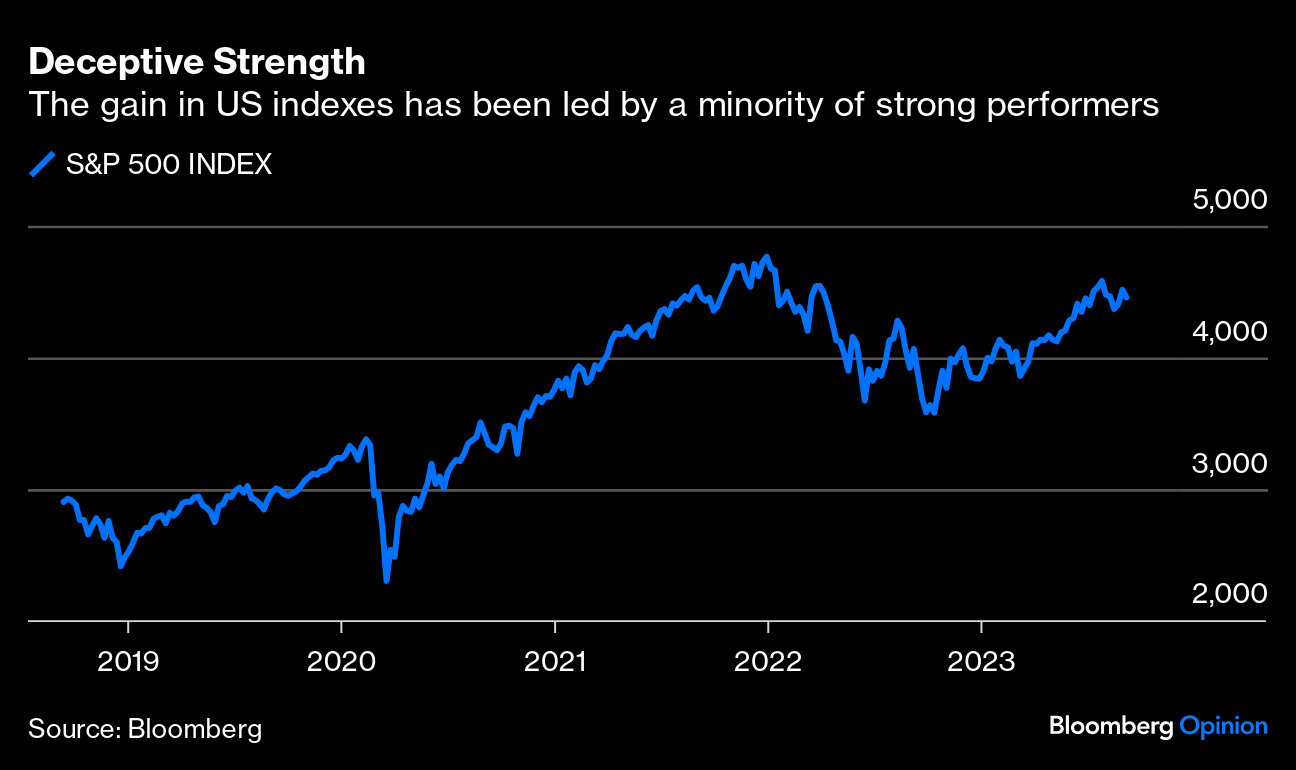
True, the backdrop is one of IPO activity picking up. Grocery delivery firm Instacart Inc. and high-class German shoemaker Birkenstock are preparing to go public in New York. Even so, this still feels like a buyer's market. Around two-thirds of the constituents of the S&P 500 and Stoxx Europe 600 indexes are down from the beginning of last year. Fund managers can snap up stocks they're familiar with at prices below their peak. They don't need to take a risk on an IPO.
Arm benefited from its unique position in the semiconductor ecosystem, an AI-based equity story and a strong balance sheet. Contrast this with what's likely to come from the dominant provider of IPO supply, the private equity industry. The buyouts of 2016 to 2018 that are coming due for resale are unlikely to enjoy comparable characteristics.
The average private equity investment now maturing will have run into a macroeconomic slowdown and rising borrowing costs. Progress on cutting debt from the high levels used in buyouts to the more prudent capital structures accepted by public markets is likely to be behind schedule. Overleveraged, low-growth businesses don't make attractive IPO candidates.
With the M&A market sluggish, an IPO may nevertheless be the least bad option to exit the investment and return cash. SoftBank's Arm playbook will have to be rolled out again — but with improvements.
First, recall that SoftBank bought 25% of Arm from its own Vision Fund at a $64 billion valuation shortly before the marketing of the IPO. The basic idea of doing a deal for a stake in the IPO company makes tactical sense. It puts a price on the asset, which should ideally become the floor for any future public stock sale. The way SoftBank did this is not, however, the model. The Vision Fund deal provided no third-party validation of the valuation. It arguably put a ceiling on the price.
A genuinely independent investment in a business heading for IPO would, though, put a credible number in people's minds. It could also bring debt down and save having to ask future stock market investors to do that job at the IPO — a task they're likely to find off-putting.
Of course, pre-IPO stake sales must probably be done at an undemanding valuation. Yet if a decent amount of time passes between the transaction and the IPO, investors in the listing may be persuaded the business has subsequently improved and be willing to pay more.
The second relevant piece of the Arm playbook is the use of cornerstone shareholders in the IPO itself. SoftBank roped in 10 top tech names including Nvdia Corp. and Apple Inc., to commit to buying $735 million of the shares being offered on the same terms as the deal's regular investors.
An average $74 million each isn't exactly betting the farm, and the anticipated benefits may be strategic as much as financial. But collectively this who's who of the tech world validated the price range and left the bankers with less stock to sell. New stock sales can never have too much validation. That said, enlisting asset managers rather than industrial friends and family is most effective.
These dynamics put the potential pre-IPO investors — sovereign wealth funds like Singapore's GIC Pte or Norway's Norges Bank and the global names in asset management like Fidelity and BlackRock Inc. — in an extremely strong negotiating position to lend their credibility to deals by investing ahead of the IPO or anchoring it in a set price range. They ought to be able to obtain extremely decent discounts. That will come at the expense of the returns of those bringing the IPO forward.
SoftBank has returned Arm to the markets and deployed tactics we're likely to see more of. The challenge for successor IPO candidates remains getting deals done — not maxing out on the price.
More From Bloomberg Opinion:
- Arm's $55 Billion IPO Smacks of Bankers' Desperation: Shuli Ren
- VinFast's $190 Billion Value Screams Silly SPAC: Chris Bryant
- Instacart IPO Filing Arrives With Red Flags: Dave Lee
This column does not necessarily reflect the opinion of the editorial board or Bloomberg LP and its owners.
Chris Hughes is a Bloomberg Opinion columnist covering deals. Previously, he worked for Reuters Breakingviews, the Financial Times and the Independent newspaper.
More stories like this are available on bloomberg.com/opinion
©2023 Bloomberg L.P.

-
Gold Is Rs 22,000 Cheaper Than A Month Ago. Should You Buy Amid The Wedding Season?

Gold's potential slide to $3,500 could save around Rs 4,700 per 10 grams, but a soft inflation print could just as easily push prices back up. One way to split the risk is to buy in parts, some now and the rest after the Fed's Dec. 9 decision.
-
AI Agents Are Gaining Power. Who Governs Them?
Artificial intelligence agents promise to transform productivity by moving machines from assisting decisions to executing them. But as organisations delegate greater authority to these AI-agents, they must first establish who controls that authority and who remains accountable when things go wrong.
-
Why Swapping Your Old Gold Can Trigger A Rs 5 Lakh Tax Bill, And How You Can Avoid It Legally
Swapping old gold for new is taxed as a sale and a fresh purchase. Getting your own gold remade can cut most of that bill, though it has its own costs.
-
The AI Trade is Done. The Real Opportunity for Investors Starts in 2027 | Unhedged Position
As pureplay AI stocks plunge and circular, capex-led financing unwinds, 2027 is set to be a year of reckoning for AI companies. Yet the bust clears the way for a better opportunity for investors in 2027 -- shifting the spotlight from AI builders to the companies using AI.
-
Leadership As Mission: Why The Age Of AI Demands More Human Leadership
Debjani Ghosh examines how AI is changing leadership, arguing that its success must be measured by its impact on people and the accountability of those guiding its use.
-
We May Need Another Tukaram Mundhe To Fight Air Pollution | The Reason Why
Developers may install basic measures such as sprinklers and green nets, resume work, and continue violating rules when this equipment stops working.
-
Extracting Value From Battery Scrap Could Be Challenging For India | The Reason Why
A discarded lithium-ion battery still contains valuable materials such as lithium, nickel and cobalt. These can be recovered and reused. When such batteries are crushed and shredded, they produce a dark powder called black mass.
-
One El Nino, India Can Handle. Two Could Break The Granary
India's grain stocks can absorb one bad year, but a second El Nino could drain the buffer in two to three years, economists say.
-
India's Troika Of Good Luck | Joining The Dots
As Jensen Huang's exit drags Nvidia down, a cooling AI trade and resilient earnings have revived investor interest in India. A likely RBI rate hike looms.
-
Talking Points This Week: Leadership Shock At Nvidia, Earnings Strength, And The Fog Over Hormuz
The Anthropic IPO pricing and first trading day, Nvidia's upcoming earnings, and any fresh signals from Iran will set the tone for the following week.









