NSE Co-Location Scam And The "Himalayan Yogi" Link: 10 Points
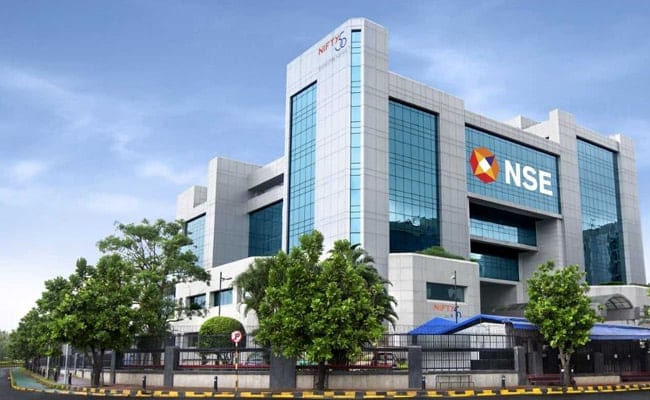
- The spate of regulatory orders and investigative actions against the former management of NSE has only prolonged the uncertainty around NSE's public offer. Vikram Limaye, the current NSE CEO, has decided against seeking another term when his tenure ends in July.
- While the offer of NSE's shares to the public has been delayed, the stock exchange has invited applications for the MD and CEO positions, detailing the eligibility criteria, including an IPO experience.
- Former NSE CEO Chitra Ramkrishna accepted that she had been guided by a “Himalayan Yogi” for around 20 years, while taking key decisions during her tenure as the head of the country's top stock market. She was arrested after an almost four-year probe by CBI against a Delhi-based stockbroker. Ms Ramkrishna has been sent to a seven-day CBI custody for questioning.
- The CBI's probe received a shot in the arm after market regulator Securities and Exchange Board of India (SEBI) released a report indicating alleged misuse of power by the top management of NSE and favouring some high-frequency trading brokers.
- What is the NSE co-location scam? NSE started co-location services in August 2009, where due to the close proximity to stock exchange servers, traders got faster access to the price feed like buy or sell quotes distributed by the stock exchange. It has been alleged that some brokers in connivance with insiders, took advantage of the fact that NSE provided data on first come first serve basis for making handsome profits.
- Co-location facilities are dedicated spaces attached with facilities like power supply and bandwidth and can be leased by a third party for trading. The faster access to data helped traders receive quotes earlier than others and execute trade faster, thus resulting in profits for them. Also, since the charge for these services was high, only big brokers could afford to rent such a space.
- A whistleblower in the case alleged that OPG Securities, with help from some officials in NSE's IT department was able to figure out which server had the least load so that they could get connected to the NSE server faster. The trader had allegedly mapped multiple IPs to a single server to get access to the first two or even three connections to that exchange server and crowd out other members.
- Meanwhile, a Delhi court on Wednesday (March 9) remanded Anand Subramanian, the ex group operating officer of the NSE, to fourteen days judicial custody, in connection with the co-location scam case.
- The CBI official produced him before the court of Sanjeev Aggarwal on Wednesday. The federal probe agency moved a plea before the court saying he wasn't required for further questioning and requested the court to send him to judicial custody. The court allowed the move of the CBI and remanded Mr Subramanian to fourteen days of judicial custody. He will now be lodged at Tihar Jail.
- Mr Subramanian was arrested by the CBI on February 24.

-
'Never Seen This Level Of Negativity': Sandeep Tandon Says The Next Rally May Be Closer Than You Think

Veteran investor Sandeep Tandon says foreign selling is easing, large-caps are due a comeback and mid-caps are crowded, while he turns positive on gold, power and pharma this Diwali.
-
Indians Stay With Family, Not In Hotels | The Reason Why
India still lacks enough clean, reliable and affordable hotels for budget-conscious travellers.
-
The Economic Imperative: Analysing The Material Driving Force Behind India-Canada Strategic Reset
This economic complementarity is further reinforced by deep institutional investment ties and talent mobility, which form the bedrock of the bilateral framework.
-
Medicine Pricing: Where Must Profit Stop?
India must confront excessive margins, hidden incentives and regulatory gaps that threaten the integrity of medicine.
-
Why Amazon And Flipkart Are Struggling To Beat Meesho In India's Smaller Cities
With 274 million users and lowest-cost logistics, Meesho is defending its value commerce crown against giants like Amazon and Flipkart.
-
High US Salaries, No Green Card Certainty: The Financial Calculation Facing Indian H-1B Families
The suspension of PERM processing at eight technology employers does not cancel existing H-1B visas. What it does is force a question many Indian families have been avoiding: is the US salary worth tying your career and family plans to one employer?
-
Swiggy vs Eternal: Food Delivery's Two Rivals Are No Longer In The Same Race
Eternal is building a private AI assistant, dark.ai. Swiggy is still working out how to make Instamart pay, with an operating loss of Rs 895 crore in the July-September quarter while Blinkit stayed profitable.
-
Where You Live Shapes How You Get To Work | The Reason Why
Two-wheelers are the most popular way to get to work in India, accounting for nearly 43% of workplace commutes.
-
Unhedged Position: Can India See An Indonesia-Style Time Correction?
The Nifty is trading below levels it first clocked in 2024. Is there, then, as I have suggested in the headline, potential that the current time correction drags on painfully for the next three-five, even ten years?
-
Navigating Friction And Energy Realities: An Analysis Of Marco Rubio's October Visit To India
Occurring at a critical juncture marked by stalled trade negotiations and escalating geopolitical pressures over global energy supplies, the visit offers a profound window into modern US-India relations.










