Smartphone Makers Dial Up Growth in India
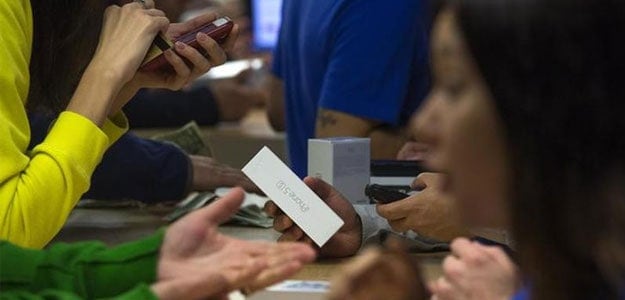
New Delhi: Smartphone-makers are in a race to the bottom of India's economic pyramid as they battle for customers in the fast-growing low-end market segment where analysts say opportunities are vast.
India is now the quickest-expanding smartphone market globally and the third-largest market after China and the United States, according to Britain-based consultancy Canalys.
India "is a market that offers huge potential as hundreds of millions of users have yet to upgrade", said Jessica Kwee, an analyst at Canalys.
Sales in the country of 1.25 billion people rose by 84 per cent in the quarter to June from a year earlier as users traded up from basic handsets to more sophisticated models, spurred by ever lower prices.
Local and foreign companies alike are sacrificing profit margins to build market share in India, which counts 914 million mobile users, according to government data.
The cheapest smartphones now retail at Rs 2,000 ($33), down from an average Rs 15,000 two years ago.
Technology consultancy IDC India projects annual smartphone sales growth of around 40 per cent for the next five years in the price-sensitive nation, home to 33 per cent of the world's poor.
"A new entry-level price point is being breached by Indian home-grown vendors in every (financial) quarter," IDC analyst Karan Thakkar said.
Smartphones now hold a 10 per cent market share among India's mobile-phone-using population, according to IDC.
That 10 per cent figure is widely seen as a "tipping point" -- the moment when buyers start opting for smartphones over other phones, going by experiences in other countries.
And the below-$200 slice of the smartphone market is at the heart of the action, accounting for some four-fifths of total Indian smartphone sales, IDC says.
'A Time of Transformation'
California-based Mozilla, the non-profit organisation behind the open-source web browser Firefox, is the latest entry into India's cheap smartphone market.
Mozilla joined forces with Indian phonemaker Intex last month to launch a low-cost smartphone -- the Intex Cloud FX -- at 1,999 rupees.
Intex, which billed the smartphone as India's cheapest, said the first batch sold out in days. It aims to sell half-a-million handsets by the end of 2014.
Leading television channel NDTV's technology reviewer Jamshed Avari called the handset "a great start" for Firefox in India but warned of "agonising slowdowns" when operating it.
Intex's nearest smartphone rival price-wise is domestic handset-maker Spice, which sells its Firefox-powered Spice Fire One Mi-FX 1 for Rs 2,299, or $37.
Using Firefox slashes 30 per cent from prices of the closest Android-based competition, experts say. Other Indian handset-makers also have ultra-affordable Firefox-driven smartphones in the works.
The smartphone sales boom echoes India's initial staggering growth in mobile telephony in the last decade when the country was adding millions of new subscribers a month.
That frenetic growth has flattened -- the number of mobile users per 100 stands at 73.55 -- and now the focus is getting Internet access through smartphones.
"It's a time of transformation in the Indian mobile industry -- getting access to the Internet is where it's at," Vanitha Narayanan, IBM India managing director, told AFP.
Handset makers in India and other emerging markets have been leapfrogging fixed-line technology that was used in developed markets. They are employing mobile broadband to deliver Internet access to people who have no computers.
The replacement market now is propelling most mobile sales and the smartphone switchover is becoming much easier with the fall in prices and cheap monthly finance options.
All these developments could spell trouble for South Korean giant Samsung, which has targeted mainly high-end customers and leads the Indian smartphone market with a 29 per cent share, according to IDC.
It needs to move into the high-volume, low-cost segment more decisively, analysts say.
Samsung is being shadowed aggressively by local heavyweight Micromax, which has become India's No. 2 smartphone brand in six years and boasts Hollywood actor Hugh Jackman as its brand ambassador.
Micromax, which has targeted the low-end consumer, has an 18 per cent market share and is now moving upmarket as well as abroad with its phones.
"Samsung needs to continue to address the low end of the market aggressively and also needs a blockbuster product at the high end to regain momentum," said IDC's South Asia general manager Jaideep Mehta.
Apple deals at the top-price bracket but has been offering trade-in payments, instalment plans and older models to make its iconic phones more affordable -- a strategy it says has paid dividends, although its exact sales figures in India are not known.

-
The Curious Case of Equitas Small Finance Bank And A CEO Who Quit For Stock

PN Vasudevan believes persistent investor concerns over a perceived conflict of interest had become a governance overhang on Equitas Small Finance Bank's stock, even as the lender improved profitability and asset quality.
-
Talking Points This Week: AI Cash Burn, A Tiger Comeback And An India That Still Finds Its Own Path
India is not immune to higher oil or tighter global liquidity, yet its earnings base is broader, its domestic policy levers are still available.
-
Foreign Investors Own Half Of HDFC Bank and ICICI Bank. An LTCG Cut Could Matter Most Here
Foreign portfolio investors have US$115 billion parked in HDFC Bank, ICICI Bank. If the government cuts long-term capital gains tax, Jefferies says returning foreign money could land here first.
-
'Never Seen This Level Of Negativity': Sandeep Tandon Says The Next Rally May Be Closer Than You Think
Veteran investor Sandeep Tandon says foreign selling is easing, large-caps are due a comeback and mid-caps are crowded, while he turns positive on gold, power and pharma this Diwali.
-
Indians Stay With Family, Not In Hotels | The Reason Why
India still lacks enough clean, reliable and affordable hotels for budget-conscious travellers.
-
The Economic Imperative: Analysing The Material Driving Force Behind India-Canada Strategic Reset
This economic complementarity is further reinforced by deep institutional investment ties and talent mobility, which form the bedrock of the bilateral framework.
-
Medicine Pricing: Where Must Profit Stop?
India must confront excessive margins, hidden incentives and regulatory gaps that threaten the integrity of medicine.
-
Why Amazon And Flipkart Are Struggling To Beat Meesho In India's Smaller Cities
With 274 million users and lowest-cost logistics, Meesho is defending its value commerce crown against giants like Amazon and Flipkart.
-
High US Salaries, No Green Card Certainty: The Financial Calculation Facing Indian H-1B Families
The suspension of PERM processing at eight technology employers does not cancel existing H-1B visas. What it does is force a question many Indian families have been avoiding: is the US salary worth tying your career and family plans to one employer?
-
Swiggy vs Eternal: Food Delivery's Two Rivals Are No Longer In The Same Race
Eternal is building a private AI assistant, dark.ai. Swiggy is still working out how to make Instamart pay, with an operating loss of Rs 895 crore in the July-September quarter while Blinkit stayed profitable.










