Smallholder Farmers Need Minimum Income Assurance, Not MSP As A Legal Guarantee
MS Swaminathan, the agricultural scientist who enabled the Green Revolution in India and was honoured with the Bharat Ratna last week, wanted farmers to be paid minimum support prices for their produce at cost plus at least 50% of the weighted average cost of production. In 2018, the prime minister announced that this would be the case and the Commission for Agricultural Costs and Prices obliged—then and since—with appropriate recommendations.
The cost currently includes all paid out costs and the imputed value of family labour. It is not as comprehensive as C2 cost, which includes rent for owned cultivated land and interest on fixed assets. If the latter were to be the basis, the MSP would be 25-30% higher, the economist Ashok Gulati writes in a newspaper article.
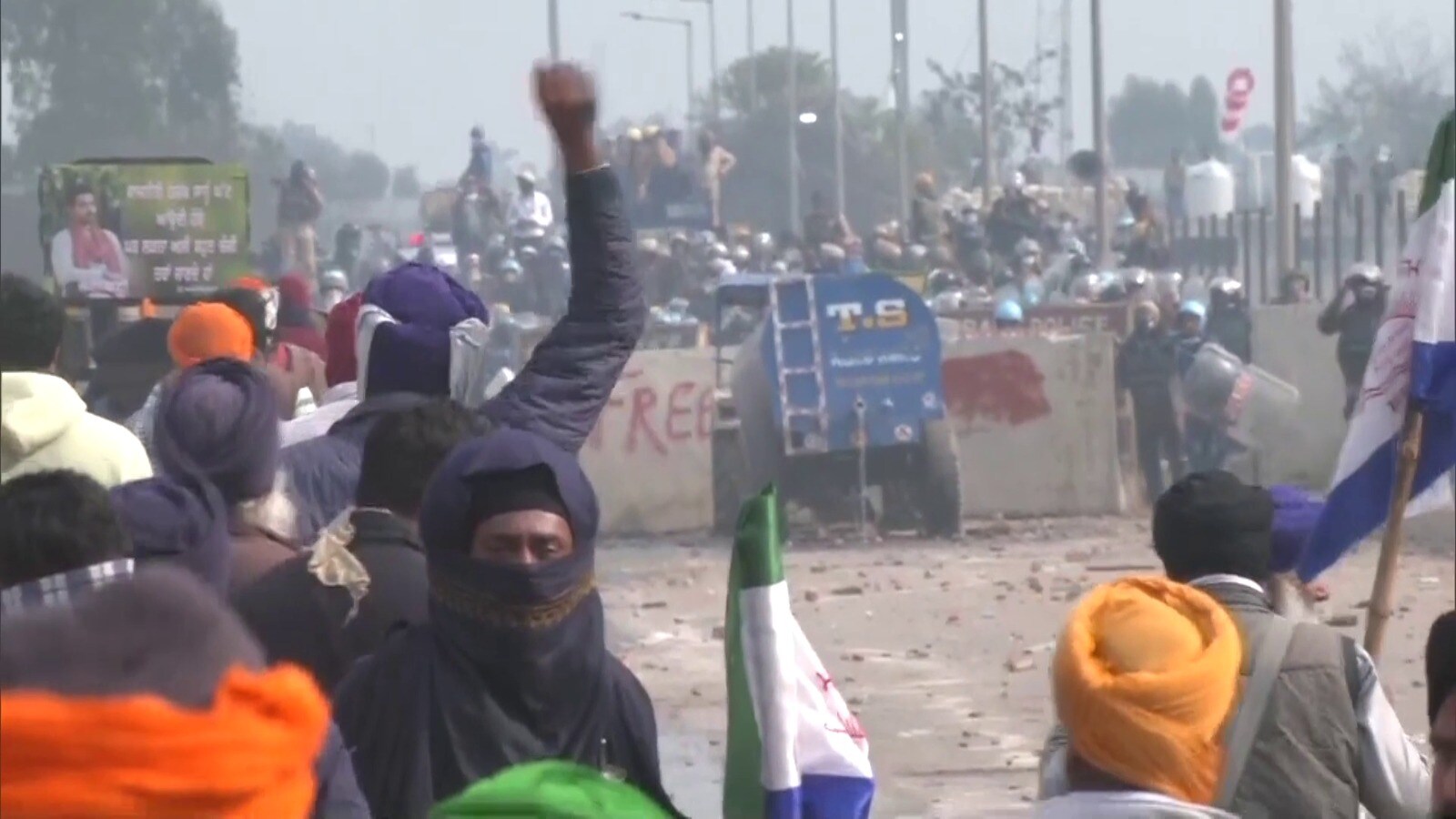
Farmers besieging Delhi want MSP as a legal guarantee. Such a guarantee will be financially onerous and leave little money for public investment in agriculture. It will be inflationary, make Indian produce globally uncompetitive and will raise barriers to Indian exports of the commodities that are thus supported.
The government declares MSP for 23 commodities, but mainly procures wheat and rice. It also buys pulses in small quantities, episodically. To use wheat as an example, in 2022-23, the government procured 261.9 lakh tonnes of it at the rate of Rs 21,250 a tonne. Farmers received Rs 55,654 crore in payments for their procured produce. The quantity procured was 30% of the marketed surplus. Suppose all the marketed surplus was procured, there would have been a threefold increase in the bill.
The cost to the government in making the procured grain available to the poor through ration shops is higher than the price it pays farmers. It includes the cost of packaging, storing, transporting, distribution, wastage and interest. Procurement cost is about two-thirds of the total.
Even if the government doesn't produce all the grain that is offered to it, it will have to reimburse farmers the difference between the price they get in the market and the MSP as deficiency payment, if MSP became a legally enforceable right.
The leaders of the farmers' union say that if MSP is made a legal guarantee, even private traders will be compelled to buy at that price. This might work when there is a shortage of grain, as for example happened in 2022 because of aberrant weather, when market prices were higher and government procurement of wheat fell to 19 million tonnes against the three-year annual average of 34 million tonnes. But in years when supply is plentiful, the government is the largest buyer—at 70% of wheat production—in Punjab, Haryana and Madhya Pradesh.
As it is, traders keep off the wheat because of high fees and levies that states charge in addition to MSP. In Punjab, it is 8.5%. Government procurement keeps wheat and rice prices high because the procured grain is impounded in warehouses, restricting supply in the market. Currently, the government procures whatever wheat and rice arrives in the regulated mandis and this is more than the quantity needed to maintain a buffer. If the government were to stop procurement once buffer norms are met, and if private trade did not step in, small farmers will be compelled to sell at prices below MSP even if there is a legal guarantee.
Cost-plus purchases will not compel farmers to be efficient. They will produce regardless of market demand. Due to assured MSP, low production risks and high profitability, wheat production has increased significantly in the country, while production of crops needed for nutritional security, sustainability and demand-supply balance has declined or stagnated, the CACP says in a report. India needs to produce more of pulses, oilseeds and millets. These require government support for the reasons cited than wheat and rice which is over-produced and in low demand.
A legally guaranteed MSP ignores the power of demand in fuelling growth. Commodities that receive government support in the form of input subsidies and output prices have seen lower growth in the past decade, economists Ramesh Chand and Jaspal Singh say in a NITI Aayog report. Dairy and livestock products grew at an annual average of 5.84% in the last decade, and fisheries grew 8.97 %. These get little or no support unlike rice, wheat, cotton and sugarcane which get high government support but grew at 1.39%.
Of course, smallholder farmers need to be assured a minimum income. For that, there are other instruments. The government should persuade them to accept these through negotiations in good faith and not treat farmers as criminals as Madhura Swaminathan said at an event in honour of her father on Feb. 13.
Vivian Fernandes is a journalist with more than three decades of practice.
The views expressed here are those of the author and do not necessarily represent the views of NDTV Profit or its editorial team.

-
Extracting Value From Battery Scrap Could Be Challenging For India | The Reason Why

A discarded lithium-ion battery still contains valuable materials such as lithium, nickel and cobalt. These can be recovered and reused. When such batteries are crushed and shredded, they produce a dark powder called black mass.
-
One El Nino, India Can Handle. Two Could Break The Granary
India's grain stocks can absorb one bad year, but a second El Nino could drain the buffer in two to three years, economists say.
-
India's Troika Of Good Luck | Joining The Dots
As Jensen Huang's exit drags Nvidia down, a cooling AI trade and resilient earnings have revived investor interest in India. A likely RBI rate hike looms.
-
Talking Points This Week: Leadership Shock At Nvidia, Earnings Strength, And The Fog Over Hormuz
The Anthropic IPO pricing and first trading day, Nvidia's upcoming earnings, and any fresh signals from Iran will set the tone for the following week.
-
Signature Play: The Classic Cocktail Is Dead. Or Is It?
Classic cocktails are disappearing from India's cocktail menus. But they're still being ordered, taught to bartenders and borrowed from. So, who's really having the last drink?
-
A New Samvat Wishlist: Inclusive Prosperity And Human Development
India has strengthened its economic foundations through infrastructure, digital access and enterprise. Its next growth chapter must deepen productivity, create better livelihoods and widen participation in prosperity.
-
Love, Sex Aur Dhokha: The Audacious Plot To Spy On Jensen Huang
A Taipei dinner, a Singapore chip buyer and a suspected Chinese asset: inside the alleged spy operation that got close to NVIDIA's Jensen Huang.
-
Ten Things I Learnt This Samvat
Patience can be a trap. Cheap stocks can stay cheap. Leverage can wipe you out. What did Samvat 2082 teach us? Niraj Shah writes on 10 lessons from the year gone by.
-
Talking Points This Week: Tech Nerves, FII Buying, And A Faraway Banking Shock
The global markets are not shining this Diwali. The exception in the large markets is, India.
-
Midterm Rally Lasted A Day. The Hard Reality Of A Divided US May Last Two Years | Opinion
Between a contested AI boom, a debt ceiling that arrives in 2027 and a president with every incentive to act alone, the next two years may prove more volatile than the first day's rally suggests.









