Small City Routes Hold Big Potential for Indian Carriers
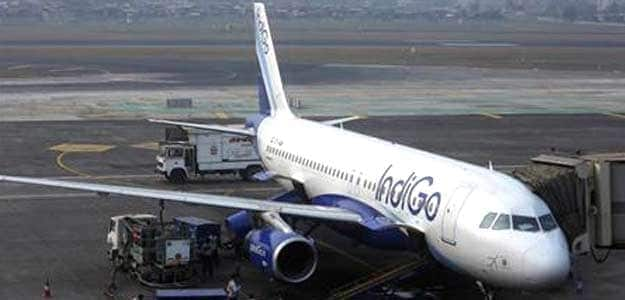
The airport in Patna, one of India's smaller cities and the capital of its poorest state, is so crowded that government authorities this year said they need to build another one.
The airport has seen the number of passengers, and daily flights, double in the last four years as the country's largest carrier IndiGo Airlines and smaller rivals like GoAir seek to cash in on a surge in demand for air travel from smaller regions to offset losses on highly competitive "trunk" routes linking big cities.
"We are close to capacity in our arrivals and departure lounges," said Santosh Kumar, who runs operations at Patna airport. "We can handle more planes but it is only possible with a bigger terminal. We need a bigger airport."
Higher disposable incomes, an expanding middle class and rapid urbanisation have made India one of the world's fastest growing domestic aviation markets, where passenger numbers are expected to grow by more than 75 percent in the next six years to exceed 217 million.
Much of that growth is expected to come from smaller cities like Patna, where more people are flying for the first time. Passenger numbers from these places have risen nearly 17 percent a year since 2009, compared to 7.6 percent from larger hubs, data from industry analysts CAPA - Centre for Aviation show.
That trend is set to continue as more airports are built in smaller cities. This month, Prime Minister Narendra Modi's government picked five smaller cities to kick off a nationwide initiative to build about 50 new airports.
"The opportunity is changing," said Aditya Ghosh, president of IndiGo, which now flies larger Airbus A320 planes to and from Patna instead of smaller ATR jets. "On some of these smaller routes, the planes are more full than the trunk routes."
Fifth largest carrier GoAir has also boosted flights to and from Patna and other smaller cities, Chief Executive Giorgio de Roni said, as these regional routes now make more money than the more congested routes between Mumbai and Delhi.
Flag carrier Air India's regional unit is also looking at increasing its fleet to tap a larger share of this market, industry officials said. Air India did not respond to requests for comment.
While more established carriers see regional travel as a way to counter the razor-thin margins and losses on big city routes, a crop of new airlines are catering only to regional demand.
Zav Airways plans to start flying within the northeast in 2015, when Air Carnival also aims to fly within the south, according to CAPA.
Air Costa began flying within southern India last October and this year, it agreed to buy 50 jets from Embraer SA in the biggest aircraft deal for an Indian regional carrier so far this year.
Chief Financial Officer Vivek Choudhary said Air Costa was bracing for competition. "But we are capitalising on the first-mover advantage," he added.
For now, demand for regional travel outstrips supply, making the sector attractive for airlines. Air travel penetration in India remains small in global terms, with 0.04 annual trips per capita against 0.3 in China and more than two in the United States.
Industry analysts, however, warn that as more carriers pile into the sector, fares will fall and airlines will face the same pressure on yields as they do now on big city routes.
"There is huge latent demand in some of these smaller cities," said Dhiraj Mathur, an executive director at PwC India who focuses on aerospace and defence. "But there's always a danger from increased competition."
Copyright Thomson Reuters 2014

-
Indians Are Travelling, But Not Every Journey Is A Holiday | The Week In Whys

Pilgrims, patients and working women are the real travellers, and the system hasn't quite caught up with them.
-
Getting To Work Costs Women More | The Reason Why
It is not just about women paying more than men. It is about women paying much more in cities than in villages.
-
AI Bias In Investing Cannot Be Eliminated, But It Can Be Governed
Framing is a particularly important example as identical financial information presented in terms of gains rather than losses can lead an LLM to reach a different assessment.
-
Joining The Dots | Dark Skies, Steady Diya: Why Hope Holds This Diwali
With war, a weak rupee and foreign outflows weighing on sentiment, policymakers at the NDTV World Summit and market veterans at NDTV Profit Ignite: Diwali Edition offered the same advice: stay invested and filter out the noise.
-
The Curious Case of Equitas Small Finance Bank And A CEO Who Quit For Stock
PN Vasudevan believes persistent investor concerns over a perceived conflict of interest had become a governance overhang on Equitas Small Finance Bank's stock, even as the lender improved profitability and asset quality.
-
Talking Points This Week: AI Cash Burn, A Tiger Comeback And An India That Still Finds Its Own Path
India is not immune to higher oil or tighter global liquidity, yet its earnings base is broader, its domestic policy levers are still available.
-
Foreign Investors Own Half Of HDFC Bank and ICICI Bank. An LTCG Cut Could Matter Most Here
Foreign portfolio investors have US$115 billion parked in HDFC Bank, ICICI Bank. If the government cuts long-term capital gains tax, Jefferies says returning foreign money could land here first.
-
'Never Seen This Level Of Negativity': Sandeep Tandon Says The Next Rally May Be Closer Than You Think
Veteran investor Sandeep Tandon says foreign selling is easing, large-caps are due a comeback and mid-caps are crowded, while he turns positive on gold, power and pharma this Diwali.
-
Indians Stay With Family, Not In Hotels | The Reason Why
India still lacks enough clean, reliable and affordable hotels for budget-conscious travellers.
-
The Economic Imperative: Analysing The Material Driving Force Behind India-Canada Strategic Reset
This economic complementarity is further reinforced by deep institutional investment ties and talent mobility, which form the bedrock of the bilateral framework.










