Signs Of Normalcy In Economy But Medium-Term Outlook Uncertain: RBI Chief
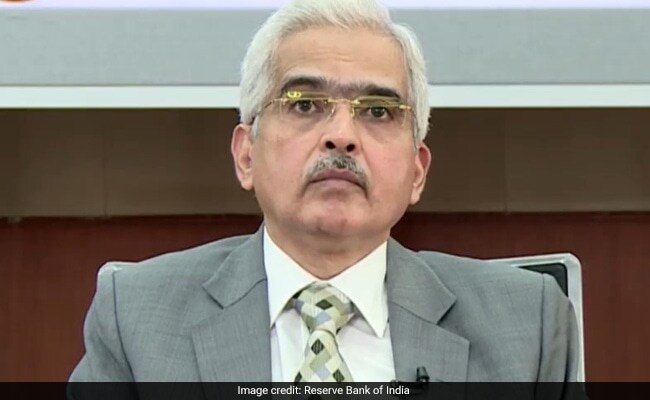
- The RBI's policy responses with a multi-pronged approach appear to have worked so far, but the situation would need even more careful assessment going forward, said the RBI Governor in his keynote address at the seventh SBI Banking and Economics Conclave.(Read Full Text Here)
- Economic growth is the "topmost priority" for the central bank and "equal priority has to be given to financial stability", the RBI Governor said. His comments come at a time when most economists expect India to register a record contraction of 4.5 per cent or more in the current fiscal year due to the coronavirus.
- The financial sector should return to normal functioning without relying on regulatory relaxation as the new norm. "Indian economy has started showing signs of going back to normalcy after easing of restrictions," Mr Das said.
- Starting late March, the country was placed under one of the strictest lockdowns in the world for over two months. Since early June, the government has started easing restrictions to help some revival in the economy even though the number of infections in the country continues to rise. (Also Read: COVID-19 Worst Health, Economic Crisis In Last 100 Years, Says Shaktikanta Das)
- "The COVID-19 pandemic, perhaps, represents so-far the biggest test of the robustness and resilience of our economic and financial system," Mr Das said. "Banks and other financial entities are today at the forefront of the country's counter-measures against the economic impact of COVID-19."
- The COVID-19 outbreak has "dented the existing world order, global value chains, labour and capital movements across the globe, and, needless to say, the socioeconomic conditions of large sections of the world population". He said the 2008 global financial crisis and the current situation show that such economic shocks have "fatter tails" than generally believed.
- The Governor reiterated that the RBI has taken a number of important measures, conventional and unconventional, to boost the financial system and support the economy against the crisis. The RBI has announced liquidity measures worth Rs 9.57 lakh crore since February this year, equivalent to 4.7 per cent of the country's nominal GDP in 2019-20, he pointed out.
- Mr Das warned that the damage caused by COVID-19 may lead to higher non-performing assets - or bad loans - and capital erosion in banks, which will have to raise capital in an anticipatory basis. This makes a recapitalisation plan for the country's banks - both private and public - necessary, and lenders also have to improve governance and sharpen their risk management, he said.
- Mr Das said that the central bank has to carefully unwind the unusual monetary and regulatory measures taken to cushion the economic shocks in the post pandemic world, as the financial sector should return to normal functioning without relying on the regulatory relaxations as the new norm. Inflation will continue to moderate going forward and investment activity will revive, he said.
- The RBI had already switched to an "accommodative" stance before the onset of the COVID-19 outbreak, its Governor said. While an "accommodative" stance eradicates the possibility of stricter monetary policy measures such as a rate hike, a "neutral" stance means the central bank can move either way. He highlighted that the RBI has cut the repo rate by a total 250 basis points (2.5 percentage points) since February 2019. The repo rate - or the key rate at which the RBI lends money to commercial banks - is currently at 4 per cent, the lowest since 2000.

-
Gold Is Rs 22,000 Cheaper Than A Month Ago. Should You Buy Amid The Wedding Season?

Gold's potential slide to $3,500 could save around Rs 4,700 per 10 grams, but a soft inflation print could just as easily push prices back up. One way to split the risk is to buy in parts, some now and the rest after the Fed's Dec. 9 decision.
-
AI Agents Are Gaining Power. Who Governs Them?
Artificial intelligence agents promise to transform productivity by moving machines from assisting decisions to executing them. But as organisations delegate greater authority to these AI-agents, they must first establish who controls that authority and who remains accountable when things go wrong.
-
Why Swapping Your Old Gold Can Trigger A Rs 5 Lakh Tax Bill, And How You Can Avoid It Legally
Swapping old gold for new is taxed as a sale and a fresh purchase. Getting your own gold remade can cut most of that bill, though it has its own costs.
-
The AI Trade is Done. The Real Opportunity for Investors Starts in 2027 | Unhedged Position
As pureplay AI stocks plunge and circular, capex-led financing unwinds, 2027 is set to be a year of reckoning for AI companies. Yet the bust clears the way for a better opportunity for investors in 2027 -- shifting the spotlight from AI builders to the companies using AI.
-
Leadership As Mission: Why The Age Of AI Demands More Human Leadership
Debjani Ghosh examines how AI is changing leadership, arguing that its success must be measured by its impact on people and the accountability of those guiding its use.
-
We May Need Another Tukaram Mundhe To Fight Air Pollution | The Reason Why
Developers may install basic measures such as sprinklers and green nets, resume work, and continue violating rules when this equipment stops working.
-
Extracting Value From Battery Scrap Could Be Challenging For India | The Reason Why
A discarded lithium-ion battery still contains valuable materials such as lithium, nickel and cobalt. These can be recovered and reused. When such batteries are crushed and shredded, they produce a dark powder called black mass.
-
One El Nino, India Can Handle. Two Could Break The Granary
India's grain stocks can absorb one bad year, but a second El Nino could drain the buffer in two to three years, economists say.
-
India's Troika Of Good Luck | Joining The Dots
As Jensen Huang's exit drags Nvidia down, a cooling AI trade and resilient earnings have revived investor interest in India. A likely RBI rate hike looms.
-
Talking Points This Week: Leadership Shock At Nvidia, Earnings Strength, And The Fog Over Hormuz
The Anthropic IPO pricing and first trading day, Nvidia's upcoming earnings, and any fresh signals from Iran will set the tone for the following week.









