SIDBI Steps Up Refinancing Plans Amidst Focus On SME Lending
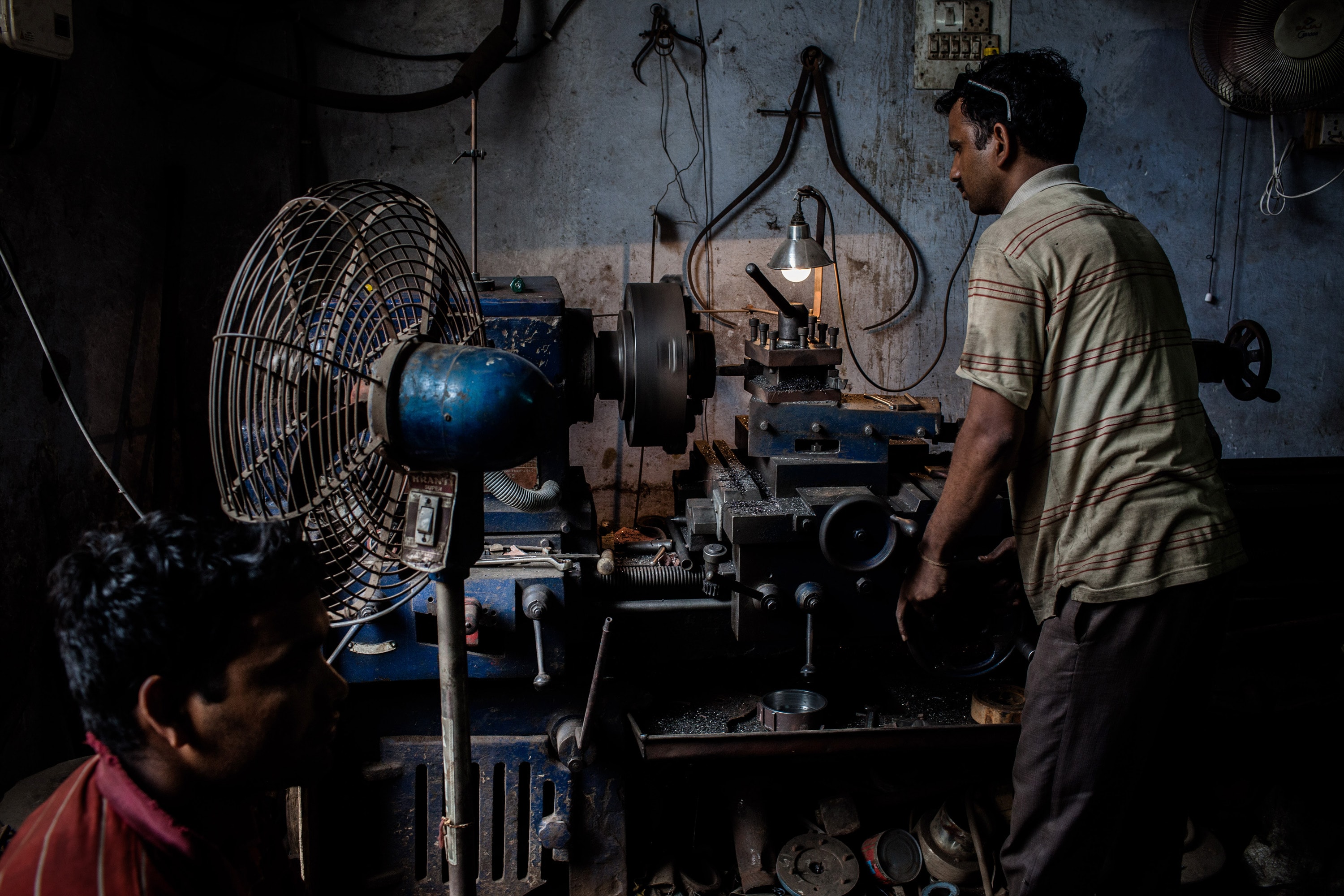
SIDBI Ltd., an entity set up to help finance India's small and medium enterprises, plans to step up refinance of SME loans as it joins the government's push for increasing the flow of credit to smaller businesses.
SIDBI was set up in 1990, with the backing of the government and public sector banks, to provide refinance to lenders. At present, SIDBI has a refinance portfolio of only about Rs 60,000 crore in loans. In addition, it has loaned about Rs 10,000 crore directly.
In 2018-19, SIDBI will expand its refinancing and direct lending book by more than 40 percent to over Rs 1 lakh crore, Mohammad Mustafa, chairman and managing director, SIDBI told BloombergQuint in an interview. This pace of growth is significantly higher than the 5 percent compounded annual growth rate (CAGR) in SIDBI's portfolio over the last few years.
The total credit to the MSME segment through various financial institutions is between Rs 11-12 lakh crore. According to data available with the Reserve Bank of India (RBI), outstanding bank loans to the MSME segment stood at Rs 4.65 lakh crore in April 2018.
Adding To The MUDRA Push
SIDBI's plan to expand refinance available to SME lenders comes against the backdrop of the government's efforts to increase credit flow to small and medium enterprises.
So far, much of the refinance effort has been centered around the Micro Units Development Refinance Agency or MUDRA - a subsidiary of SIDBI. For the current year, the government has set a target of Rs 4 lakh crore for outstanding refinance under the MUDRA scheme, as compared to Rs 2.5 lakh crore at the end of March 2018.
SIDBI's plan to expand its own refinancing and direct lending book to Rs 1 lakh crore comes atop that.
The two agencies cater to different segments of the market, explains Mustafa.
Under MUDRA, the focus is on refinancing MSME loans under Rs 10 lakh. This option is availed mostly by smaller lenders. Also only those loans which are given out at base rate are eligible for refinancing under the MUDRA scheme.
In contrast, SIDBI plans to expand its book by refinancing larger MSME loans, Mustafa said.
Last month, SIDBI organised a meeting between some leading lenders and aggregators such as Oyo, Uber and Ola, service providers such as Swiggy and Zomato, fast moving consumer goods companies like Amul and Patanjali, among others. The meeting was aimed at creating avenues for disbursal of credit under MUDRA to MSMEs working with these companies as service providers.
SIDBI is also tying up with NBFCs to target entrepreneurs in small towns across India, who may be looking for credit, said Mustafa.
MSMEs: A Bankable Opportunity?
Banks have traditionally approached MSME lending cautiously due to the lack of adequate information needed to assess these borrowers, which in turn has led to higher bad loans in this segment.
Will an increased push for refinancing help increase credit flow to this segment?
Two factors could help.
First, bad loans in the MSME portfolio have been range bound and lower than what has been recently been seen in the large corporate segment.
According to a report titled MSME Pulse released by CIBIL Transunion and SIDBI in March, the rate of non-performing assets (NPAs) in the large MSME segments, where the outstanding loans ranged between Rs 5-10 crore, was 11.3 percent as on December 2017. The rate was higher at 11.5 percent for MSMEs with outstanding loans worth less than Rs 10 lakh. This is currently in line with the industry wide gross NPA ratio of 11 percent.
Mustafa claims that the NPAs on the MUDRA portfolio are significantly lower at about 5-6 percent.
The CIBIL Transunion-SIDBI study also noted that the chances of a sudden spike in bad loans in this segment is low.
A deep dive into the data for ‘partially recognised' and ‘irregular borrowers' shows that while NPAs are stable and in control, the likelyhood of a sharp increase in NPAs is lowMSME Pulse Report (2018)
Another factor that could make it lucrative for bankers to avail of the refinancing benefit and, in turn, lend more to this segment is the change in the interest rate dynamics.
According to a public sector banker, who spoke on conditions of anonymity, traditionally large lenders have not availed of the refinancing opportunity that SIDBI provides because the interest rate differentials were not large. Hence, the benefit of refinancing was limited.
Typically SIDBI borrows funds from the market and also receives funds from the RBI, which have been sourced from the funds that banks deposit with the regulator due a shortfall in their priority sector lending targets. SIDBI then uses these funds for refinancing after charging a small fee. The difference between the lending rate at which banks give out MSME loans and at the rate at which they receive refinancing is what banks gain.
Since the rate at which RBI gives funds to SIDBI for lending has come down, there has been an improvement in the margins that the banks make, said the banker quoted above. This may encourage bankers to consider the refinance option for MSME loans more actively, he added.

-
We May Need Another Tukaram Mundhe To Fight Air Pollution | The Reason Why

Developers may install basic measures such as sprinklers and green nets, resume work, and continue violating rules when this equipment stops working.
-
Extracting Value From Battery Scrap Could Be Challenging For India | The Reason Why
A discarded lithium-ion battery still contains valuable materials such as lithium, nickel and cobalt. These can be recovered and reused. When such batteries are crushed and shredded, they produce a dark powder called black mass.
-
One El Nino, India Can Handle. Two Could Break The Granary
India's grain stocks can absorb one bad year, but a second El Nino could drain the buffer in two to three years, economists say.
-
India's Troika Of Good Luck | Joining The Dots
As Jensen Huang's exit drags Nvidia down, a cooling AI trade and resilient earnings have revived investor interest in India. A likely RBI rate hike looms.
-
Talking Points This Week: Leadership Shock At Nvidia, Earnings Strength, And The Fog Over Hormuz
The Anthropic IPO pricing and first trading day, Nvidia's upcoming earnings, and any fresh signals from Iran will set the tone for the following week.
-
Signature Play: The Classic Cocktail Is Dead. Or Is It?
Classic cocktails are disappearing from India's cocktail menus. But they're still being ordered, taught to bartenders and borrowed from. So, who's really having the last drink?
-
A New Samvat Wishlist: Inclusive Prosperity And Human Development
India has strengthened its economic foundations through infrastructure, digital access and enterprise. Its next growth chapter must deepen productivity, create better livelihoods and widen participation in prosperity.
-
Love, Sex Aur Dhokha: The Audacious Plot To Spy On Jensen Huang
A Taipei dinner, a Singapore chip buyer and a suspected Chinese asset: inside the alleged spy operation that got close to NVIDIA's Jensen Huang.
-
Ten Things I Learnt This Samvat
Patience can be a trap. Cheap stocks can stay cheap. Leverage can wipe you out. What did Samvat 2082 teach us? Niraj Shah writes on 10 lessons from the year gone by.
-
Talking Points This Week: Tech Nerves, FII Buying, And A Faraway Banking Shock
The global markets are not shining this Diwali. The exception in the large markets is, India.









