Show Us the Money: EU Seeks Billions of Euros to Revive Economy
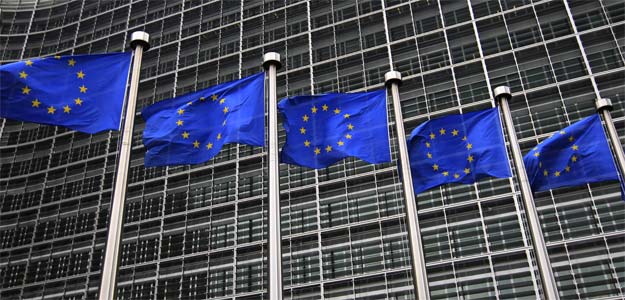
Milan, Italy: The European Union sought ways on Saturday to marshal billions of euros into its sluggish economy without getting deeper into debt, casting the net wide to consider options from a pan-European capital market to a huge investment fund.
Finance ministers from the bloc's 28 countries are fleshing out a host of ideas circulating in European capitals. With interest rates already at record lows, ministers need radical steps to help growth at a time of near record unemployment.
From Poland's 700-billion-euro ($907 billion) 'European Fund for Investments' to the European Central Bank's plan to resurrect the EU's market for asset-backed securities, Europe's ability to get credit flowing to small companies is central to its economic revival.
"We're thinking about instruments that facilitate investments," Italy's economy minister, Pier Carlo Padoan, said as he arrived for the gathering in Milan.
"Resources (for investments) will come mostly from the private sector but of course public sector resources will be instrumental in leveraging them," he said.
The European Union's economy, which generates about a quarter of global output, grew by just 0.1 per cent last year and its jobless rate is almost double that of the United States, with around 25 million people unemployed.
Investment is the new buzz word among ministers, overriding the German mantra of budget cuts. Germany is under growing pressure from partners like France and Italy to loosen the fiscal reins and use its overflowing government coffers to ramp up public investment.
But German Finance Minister Wolfgang Schaeuble this week rebuffed calls for Berlin to spend more to boost the euro zone economy which showed no growth in the second quarter as recovery stalls.
In a speech in Milan, ECB President Mario Draghi described business investment as "one of the great casualties" of the financial crisis, saying it has fallen 20 per cent since 2008.
"We will not see a sustainable recovery unless this changes," he told officials on Thursday night.
The incoming president of the European Commission, Jean-Claude Juncker, wants a 300 billion-euro ($410 billion) investment programme to revive the European economy.
Unlike in the United States, European companies rely on banks to provide 80 per cent of loans, but banks are reluctant to lend following the worst crisis in a generation.
In Italy, Europe's fourth-largest economy, credit to companies has shrunk by more than 70 billion euros since mid-2011 and is still contracting, central bank data shows.
That problem is mirrored across Europe, holding back the recovery because smaller companies provide two out of every three private-sector jobs in the European Union.
Italian Organic Jam
Indebted countries like Italy and France have little public money for businesses. Another hangover of the crisis is the differing cost of financing across the euro zone in a currency area that aimed to create the same financing conditions for all.
At their meeting, ministers have four ideas in front of them: an Italian paper on new financing tools for companies, a Franco-German proposal on how to boost private investments, a Polish proposal on creating a joint EU fund and the Juncker Commission's call for the 300-billion-euro programme.
Poland wants a 'European Fund for Investments' that would be able to finance, through leveraging its own capital, 700 billion euros worth of investment. The fund could be a special-purpose vehicle under the umbrella of the European Investment Bank, the EU bank owned by European governments.
"The European Investment Bank isn't short of money. There's a shortage of projects and if we can match the money with good projects, we'll get there," said Luxembourg's finance minister, Pierre Gramegna.
Italy's proposal is a pan-European market, where smaller companies can raise capital, building on its "minibond" legislation in 2012 that allows unlisted companies to issue.
That could be part of a EU capital-market union, building on the euro zone's banking union, but that will need to closely involve London, the leading financial centre in Europe.
Twenty-six Italian family businesses, including one that makes organic jam, issued bonds in the past two months, raising 1 billion euros combined, according to the Italian treasury.
"This is not just about funding small companies per se, it is about funding high growth companies," said Nicolas Veron, an expert on capital markets at the Bruegel economic think-tank in Brussels. "They start small but the ones you are really interested in are the ones with the high growth potential."
Copyright: Thomson Reuters 2014

-
We May Need Another Tukaram Mundhe To Fight Air Pollution | The Reason Why

Developers may install basic measures such as sprinklers and green nets, resume work, and continue violating rules when this equipment stops working.
-
Extracting Value From Battery Scrap Could Be Challenging For India | The Reason Why
A discarded lithium-ion battery still contains valuable materials such as lithium, nickel and cobalt. These can be recovered and reused. When such batteries are crushed and shredded, they produce a dark powder called black mass.
-
One El Nino, India Can Handle. Two Could Break The Granary
India's grain stocks can absorb one bad year, but a second El Nino could drain the buffer in two to three years, economists say.
-
India's Troika Of Good Luck | Joining The Dots
As Jensen Huang's exit drags Nvidia down, a cooling AI trade and resilient earnings have revived investor interest in India. A likely RBI rate hike looms.
-
Talking Points This Week: Leadership Shock At Nvidia, Earnings Strength, And The Fog Over Hormuz
The Anthropic IPO pricing and first trading day, Nvidia's upcoming earnings, and any fresh signals from Iran will set the tone for the following week.
-
Signature Play: The Classic Cocktail Is Dead. Or Is It?
Classic cocktails are disappearing from India's cocktail menus. But they're still being ordered, taught to bartenders and borrowed from. So, who's really having the last drink?
-
A New Samvat Wishlist: Inclusive Prosperity And Human Development
India has strengthened its economic foundations through infrastructure, digital access and enterprise. Its next growth chapter must deepen productivity, create better livelihoods and widen participation in prosperity.
-
Love, Sex Aur Dhokha: The Audacious Plot To Spy On Jensen Huang
A Taipei dinner, a Singapore chip buyer and a suspected Chinese asset: inside the alleged spy operation that got close to NVIDIA's Jensen Huang.
-
Ten Things I Learnt This Samvat
Patience can be a trap. Cheap stocks can stay cheap. Leverage can wipe you out. What did Samvat 2082 teach us? Niraj Shah writes on 10 lessons from the year gone by.
-
Talking Points This Week: Tech Nerves, FII Buying, And A Faraway Banking Shock
The global markets are not shining this Diwali. The exception in the large markets is, India.









