Elections, RBI's Rate Stance, Crude Oil Prices To Drive Markets In 2019: Analysts
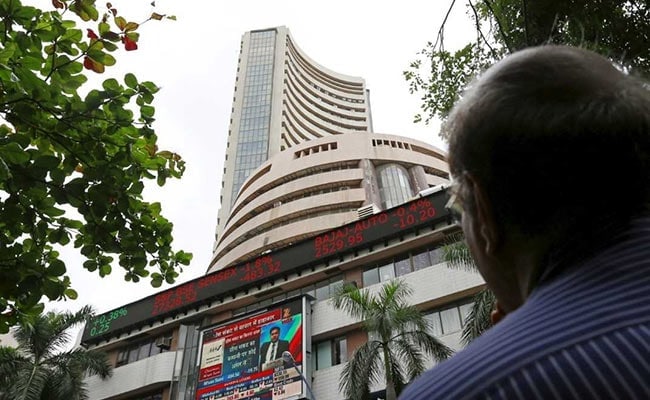
The coming general elections, along with the ongoing US-China trade war and crude oil prices will determine the trajectory of equities in 2019.
Additionally, the Reserve Bank of India's (RBI) rate stance, direction of foreign fund flows, the rupee's strength against the US dollar, quarterly earning results as well as premium valuations are expected to impact investors' sentiments in the current year.
"The ongoing volatility may continue in the near-term due to premium valuation, slowdown in the domestic economy, muted earnings growth in the next two quarters, cascading effect of liquidity crunch in the urban and rural market," Geojit Financial Services Head of Research Vinod Nair told IANS.
"Short-term effect of national elections and the global effect of current uncertainties, will impact the performance during the initial part of 2019," he said.
HDFC Securities' Retail Research Head Deepak Jasani told IANS: "The Nifty has the potential to touch 12,400 points during CY2019. This is based on various factors, namely the expectations of an earnings pick-up in corporates post Q4FY19, and the resumption of FII (foreign institutional investor) inflows to the domestic markets around and post the general elections."
"Till February, corporate earnings trends, US Fed outlook on interest rates and trade war issue developments need to be closely watched."
In 2018, despite heavy volatility, foreign fund outflows and a weak rupee, the equity market emerged as one of the best performers globally, mainly on account of a rise in the pace of economic expansion, lower inflation and a normal monsoon.
The two key indices -- the S&P Bombay Stock Exchange (BSE) Sensex and the National Stock Exchange's (NSE) Nifty50 -- closed higher by just six per cent and three per cent respectively, placing the indices among the best-performing benchmark indices among the BRICS (Brazil, Russia, India, China, South Africa) group of countries.
However, gains were capped as crude oil prices rose and fears over a tariff war-induced global slowdown grew.
"Markets appear to be much better in the year 2019 compared to the behaviour we saw in 2018. Two important variables among others that went negative for markets were rise in crude prices and consistent selling by FIIs," SMC Investments & Advisors CMD D.K. Aggarwal told IANS.
"As of now, undoubtedly, surging crude oil prices have reversed, rupee is now stable, but the political risk and trade war concerns and other global risk factors remains as a key headwind for the markets."
On the currency front, the rupee's strength against the US dollar will play a decisive role in charting the course of the key indices.
The rupee was heavily dented in 2018. The currency fell by 9.23 per cent against the US dollar at 69.77 from its previous close of 63.87 at the end of 2017, making it the worst-performing Asian currency of the year.
Another important factor for 2019, will be the direction of foreign fund flows. Last calendar year, NSDL data showed that foreign portfolio investors (FPIs) sold Rs 33,014 crore worth of equities in 2018.
Similarly, provisional data from the stock exchanges showed that FIIs sold over Rs 73,000 crore worth of equities.
"For the short term, FIIs may come in a big way around general election time, if the markets are at an attractive entry level. Their subsequent behaviour will depend on the political situation in India and interest rate trends abroad," Jasani added.

-
We May Need Another Tukaram Mundhe To Fight Air Pollution | The Reason Why

Developers may install basic measures such as sprinklers and green nets, resume work, and continue violating rules when this equipment stops working.
-
Extracting Value From Battery Scrap Could Be Challenging For India | The Reason Why
A discarded lithium-ion battery still contains valuable materials such as lithium, nickel and cobalt. These can be recovered and reused. When such batteries are crushed and shredded, they produce a dark powder called black mass.
-
One El Nino, India Can Handle. Two Could Break The Granary
India's grain stocks can absorb one bad year, but a second El Nino could drain the buffer in two to three years, economists say.
-
India's Troika Of Good Luck | Joining The Dots
As Jensen Huang's exit drags Nvidia down, a cooling AI trade and resilient earnings have revived investor interest in India. A likely RBI rate hike looms.
-
Talking Points This Week: Leadership Shock At Nvidia, Earnings Strength, And The Fog Over Hormuz
The Anthropic IPO pricing and first trading day, Nvidia's upcoming earnings, and any fresh signals from Iran will set the tone for the following week.
-
Signature Play: The Classic Cocktail Is Dead. Or Is It?
Classic cocktails are disappearing from India's cocktail menus. But they're still being ordered, taught to bartenders and borrowed from. So, who's really having the last drink?
-
A New Samvat Wishlist: Inclusive Prosperity And Human Development
India has strengthened its economic foundations through infrastructure, digital access and enterprise. Its next growth chapter must deepen productivity, create better livelihoods and widen participation in prosperity.
-
Love, Sex Aur Dhokha: The Audacious Plot To Spy On Jensen Huang
A Taipei dinner, a Singapore chip buyer and a suspected Chinese asset: inside the alleged spy operation that got close to NVIDIA's Jensen Huang.
-
Ten Things I Learnt This Samvat
Patience can be a trap. Cheap stocks can stay cheap. Leverage can wipe you out. What did Samvat 2082 teach us? Niraj Shah writes on 10 lessons from the year gone by.
-
Talking Points This Week: Tech Nerves, FII Buying, And A Faraway Banking Shock
The global markets are not shining this Diwali. The exception in the large markets is, India.









