RBI Governor Shaktikanta Das To Meet Chiefs Of State-Run Banks On Thursday
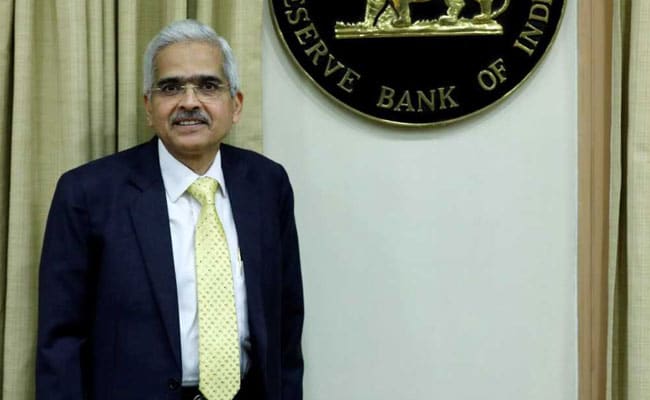
Shaktikanta Das, the newly-appointed governor of the Reserve Bank of India (RBI), said on Wednesday that he would adopt a consultative approach and move quickly to meet the chiefs of state-run banks to tackle issues facing the banking sector. "I propose to undertake consultations with stakeholders wherever necessary," he said at his first news conference after taking charge as central banker. Mr Das's more communicative approach is in contrast to his more reticent predecessor, Urjit Patel, who resigned on Monday following a drawn out public dispute with the government.
Mr Das said the banking sector would be his key focus area and more measures were needed to revive lenders. A meeting with the heads of a number of state banks would be held on Thursday, he said.
Analysts said the move to open up a dialogue was positive.
"He is trying to give comfort to the banking industry against the backdrop of continued concerns on the financial stability front," said Rupa Rege Nitsure, chief economist at L&T Financial Holdings.
Mr Das's open style of communication is likely to be the way business will be conducted within the RBI as well as with outsiders, a marked departure from the previous regime.
At the news conference, he answered questions from at least a dozen journalists, unlike his predecessor who only answered questions from a select few at bi-monthly monetary policy meetings.
While assuring that he would defend the central bank's autonomy at a time when the government has put pressure on it to ease regulatory curbs and boost growth, Mr Das, a veteran government bureaucrat, also highlighted the need to take the government's views on board.
"Government is not just a stakeholder, but the government of the day runs the economy and manages major policy decisions," Mr Das said, responding to a question on the breakdown of communication lines between the two sides.
"So there has to be free, fair, objective and very frank discussions between the government and the RBI," he said.
Eye on growth
A seasoned bureaucrat who has worked under two successive finance ministers from two opposing political parties, Mr Das is known for his preference towards pro-growth policies.
That will be key to Prime Minister Narendra Modi as he tries to woo voters ahead of general elections due by May, after facing defeat in five recent state polls.
PM Modi also needs the RBI's support in getting additional funds from the central bank's capital reserves to help pay for any populist measures ahead of the general elections.
While Mr Das declined to elaborate on steps he had in mind to boost the economy, he sounded dovish on inflation and growth, which could mean a relaxation of some regulatory rules for banks.
"Inflation targeting is an important function which the RBI Act has mandated. It's a mandatory part of RBI's functioning. So that will remain very important," Mr Das said, adding that the Act also mentions the importance of economic growth.
"Maintenance of the growth trajectory of the Indian economy is also important," Mr Das said.
Retail inflation on Wednesday fell to a 17-month low of 2.33 per cent in November, lower than an expected 2.8 per cent, driven by weaker food inflation.

-
Signature Play: The Classic Cocktail Is Dead. Or Is It?

Classic cocktails are disappearing from India's cocktail menus. But they're still being ordered, taught to bartenders and borrowed from. So, who's really having the last drink?
-
A New Samvat Wishlist: Inclusive Prosperity And Human Development
India has strengthened its economic foundations through infrastructure, digital access and enterprise. Its next growth chapter must deepen productivity, create better livelihoods and widen participation in prosperity.
-
Love, Sex Aur Dhokha: The Audacious Plot To Spy On Jensen Huang
A Taipei dinner, a Singapore chip buyer and a suspected Chinese asset: inside the alleged spy operation that got close to NVIDIA's Jensen Huang.
-
Ten Things I Learnt This Samvat
Patience can be a trap. Cheap stocks can stay cheap. Leverage can wipe you out. What did Samvat 2082 teach us? Niraj Shah writes on 10 lessons from the year gone by.
-
Talking Points This Week: Tech Nerves, FII Buying, And A Faraway Banking Shock
The global markets are not shining this Diwali. The exception in the large markets is, India.
-
Midterm Rally Lasted A Day. The Hard Reality Of A Divided US May Last Two Years | Opinion
Between a contested AI boom, a debt ceiling that arrives in 2027 and a president with every incentive to act alone, the next two years may prove more volatile than the first day's rally suggests.
-
Blue Wave Will Derail the AI Trade but Won't Dismantle the AI Era | Unhedged Position
The Democrats' sweep of the US Congress will see politics collide with economic forces both over the long and short term.
-
It's Time To Take The GST Council's Bet On Trust Global
Payment records can prove India's services exports, and clear, proportionate rules can bring foreign digital sellers into the tax net.
-
Opinion | India at 38: From Innovation Overperformer to Innovation Powerhouse
India now has 453 VC-backed deep science startups, 18 of them late-stage, after 117 percent growth since 2020. Laurus Labs, at USD 9.3 billion, is the most valuable deep science company in any middle-income economy outside China.









