Sensex Crashes 1,942 Points On Rampaging Coronavirus, Plunging Oil
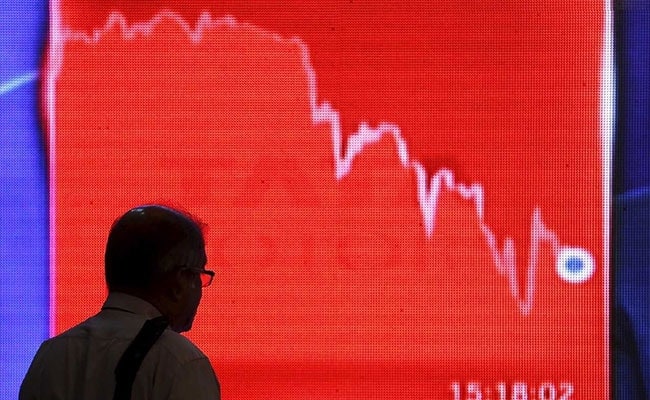
The stock markets crashed by 5 per cent on Monday on the back of rampaging coronavirus and plunging crude oil prices. The S&P BSE ended the day at 35,635, weaker by 1,942 points or 5.1 per cent and the Nifty ended at 10,451, down 538 points or 4.9 per cent. The broader markets also faced a rout, with the BSE Midcap index shedding 4.7 per cent at 13,554 and the Smallcap index losing 4.2 per cent at 12,770. The Sensex suffered its biggest loss, in percentage terms, since August 2015. All the BSE sectoral indices ended in the red, with oil marketing companies and banking stocks being among the worst affected. Reliance Industries was the biggest contributor to the fall in the benchmark indices.
The Sensex plummeted more than 2,400 points to hit 35,109 on the downside during the session and broader NSE Nifty benchmark slumped to as low as 10,294, down more than 700 points before making a mild recovery towards the end of trade.
The coronavirus is fast acquiring pandemic proportions. It has relentlessly spread throughout the world, with the number of infected people worldwide crossing the 1 lakh mark worldwide across 100 countries out of a total of 194 constituent countries of the United Nations. In India, the number of infected people has risen to 44 as 5 more people have tested positive in the past 24 hours.
The NSE's India VIX index - which gauges the markets' expectation of volatility in the near term - extended its recent gains by another 20 per cent to touch the 30 mark.
There was turmoil in the oil markets after Saudi Arabia started a price war with Russia by slashing its selling prices and pledging to unleash pent-up supply onto the market. Brent crude futures fell by as much as $14.25, or 31.5 per cent, to $31.02 a barrel. That was the biggest percentage drop since January 17, 1991, at the start of the first Gulf War and the lowest since February 12, 2016.
Equity markets across Asia sank, with MSCI's broadest index of Asia-Pacific shares outside Japan plummeting 3.0 per cent to a five-month low, Japan's Nikkei falling 4.7 per cent and Australia's commodity-heavy market down 5 per cent.
European indices, including the CAC, DAX and FTSE, had cuts ranging from 4-8 per cent each in early trades. The US market futures are also staring at huge losses at opening bell, with the Wall Street E-Mini futures plunging 4.6 per cent. Crude oil prices nosedived 31.5 per cent to $31.02 a barrel in their biggest percentage slump since the start of the first Gulf War.
Investors around the world are looking at central banks to announce measures to shield world economy from the virus. The European Central Bank meets on Thursday, but the jury is still out on of and how it will choose to respond to the spreading contagion in the market.
All the BSE sectoral indices ended in the red, with oil marketing companies and banking stocks being among the worst effected. Companies engaged in crude oil exploration fell sharply after crude oil prices crashed in international markets. The operator of world's largest crude oil refining facility at Jamnagar and operator of KG-D6 basin in Krishna Godavari basin - Reliance Industries - slumped 12.35 per cent, its biggest single-day fall in at least 10 years, to end at Rs 1,113. State-run oil explorer ONGC dived 16.2 per cent to Rs 74 to be the top loser on the BSE.
Banking stocks also had a rough ride, with IndusInd Bank, SBI, ICICI Bank and Axis Bank losing 5-8 per cent each. The other index heavyweights that received a battering were Tata Steel, TCS, Infosys, Bajaj Auto and L&T, losing between 5 per cent and 8 per cent each.
There were no gainers among the BSE index stocks. In the non-index space, Yes Bank zoomed 31 per cent to Rs 21 as SBI expressed interest to take a 49 per cent stake in the beleaguered bank.
The BSE market breath was abysmal. Out of 2,725 stocks traded on the BSE, there were 2,197 losers.

-
One El Nino, India Can Handle. Two Could Break The Granary

India's grain stocks can absorb one bad year, but a second El Nino could drain the buffer in two to three years, economists say.
-
India's Troika Of Good Luck | Joining The Dots
As Jensen Huang's exit drags Nvidia down, a cooling AI trade and resilient earnings have revived investor interest in India. A likely RBI rate hike looms.
-
Talking Points This Week: Leadership Shock At Nvidia, Earnings Strength, And The Fog Over Hormuz
The Anthropic IPO pricing and first trading day, Nvidia's upcoming earnings, and any fresh signals from Iran will set the tone for the following week.
-
Signature Play: The Classic Cocktail Is Dead. Or Is It?
Classic cocktails are disappearing from India's cocktail menus. But they're still being ordered, taught to bartenders and borrowed from. So, who's really having the last drink?
-
A New Samvat Wishlist: Inclusive Prosperity And Human Development
India has strengthened its economic foundations through infrastructure, digital access and enterprise. Its next growth chapter must deepen productivity, create better livelihoods and widen participation in prosperity.
-
Love, Sex Aur Dhokha: The Audacious Plot To Spy On Jensen Huang
A Taipei dinner, a Singapore chip buyer and a suspected Chinese asset: inside the alleged spy operation that got close to NVIDIA's Jensen Huang.
-
Ten Things I Learnt This Samvat
Patience can be a trap. Cheap stocks can stay cheap. Leverage can wipe you out. What did Samvat 2082 teach us? Niraj Shah writes on 10 lessons from the year gone by.
-
Talking Points This Week: Tech Nerves, FII Buying, And A Faraway Banking Shock
The global markets are not shining this Diwali. The exception in the large markets is, India.
-
Midterm Rally Lasted A Day. The Hard Reality Of A Divided US May Last Two Years | Opinion
Between a contested AI boom, a debt ceiling that arrives in 2027 and a president with every incentive to act alone, the next two years may prove more volatile than the first day's rally suggests.
-
Blue Wave Will Derail the AI Trade but Won't Dismantle the AI Era | Unhedged Position
The Democrats' sweep of the US Congress will see politics collide with economic forces both over the long and short term.









