Sebi For Action in High-profile Insider Trading Cases
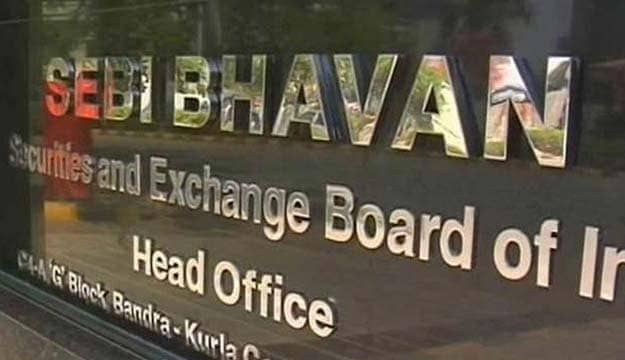
To send across a strong message to manipulators, capital market regulator Sebi is mulling over ways for more stringent enforcement actions in cases of high-profile and glaring violations of insider trading norms.
A revision of nearly two-decade old set of insider trading regulations is currently underway and the new norms are expected to be put in place in about a month after clearance from the Sebi board, a senior official said.
At the same time, efforts are being made to comply with a principle of dealing more stringently with glaring violations and high-profile cases, he added.
While the new insider trading norms are being framed as per wide-ranging reforms suggested by a Sebi-appointed panel, the regulatory body's International Advisory Board (IAB) has also suggested significant changes in Sebi's insider trading regulations to bring them at par with global best practices.
Insider trading -- dealing in securities with prior access to unpublished price-sensitive information -- has been attracting regulatory attention worldwide. However, certain outdated provisions of existing norms have been misused by the offenders to escape regulatory action.
The IAB has also suggested that heavy penalty along with naming and shaming may be used as a major deterrence to insider trading and other offences in the securities market.
Sebi was also asked to "Publicise major insider trading cases through various means including in a separate section on Sebi website for easier access", while IAB also sought provisions to compensate victims, if any, of such offences.
In an Action Taken Report on suggestions made by IAB, Sebi said that its orders are made public through various forums whenever there are major enforcement actions on Fraudulent and Unfair Trade Practices or Insider Trading.
Besides, Sebi website is also being revisited for better dissemination of information from users' perspective, the regulator said.
On dealing more stringently with glaring violations of high-profile nature, Sebi said that "efforts are being made to comply with such principle", while it has also issued internal guidelines for adjudicating officers which envisage stringent penalty for insider trading.
On heavy penalty and 'naming and shaming' measures, Sebi said that the regulations provide for heavy penalty of Rs 25 crore or three-times of ill-gotten profits, whichever is higher, for the offence of insider trading.
The regulator said that the orders imposing heavy penalty are put up in public domain and a press release is also issued, while giving example of a huge penalty of Rs 1,850 crore it recently imposed in the matter of Satyam fraud.
On provisions to compensate victims, Sebi said that the "nature of insider trading offence is such that it is impracticable to ascertain which shareholders had actually lost because of an offender's trade".
While Sebi does not have power to compensate, it can disgorge ill-gotten profits, and restitution is possible from disgorgement amount if victims of a fraud are identifiable.
The new amendments to the Sebi Act provides for explicit power of disgorgement, while the Investor Education and Protection Fund regulations have been amended to provide for restitution, the regulator said.

-
'Never Seen This Level Of Negativity': Sandeep Tandon Says The Next Rally May Be Closer Than You Think

Veteran investor Sandeep Tandon says foreign selling is easing, large-caps are due a comeback and mid-caps are crowded, while he turns positive on gold, power and pharma this Diwali.
-
Indians Stay With Family, Not In Hotels | The Reason Why
India still lacks enough clean, reliable and affordable hotels for budget-conscious travellers.
-
The Economic Imperative: Analysing The Material Driving Force Behind India-Canada Strategic Reset
This economic complementarity is further reinforced by deep institutional investment ties and talent mobility, which form the bedrock of the bilateral framework.
-
Medicine Pricing: Where Must Profit Stop?
India must confront excessive margins, hidden incentives and regulatory gaps that threaten the integrity of medicine.
-
Why Amazon And Flipkart Are Struggling To Beat Meesho In India's Smaller Cities
With 274 million users and lowest-cost logistics, Meesho is defending its value commerce crown against giants like Amazon and Flipkart.
-
High US Salaries, No Green Card Certainty: The Financial Calculation Facing Indian H-1B Families
The suspension of PERM processing at eight technology employers does not cancel existing H-1B visas. What it does is force a question many Indian families have been avoiding: is the US salary worth tying your career and family plans to one employer?
-
Swiggy vs Eternal: Food Delivery's Two Rivals Are No Longer In The Same Race
Eternal is building a private AI assistant, dark.ai. Swiggy is still working out how to make Instamart pay, with an operating loss of Rs 895 crore in the July-September quarter while Blinkit stayed profitable.
-
Where You Live Shapes How You Get To Work | The Reason Why
Two-wheelers are the most popular way to get to work in India, accounting for nearly 43% of workplace commutes.
-
Unhedged Position: Can India See An Indonesia-Style Time Correction?
The Nifty is trading below levels it first clocked in 2024. Is there, then, as I have suggested in the headline, potential that the current time correction drags on painfully for the next three-five, even ten years?
-
Navigating Friction And Energy Realities: An Analysis Of Marco Rubio's October Visit To India
Occurring at a critical juncture marked by stalled trade negotiations and escalating geopolitical pressures over global energy supplies, the visit offers a profound window into modern US-India relations.










