SEBI Chief Raises Money Laundering Concerns Over Private Equity, Venture Capital Funds
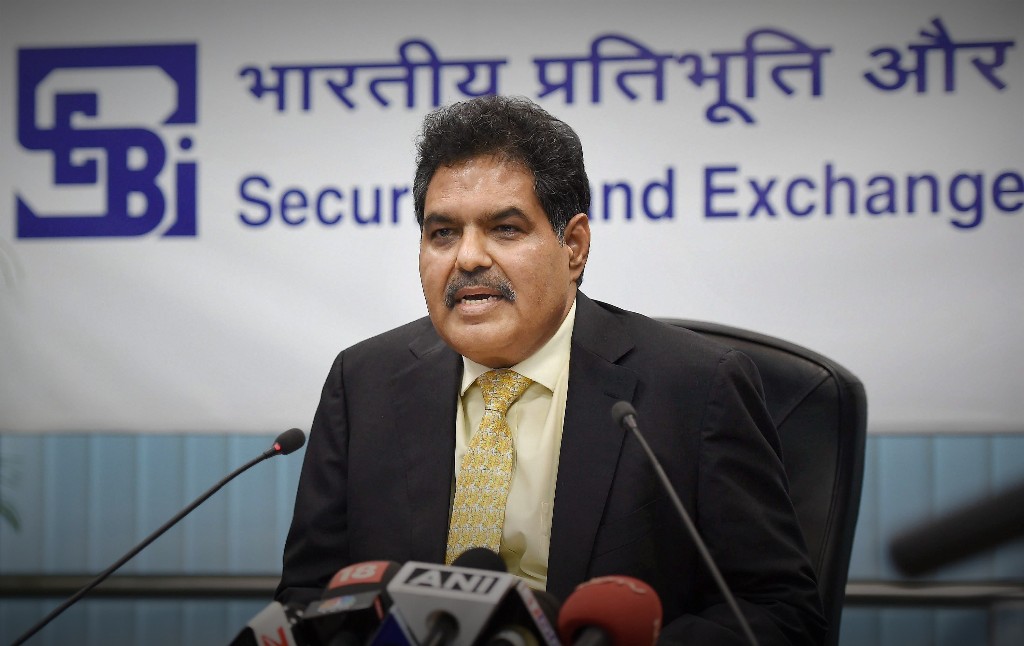
SEBI Chairman Ajay Tyagi red-flagged private equity, venture capital and hedge funds as a possible tool for money laundering.
Such alternate investment funds need immediate attention and have forced the regulator to check possible money-laundering tendencies, Tyagi said while addressing members of Indian Private Equity and Venture Capital Association in Mumbai today. “It has to be ensured that at all costs that AIF route should not be used to circumvent other laws.”
AIFs plough in the largest investments in India after foreign portfolio investors. They pumped in Rs 90,000 crore in 2017, higher than what companies raised from capital markets, according to an IVCA presentation. That's expected to hit Rs 1.5 lakh crore this year. AIFs have invested Rs 9.1 lakh crore in India in the last 12 years.
Also Read: SEBI Places Limits On Strategic Investors' Stake In REITs, InVITs
That came after the regulator eased norms for the wealthy and institutional investors ploughing more than Rs 1 crore.
“The AIF route is for educated and high net-worth investors, which why the regulations are liberal and that's the intent of SEBI as well,” said Tushar Sachade, partner, financial services at PwC. There is already a plan for an accredited investor definition, he said. “If implemented, that should solve the issue.”
Pratibha Jain, partner at law firm Nishith Desai Associates, said it's the source of money, rather than the regulation, that's the issue. “Just like round tripping happens in companies, it's the same concern here.”
SEBI doesn't intend to tighten regulations at the moment. “We don't need any further checks and balances,” said Tyagi. “But industry should self-regulate.”
A proper KYC by investment manager regulated by SEBI should address the concerns, said Sachade.
Tyagi also warned the AIF industry against misuse of investment structure. Recent cases of loans disbursed through AIFs violate investment requirements, he said. “Such irregularities have to be curbed immediately.”
That leaves no doubt that AIFs cannot provide loans and can only invest in securities. “If lending is in form of securities like non-convertible debentures, that's fine,” said Sachade. “But a pure loan is not permissible.”

-
The Economic Imperative: Analysing The Material Driving Force Behind India-Canada Strategic Reset

This economic complementarity is further reinforced by deep institutional investment ties and talent mobility, which form the bedrock of the bilateral framework.
-
Medicine Pricing: Where Must Profit Stop?
India must confront excessive margins, hidden incentives and regulatory gaps that threaten the integrity of medicine.
-
Why Amazon And Flipkart Are Struggling To Beat Meesho In India's Smaller Cities
With 274 million users and lowest-cost logistics, Meesho is defending its value commerce crown against giants like Amazon and Flipkart.
-
High US Salaries, No Green Card Certainty: The Financial Calculation Facing Indian H-1B Families
The suspension of PERM processing at eight technology employers does not cancel existing H-1B visas. What it does is force a question many Indian families have been avoiding: is the US salary worth tying your career and family plans to one employer?
-
Swiggy vs Eternal: Food Delivery's Two Rivals Are No Longer In The Same Race
Eternal is building a private AI assistant, dark.ai. Swiggy is still working out how to make Instamart pay, with an operating loss of Rs 895 crore in the July-September quarter while Blinkit stayed profitable.
-
Where You Live Shapes How You Get To Work | The Reason Why
Two-wheelers are the most popular way to get to work in India, accounting for nearly 43% of workplace commutes.
-
Unhedged Position: Can India See An Indonesia-Style Time Correction?
The Nifty is trading below levels it first clocked in 2024. Is there, then, as I have suggested in the headline, potential that the current time correction drags on painfully for the next three-five, even ten years?
-
Navigating Friction And Energy Realities: An Analysis Of Marco Rubio's October Visit To India
Occurring at a critical juncture marked by stalled trade negotiations and escalating geopolitical pressures over global energy supplies, the visit offers a profound window into modern US-India relations.
-
India Exports Capital. Why Not Export Trusteeship?
The big question, then, is whether India can build an institution that global borrowers, investors, banks, and lawyers can trust, even without an Indian connection.
-
France's Economy & Politics Are In Crisis | The Reason Why
Let's look at how the French economy and politics evolved under Nicolas Sarkozy, Franois Hollande and Emmanuel Macron.










